
STEVE REID
Editor & Publisher
sreid@lbknews.com
By January 2026, the sun rising over Sarasota Bay still paints the water in shades of impossible violet and gold, a daily reminder of why, exactly, the stakes are so high.
But if you listen closely at the Longboat Key Public Tennis Center or on the bayside terrace at the Dry Dock Waterfront Grill, the conversation has shifted. The panic of 2024—the fear of the “Condo Cliff”—has calcified into a steely, sophisticated resolve.
While national headlines scream about Florida’s insurance crisis, the reality on the ground in Longboat Key is not a collapse; it is a “flight to quality” of historic proportions. The island is not dying; it is molting. We are witnessing a massive, capital-intensive reinvestment in the island’s future—a transition from the “deferred maintenance” era of the 20th century to a hardened, resilient, and ultra-premium reality for the 21st.
This is the story of how Longboat Key is navigating the “Terminator” statutes and the new structural integrity laws not as a victim, but as a community deciding, consciously and expensively, to save itself.
The Rise of the “Fortress Class”
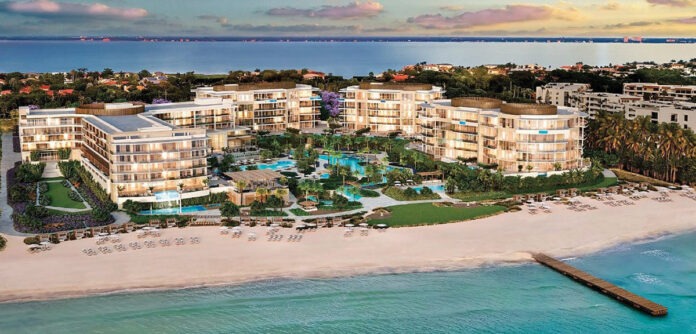
The most telling data point of 2026 isn’t the foreclosure rate; it is the price per square foot at the St. Regis Longboat Key. While older inventory lingers on the market with an average of 115 days to sell, units at the St. Regis and the wellness-focused Sage Longboat Key are transacting quietly and rapidly at record highs. We are seeing sales close north of $4,000 per square foot, with specific penthouse units at the St. Regis clearing the $9 million mark in cash deals.
This is the emergence of the “Fortress Class.” These are buildings constructed post-2020 with impact-rated glass, elevated foundations, and reserves that are fully funded from day one. Buyers in 2026—specifically the “Legacy Investors” from Greenwich, Chicago, and Toronto—are bypassing the “value” of a $800,000 vintage unit. They are willingly paying a 50% premium for the certainty of new construction.
The investment thesis is simple: In a world of climate volatility, safety is the ultimate luxury. The Aria and Sage developments have proven that there is virtually no price ceiling for “SIRS-proof” real estate. The message from the market is clear: We will pay for paradise, but we demand it be bulletproof.
The “SIRS” Effect: A Badge of Honor
For the island’s vintage inventory—the beloved mid-rise communities built between 1970 and 1990—the acronym SIRS (Structural Integrity Reserve Studies) has transformed from a scarlet letter into a badge of honor.
In the boardrooms of complexes like The Islander Club or Seaplace, a quiet heroism has taken place. Rather than folding to the “Terminator” developers, dozens of associations have successfully rallied. Residents looked at the $150,000 special assessments for concrete restoration and waterproofing and made a choice: We are staying.
By early 2026, real estate listings have evolved. Agents are no longer hiding the assessments; they are front-loading them. Listings now proudly display “SIRS Compliant,” “Milestone Inspection Passed,” and “Reserves Fully Funded” in bold print. These buildings are seeing a “Resilience Premium.” Buyers are flocking to these “recertified” vintage properties, recognizing that a renovated 1980s unit with 10-foot ceilings and a direct Gulf view—now structurally certified for another 40 years—is a rare gem that cannot be replicated under today’s stricter setback codes.
The “Friendly” Terminator
Even the dreaded “Condo Terminator” statute (Florida Statute 718.117) has proven to be more nuanced than the “predatory” narrative suggested. In 2026, we are seeing the rise of the “Friendly Termination.”
For buildings that truly reached the end of their structural lifespan—where the cost of concrete restoration exceeded 50% of the building’s value—the arrival of developers offering bulk buyouts has been a liquidity event, not an eviction. We are seeing associations actively solicit bids, turning a potential foreclosure crisis into a golden parachute.
Owners in these “end-of-life” buildings are cashing out at 150% of their unit’s prior market value, fueled by the land hunger of developers who know that Longboat Key is a finite resource. This capital is not leaving the region; it is recycling. These sellers are taking their equity and moving into newer, lower-maintenance properties on the mainland or downsizing into the boutique luxury projects rising on the footprints of the old. It is the efficient, albeit painful, recycling of the island’s housing stock.
The Culture of Resilience
Culturally, the “Condo Cliff” has sparked a renaissance of community engagement. The shared challenge of preserving these buildings has brought neighbors together in a way that decades of potlucks never could.
You see it at Whitney’s on the north end, where the morning coffee crowd is younger, sharper, and deeply conversant in “milestone inspections” and “reserve funding ratios.” You see it at Shore, where the patio is packed not just with tourists, but with full-time residents celebrating the completion of a roof project or the passing of a budget.
The “Snowbird” mentality of disengagement is dead. If you own on Longboat in 2026, you are involved. The Town of Longboat Key is seeing record engagement in planning meetings as residents push for underground utilities and improved drainage to match their private investments. The aesthetic of the island is leveling up; as older, tired complexes are renovated or replaced, the curb appeal of Gulf of Mexico Drive is becoming seamless.
The Verdict: A Stronger Paradise
Longboat Key in 2026 is undoubtedly more expensive than it was five years ago. The entry-level “beach getaway” is largely a thing of the past. But in its place is something more durable.
The fear of the “Condo Terminator” has forced a necessary reckoning that has ultimately strengthened the market. The buildings that stand today are safer. The owners who remain are committed. And the land itself—that thin, glorious strip of sand between the bay and the Gulf—remains undefeated.
For those smart enough to navigate the transition, the “Paradise Tax” is simply the cost of admission to one of the most resilient, exclusive, and well-managed zip codes in America. The sun still sets perfectly over the Gulf, but the people watching it from their balconies now know exactly what that view costs—and they are happy to pay it.

