
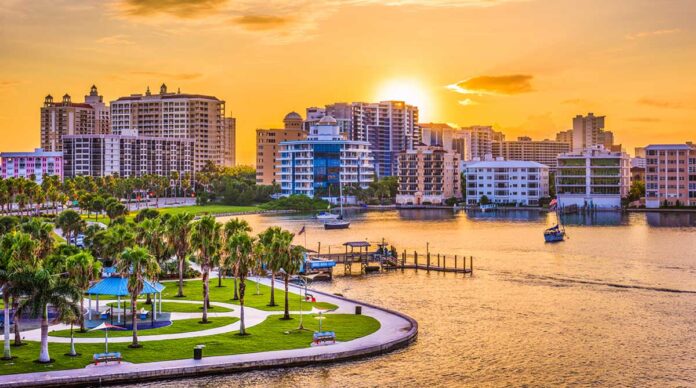
—Real estate has always been a game of demographics, but the latest data from the REALTOR® Association of Sarasota and Manatee (RASM) paints a picture of a coastline fundamentally transformed. The traditional, predictable pipeline of Midwestern snowbirds has evolved into a permanent, highly calculated, and staggeringly wealthy global migration.
New York remains the undisputed king of the Sarasota migration, leading all domestic states with over 1,400 driver’s license exchanges in Sarasota County alone over the past year. They are flanked by the usual suspects from New Jersey, Illinois, Pennsylvania, and Massachusetts. But look closer at the 2025 and early 2026 data, and a new vanguard is arriving on the keys.
International buyers—a segment that largely vanished during the pandemic—are back with a vengeance. Sarasota County saw over 1,300 new residents arrive from foreign countries and U.S. territories over the past year, an astonishing 84% spike compared to pre-2020 averages. Furthermore, the traditional East Coast monopoly on Gulf Coast real estate is officially cracked. Western wealth is making its way across the country; California migration into Sarasota jumped 34% over the last year, with buyers from Colorado, Washington, and Oregon increasingly trading mountain views for deep-water docks.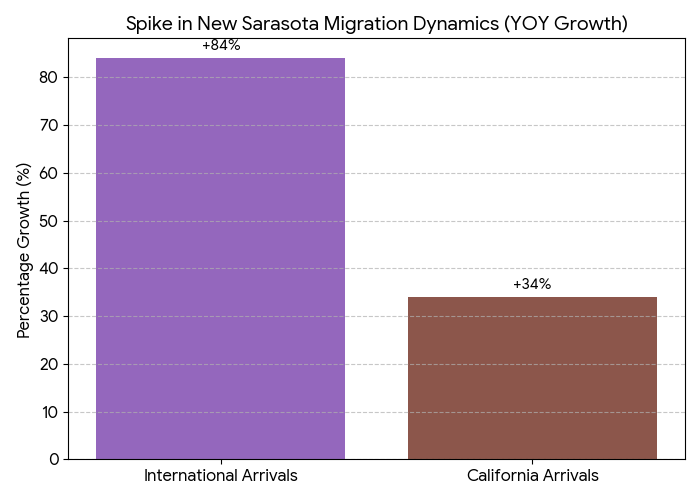
These are not the speculative, sight-unseen flippers of 2021. This new breed of buyer is highly analytical, scouting remotely from high-rises in Manhattan or Chicago. They demand 3D tours, exhaustive insurance histories, and structural engineering reports before they ever board a flight. And when they do arrive, they arrive with immense liquidity. While national mortgage rates finally dipped back below 6% in early 2026, on Longboat Key, it was merely a polite footnote. An estimated 65% to 70% of transactions on the barrier islands are closing entirely in cash.
—The Sobering of Paradise
—This new, data-driven migration matrix arrives at a fascinating time for the local market. There is a distinct mood on the barrier islands this spring. It is not a manic gold rush, nor is it the shell-shocked paralysis that followed the catastrophic storms of late 2024. Instead, as the 2026 busy season begins to fold its seasonal tents, a profound, almost surgical sobriety has settled over Longboat Key, Bird Key, Lido Key, and the gleaming waterfront of downtown Sarasota.
The summer of 2025 was mercifully quiet. The Gulf remained a placid turquoise, sparing the coast from the wrath of another Helene or Milton. The landscaping has grown back, and the sunset crowds at St. Armands Circle look exactly as they always have. But beneath the surface, the psychology of the market has been rewired by both the elements and this new class of discerning buyer. They are drawn by the undeniable gravity of the Florida coast, but their rose-colored glasses have been replaced by a magnifying glass. They want elevations, wind ratings, and structural reserves. Paradise is still for sale, but it comes with a new set of terms.
The Divergence: Single-Family Fortresses vs. The Condo Conundrum
To understand the market in early 2026, one must stop looking at the housing market as a single organism. The reality is a tale of two distinct asset classes moving in opposite directions.
—The Condominium Reset
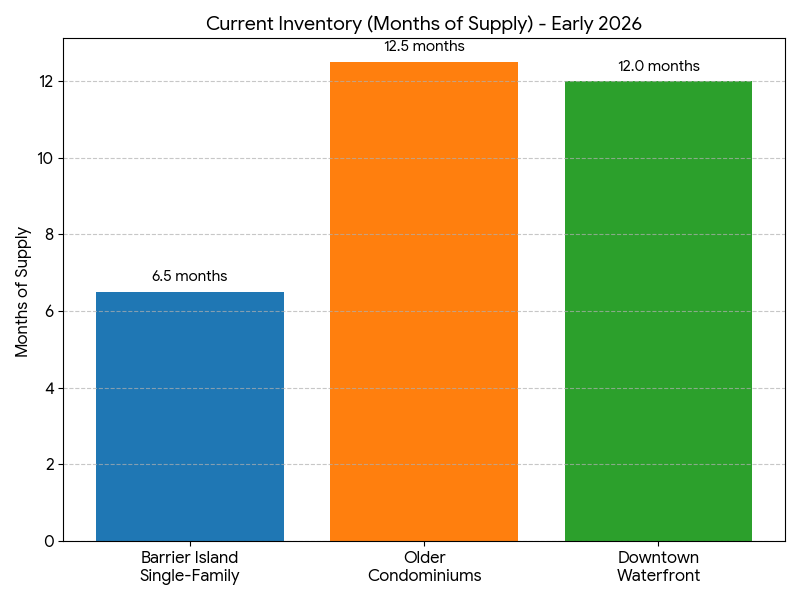
—For decades, the luxury condo was the ultimate turnkey dream. Today, it is the epicenter of a structural and financial reckoning. Across the older inventory on Longboat Key and downtown Sarasota, condominium supply has ballooned, sitting at a staggering 11 to 14 months of inventory—firmly entrenched in a buyer’s market.
This isn’t a lack of desire; it is a crisis of carrying costs. The convergence of new Florida laws requiring rigorous milestone inspections, fully funded structural reserves, and skyrocketing coastal insurance premiums has caused monthly HOA fees to double—or even triple—in aging mid-rise buildings along Gulf of Mexico Drive. Buyers hold the leverage, frequently demanding 7% to 8% off the listing price to offset impending special assessments.
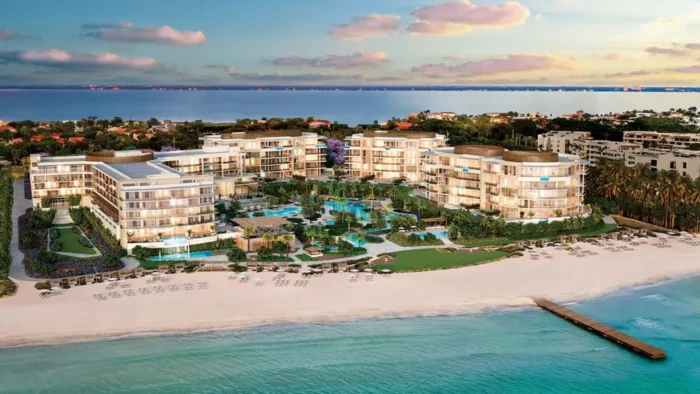
However, there is a glaring, ultra-luxury exception to this rule: brand-new, storm-hardened construction. Look no further than the St. Regis Longboat Key Resort. Having completed construction and opened its doors, it remains a gravitational anomaly. Units there are actively commanding jaw-dropping premiums, with residences in the Armand building currently listed for up to $13 million. Buyers at this tier are paying for absolute certainty: fresh concrete, cutting-edge wind resistance, and zero deferred maintenance.
—The Single-Family Moat
—Conversely, the single-family home market on enclaves like Bird Key and the northern stretches of Longboat Key has proven remarkably resilient, albeit slower. Here, the post-hurricane calculus is simple: high-net-worth buyers want dirt, they want elevation, and they want autonomy.
While the days of selling a home in a weekend are dead, well-priced, turnkey estates are moving. Buyers are categorically rejecting “fixer-uppers.” The prospect of managing a massive renovation amid an ongoing post-storm labor shortage is deeply unappealing to this new wave of out-of-state wealth.
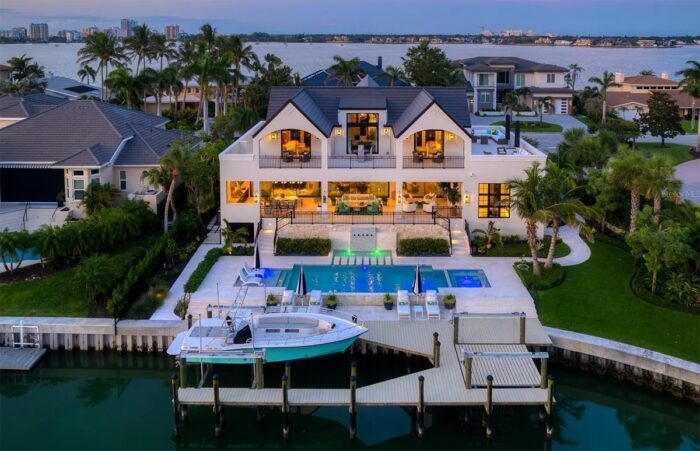
• The Bird Key Benchmark: On Bird Key, deep-water canal lots and move-in-ready fortresses rule the day. In late 2025, a sprawling estate on Mourning Dove Drive closed for a commanding $6.8 million, while more modest, turnkey footprint homes on streets like Pheasant Way and Spoonbill Way have been consistently trading in the $1.5 million to $3.7 million range in early 2026.
• The Longboat Key Reality: Longboat Key single-family homes are finding their footing a high baseline. Recent Q1 2026 closings tell the story of a rational market: a four-bedroom on Harrison Drive traded hands for $2.15 million, while a turnkey pool home on Dream Island Road closed for $1.75 million.
—Downtown’s Skyward Gaze and the Lido Lag
—Look across the Ringling Bridge toward the downtown Sarasota waterfront, and the skyline has been fundamentally transformed to meet the demands of these new transplants.
The influx of new, branded ultra-luxury construction in the Quay Sarasota district has altered the downtown dynamic. Projects like One Park Sarasota, the Waldorf Astoria Residences, and The Ritz-Carlton Residences, Sarasota Bay (where active listings easily push past $10 million) are sucking the oxygen out of the room for older downtown towers. Legacy buildings built in the 1990s and early 2000s are struggling to compete with the indoor pickleball courts, private marina slips, and five-star concierge services of these new glass titans.
Meanwhile, Lido Key finds itself in a quiet, high-stakes transition. Its proximity to St. Armands makes it perpetually desirable, but the older, ground-level mid-century homes are increasingly viewed simply as very expensive plots of dirt. Buyers here are acquiring the land, knocking down the history, and building elevated, storm-hardened structures that meet modern FEMA standards. On the beachfront, the conversation is entirely dominated by the Rosewood Residences Lido Key, where sprawling, ultra-exclusive beachfront units are asking anywhere from $8.5 million to over $14 million, proving that uncompromised beachfront luxury remains somewhat immune to broader market jitters.
—The Architecture of a New Reality
—As we look toward the summer of 2026, the narrative of the Sarasota coastline is no longer one of unbridled speculation. The “fear of missing out” has been replaced by the fear of overpaying—and the fear of structural liabilities.
Sellers in older Longboat condominiums who price aggressively, holding on to 2022 comps without transparently addressing milestone assessments, will watch their listings languish through the sweltering summer. Conversely, sellers on Bird Key or Lido Key who recognize the new reality—who present a flawless, move-in-ready product with modern wind ratings to a cash-heavy buyer from California or New York—will find success.
The coast has not lost its magic. The draw of the Gulf, the pelicans diving into Sarasota Bay, and the quiet dignity of a Longboat Key morning remain as potent as ever. But the market has matured. It has been sobered by the wind and the water, and energized by a new wave of global wealth, evolving into a landscape where logic, at long last, shares the driver’s seat with emotion.

