
—The Oxford English dictionary traces the use of the word “quixotic”, coined after the publication of Cervantes’ account of the delusional Don Quixote in 1605, and it now reveals that usage of the word has increased rapidly since 1950 and is approaching its zenith during the 21st century. This index of sentiment among English speakers seems far too close to the truth to be denied. After the horrors of WWII, an era of civility in Europe and North America inspired efforts to promote peace and harmony. The edges of civility have since frayed; theocracies, autocracies, and centers of corruption now known as kleptocracies (rule by thieves) have increased in numbers.
Thus who better than the denizens of the Iberian Peninsula to supply us with libations to help us weather legions of failed, often dangerous, idealists. The Iberian Peninsula endured invasions by the Carthaginians under Hannibal during the Punic Wars and the Romans after 218 BC. Visigoth allies of the Romans took control of the Peninsula in the 5th Century AD, only to be displaced by the Muslim Moors invasion during the 8th Century. Northern European monarchies pressed to recover areas controlled by Muslims in southern Spain in the centuries following. The “Reconquista” of Spain by Christian forces enabled the Spanish Inquisition from the 15th to the early 19th centuries, followed by the Spanish Civil War and, much later, four decades of the Fascist government of Francisco Franco.
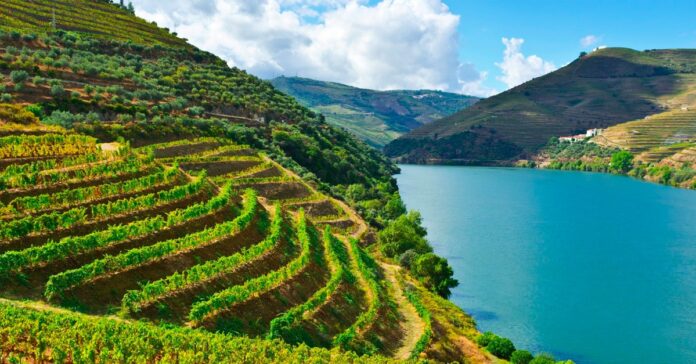
The wines of Spain and Portugal retain the character of regions that have struggled to maintain their identity. The northern Rioja and Ribera del Duero regions continue to produce wines from the old Tempranillo grape vines that scratch their concentrated flavors from arid and thin soils. The dark, shriveled grapes produce wines that rival the best of the Bordeaux and California Cabernet Sauvignon products; for example, the 2023 Emilio Moro Finca Resalso Ribera del Duero, Spain ($20) excels when served with beefsteaks and lamb. The 2021Quinta da Devesa Reserva Tinto Douro, Portugal ($18) from Touriga Nacional, Tinta Roriz, and Tinta Barroca grapes, has a flavor profile more like a fine Italian Barolo: fresh fruit, moderate acidity, and soft tannins, well suited to pork, vegetables, and fish rich in Omega 3 oils.
Grapes widely planted in Spain and Portugal tend to be unknown internationally and sell at bargain prices abroad. Mencia (Jaen in Portugal) has a taste similar to a blend of French Beaujolais and a California Zinfandel. The white grapes Rueda Verdejo and Godello have delicate floral noses with intense stone fruit flavors. The better known Albariño (Alvarinho in Portugal) grape produces wines that stand up to Chardonnay and Sauvignon Blanc.
The varieties of Iberian Peninsula wines let us escape from the jingo rantings of delusional religious and secular zealots. Spain and Portugal have held on to their land and the core values of the people who live there despite invasions and attempts to dominate them. We call for a toast for the Iberian Peninsula!
A recent visit to Los Bohemios Wine Bar and Tapas off Clark Drive in southern Sarasota Florida reminds us of the creative spirit that Bohemians brought to France and the Americas. Romani ethnic groups originally from India, misidentified as Egyptian (Gypsies) migrated through eastern Europe bearing letters of safe conduct from the Bohemian King Sigismund. Romani artists settled in France and developed an aura of free and creative outcasts. French artists and writers in the Latin Quarter began calling themselves Bohemians. Courbet and Modigliani, soon joined by Americans Mary Casset and Whistler, called their unconventional art and lifestyles “Bohemian”.
The classic tapas we ordered at Los Bohemios, the Bocarones white anchovy filets in olive oil, parsley, and garlic tasted as hoped. Perhaps the wines that accompanied them added a Bohemian flair. A crisp and clean 2023 Tarima Mediterraneo white wine from Alicante Spain near Valencia. Well-suited to fin and shellfish dishes, the obscure Mersequera grape blended with Moscatel has a floral scent and white peach taste that somehow melds with briny seafood tastes. The grape varieties in this wine combine to produce a fine white wine.
Our server behind the bar, Martin, recommended pairing the Iberian Jamón Croquettes with a red Garnacha (75%) spiced with a touch of Syrah (25%). The 2024 Bodega Cure Tinto Sobre Lías from Cariñena in the Aragón region of Spain. This wine has an intense but mild red fruit taste that matches well with the savory crust and fillings of the Croquettes. Disfrutamos mucho.
S. W. Hermansen has used his expertise in econometrics, data science and epidemiology to help develop research databases for the Pentagon, the National Institutes of Health, the Department of Agriculture, and Health Resources and Services. He has visited premier vineyards and taste wines from major appellations in California, Oregon, New York State, and internationally from Tuscany and the Piedmont in Italy, the Ribera del Duero in Spain, the Barossa Valley and McLaren Vale in Australia, and the Otego Valley in New Zealand. Currently he splits time between residences in Chevy Chase, Maryland and St. Armand’s Circle in Florida.
—Rich Hermansen selected has first wine list for a restaurant shortly after graduating from college with a degree in Mathematics. He has extensive service and management experience in the food and wine industry. Family and friends rate him as their favorite chef, bartender, and wine steward. He lives in Severna Park, Maryland.

