
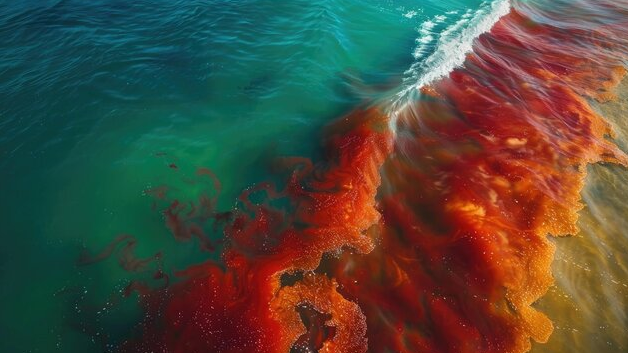
A pioneering study led by Mote Marine Laboratory, in collaboration with the Florida Fish and Wildlife Conservation Commission-Fish and Wildlife Research Institute (FWC-FWRI) and the U.S. Geological Survey (USGS), has uncovered a potential critical link between harmful algal blooms (HABs) and acidification in Florida’s estuaries.
The study reveals that distinct acidification events occurred following red tide blooms, and the growth of Karenia brevis (commonly referred to as Florida red tide) may contribute to ocean acidification and significant changes in water chemistry. This finding underscores the need for continuous monitoring to better understand and manage the interaction between HABs and acidification in coastal ecosystems.
Red tides occur when certain algae grow rapidly and overwhelm their environment, sometimes releasing toxins that harm humans, fish, shellfish, marine animals, and birds. These events can disrupt marine ecosystems, degrade water quality, and negatively impact local communities.
Ocean acidification happens when atmospheric carbon dioxide (CO2) is absorbed into the ocean, forming carbonic acid and increasing acidity. Coastal acidification results from a mix of this process and local influences such as nutrient runoff, freshwater inflow and algal respiration.
Masses of nutrients—like nitrogen (e.g., ammonia, nitrate, nitrite, and amino acids) and phosphorus (e.g., phosphate)—entering the water can worsen acidification. These nutrients promote the growth of CO2-absorbing algae, which release CO2 back into the water as they decompose, lowering pH levels.
This cycle exacerbates acidification, which harms coral reefs and hinders the growth of calcifying organisms’ shells and skeletons. Organisms with calcium carbonate skeletons or shells include corals, oysters, clams and mussels. They are essential to maintaining the marine ecosystem and food chain.
By analyzing the growth and decomposition of algal cell communities during blooms, the study revealed that biological processes play a significant role in altering water chemistry. These processes can sometimes intensify water acidity, a phenomenon closely tied to harmful algal blooms.
“This study highlights the importance of understanding how elevated CO2 affects red tide growth in natural ecosystems,” said Dr. Emily Hall, Senior Scientist and Manager of Mote’s Ocean Acidification Research Program. “By doing so, we can better anticipate and mitigate the impacts of harmful algal blooms on coastal communities.”

