
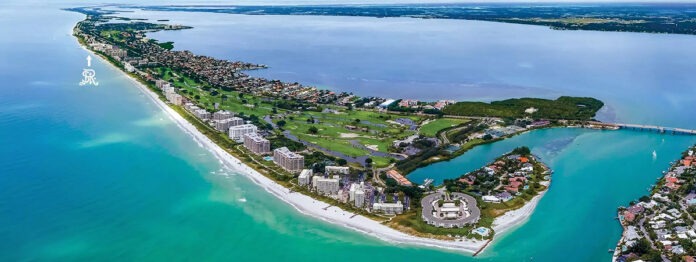
—If you ask a resident how they feel about their island, they will likely tell you it is one of the safest, most beautiful places in Florida.
If you ask them what it takes to drive off that island on a Tuesday afternoon during season, the response will be decidedly less glowing.
The recently released 2026 Longboat Key Citizen Survey—conducted by the University of South Florida’s Florida Institute of Government (FIOG)—paints a complex picture of a community that fiercely loves its quality of life but is increasingly exhausted by the logistical realities of barrier island living.
Based on responses from 1,056 residents, the data reveals a clear mandate for Town Commissioners: keep the island safe, fix the beaches, and figure out the traffic.
Here is a hard-hitting analytical dive into what residents prioritized, what they praised, and where Town Hall is falling short.
—The Good: Safety, Storm Recovery, and Satisfaction
It is difficult for any municipality to achieve the approval ratings Longboat Key currently enjoys regarding general quality of life.
• A staggering 99 percent of respondents rated the overall quality of life as either “excellent” or “good”.
• Residents feel incredibly secure, with 81.4 percent reporting they are “very satisfied” with the overall safety of the community.
• Public safety departments are overwhelmingly popular; among residents who actively used them, 83.3 percent were “very satisfied” with Fire & Ambulance services, and 66.9 percent were “very satisfied” with Police services.
Furthermore, the Town earned massive political capital for its handling of the 2024 hurricane season. Despite the devastation of Hurricanes Helene and Milton, nearly 96 percent of residents expressed satisfaction with the Town’s response and recovery efforts.
—The Bad: The Undeniable Traffic Nightmare
If safety is Longboat Key’s greatest asset, traffic is its greatest liability. The survey makes it clear that residents are losing patience with gridlock.
• Traffic congestion was identified as a top issue facing the Town by 60.5 percent of respondents.
• More than half of the respondents expressed direct dissatisfaction with the flow of traffic, with 39.4 percent reporting they were “dissatisfied” and 13.9 percent “very dissatisfied”.
• When given the opportunity to leave open-ended comments, a massive 51 percent of all respondents used the space to complain about traffic congestion, bottlenecks at St. Armands Circle, and the inability to leave the island in the afternoon.
Interestingly, the Town’s attempt at an alternative transit solution—the Breeze transportation service—is struggling to gain traction. The survey reveals that fewer than half of residents report any level of familiarity with the service, and awareness actually declined slightly from 2025 to 2026.
—The Ugly: Erosion, Insurance, and Red Tape
Beyond the roads, residents are deeply stressed about the physical and financial erosion of their properties.
• Beach Erosion is a Growing Threat: The percentage of residents identifying beach erosion as a top issue has steadily climbed, from 35.8 percent in 2024 to 41.3 percent in 2026. Consequently, 81.9 percent of residents rated beach management and shoreline protection as a “very important” priority.
• The Insurance Crisis: While it is largely a state issue, property insurance costs remain a massive local stressor, cited by 44.0 percent of respondents as a top issue facing the Town.
• Frustrations at Town Hall: While general administration scored well, regulatory departments took a hit. Among residents who actually used the services, nearly 23 percent reported dissatisfaction with the permitting process, and roughly 21 percent were dissatisfied with code enforcement. The FIOG report notes this is common for regulatory functions, but it remains a clear friction point for locals.
—Shifting Tides: A Mandate for “Natural” Beaches
One of the most striking analytical takeaways from the 2026 data is a massive shift in environmental sentiment.
When asked if they support maintaining “natural” beaches—which means limiting beach grooming to only removing excessive seaweed to protect wildlife habitats—support skyrocketed. In 2025, only 45 percent of residents supported this. In 2026, roughly 75 percent of residents expressed support for natural beaches, while opposition plummeted from 46 percent to just 15 percent. This indicates a rapidly growing local consensus that environmental preservation must take precedence over manicured aesthetics.
Support for accelerating the Gulf of Mexico Drive multi-use trail is less definitive. While a plurality (47.4 percent) support speeding up the project, nearly 29 percent remain unsure, and 23.7 percent are opposed, suggesting the Town has more work to do to sell the concept to skeptical residents.
—The Business Disconnect
For the first time, the Town attempted a dedicated Business Survey, but it essentially failed to launch. Out of approximately 221 surveys distributed, only 16 businesses responded—a dismal 7 percent response rate.
However, the few business owners who did respond sounded the alarm on two critical economic threats:
• Housing for Workers: 50 percent of business respondents were dissatisfied with the availability of quality, affordable housing.
• The Seasonal Cliff: 56.3 percent reported that seasonal fluctuations affect their business “very significantly,” making year-round survival a challenge.
—The Bottom Line for Town Leadership
The FIOG report leaves Town Hall with several clear recommendations. First and foremost, leaders must prioritize strategies to address traffic, whether through regional partnerships or new management solutions. Second, they must maintain a relentless focus on infrastructure and stormwater management, as residents are watching the rising tides with a wary eye.
Longboat Key is not losing its charm, but the 2026 Citizen Survey proves that residents are demanding that the Town’s infrastructure and logistics finally catch up to its world-class reputation.

