
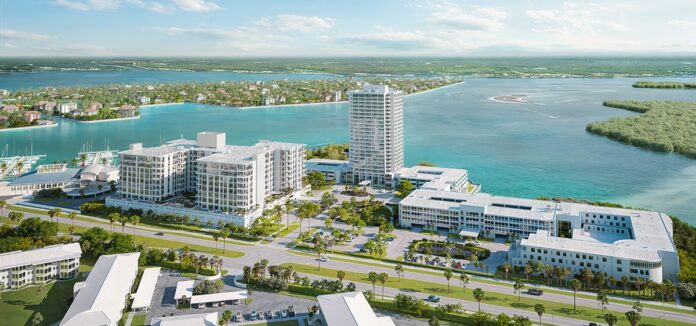
—Sixty years ago, a young architect and a visionary minister dared to pierce the Sarasota sky, erecting a 25-story tower of unpainted concrete that forever changed the city’s architectural and regulatory landscape. Today, Plymouth Harbor on Sarasota Bay—the crown jewel of Coon Key and a monument to mid-century modernism—is once again asking the city for permission to reach for the clouds.
On Monday, March 23, 2026, at 9:00 a.m. in the Commission Chambers, the Sarasota City Commission will weigh a sweeping expansion plan for the legendary retirement community. The proposal, which sailed through the city’s Planning Board with a 4-1 recommendation last month, would add a new 151-unit, 8 story independent living facility over a three-level parking garage. Click application plan link here.
But the proposed expansion is more than just a real estate play; it is a critical operational pivot for a nonprofit institution navigating a years-long waiting list, aging infrastructure, and the delicate politics of coastal development. It is also the latest chapter in a story about how Sarasota’s most iconic building continues to redefine how Americans age.
—The House That Smith Built
To understand the stakes of Monday’s vote, one must understand the outsized shadow Plymouth Harbor casts over Sarasota.
In 1962, the Rev. Dr. John Whitney MacNeil dreamed of a retirement community that defeated the cold, barracks-like isolation of traditional aging facilities. He selected Frank Folsom Smith and his partner Lou Schneider, gifted young architects of the famed Sarasota School of Architecture.
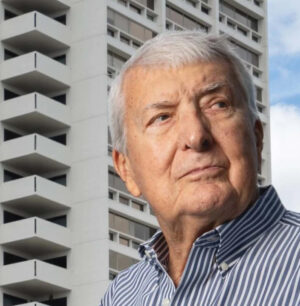
“So many of the stories you became aware of around the country were the same,” notes Harry Hobson, who served as Plymouth Harbor’s CEO from 2004 to 2022. “The senior minister felt bad seeing so many widows living alone in social isolation. This type of living changed that.”
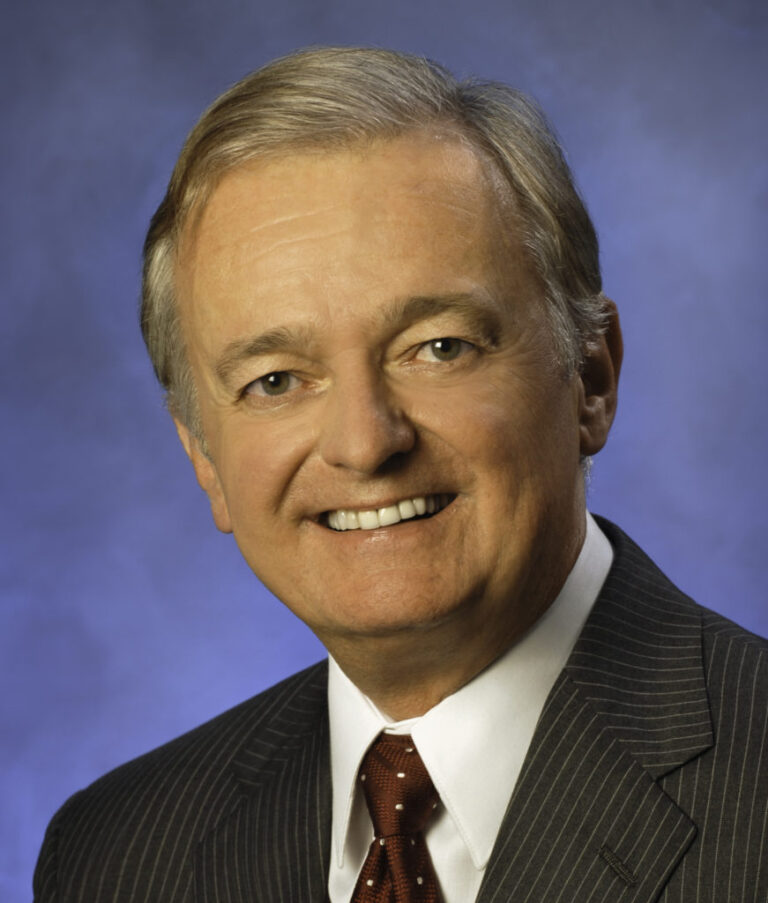
“What Frank Smith and Reverend MacNeil did, they were truly trying to create a unique architecture,” adds Jeff Weatherhead, Plymouth Harbor’s current CEO. “So many choose to move to Sarasota and they do not have strong social connections. The goal then, as now, is to create that sense of community so residents have a social network.”
MacNeil secured 17 unspoiled acres on Coon Key from the Arvida Corporation, preserving the island’s natural foliage and bird rookeries. Inside, to prevent the high-rise from feeling forbidding, Smith designed stacked three-story “colonies” surrounding an inner atrium, fostering an intimate, neighborhood atmosphere.
“The design of the 25-story tower is that every three floors, the first floor of the three has a community room, and the two floors above have an expansive atrium column,” Weatherhead explains. “It creates a neighborhood within the tower.”
This architectural philosophy extended to the community’s governance. “That is reflected in the political structure,” notes John Patterson, a former Plymouth Harbor board member. “Each Colony elects a representative… They have a seat on the governing board of Plymouth Harbor.”
Hobson emphasizes just how radical this was for the industry. “It was unique to have a resident on the board of trustees, but what was very unique is that all three residents on the board of trustees are full voting members.”
When Plymouth Harbor opened in 1966 at a staggeringly economical $10.75 per square foot, it was a sensation. It was the tallest building in Sarasota. It was so shockingly tall, in fact, that a panicked City Commission swiftly passed an 18-story height restriction to prevent the city from “turning into Miami.” That reactive law ensured that Plymouth Harbor would indefinitely remain the tallest building in town.
—A Model of Survival
From the beginning, Plymouth Harbor operated on a model that was both charitable and financially precarious. Residents paid an entrance fee that guaranteed they would always have a home and healthcare, even if they outlived their funds.
“The original concept was… a place for people of moderate income to come and retire,” Patterson recalls. “Everyone would share the same magnificent modern amenities. The fewer people there were to share the cost of these modern amenities… the [harder it was] to make the numbers work.”

The very success of the community almost led to its downfall. “What happened is it was more successful than anyone knew,” Patterson says. “It was promoting the longevity of the residents far longer than the actuary predicted. Entrance fees from new residents were not being received when anticipated. Monthly costs were fixed.”
“It was a great concept, and beautiful,” Hobson explains. “The few retirement communities that existed were mostly in the South. But the only contracts in place were like Plymouth Harbor’s, where you moved in and the contract stayed the same. That was not sustainable.”
Original administrator Jack Smith recognized the impending crisis and saved the community from financial ruin through sheer personal goodwill. “Jack saw what was happening. He was the one on the front line who went resident to resident to ask them to voluntarily change their contract to allow a cost of living adjustment,” Hobson says. “He had incredible trust with the residents, and he did it the right way. Only a handful didn’t do that.”
Today, the core model remains the same, offering residents a discount on healthcare needs and the peace of mind that they will never be asked to leave. “People on average live seven to eight years longer [here] than if they remain in their own home,” Weatherhead says.
That peace of mind extends heavily to the families of the aging residents. “If there was any kind of relapse or issue, we could say, ‘Take your time, we got this,’” Hobson recalls. “They would say Plymouth Harbor is the greatest gift my parents could have given us.”
The 2026 Expansion Plan
When Hobson retired in 2022, handing the reins over to Weatherhead was a passing of the torch designed to keep the community moving forward. “When the search committee was searching for my successor, I was so excited to see Jeff’s name come up,” Hobson says. “My wife worked with Jeff in another organization. She would say, ‘This guy is good, and this guy knows how to connect.’ That is what is key.”
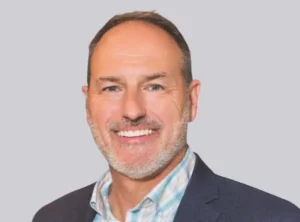
Weatherhead immediately had to connect the community’s past to its future needs. Decades of combining the original, small 500-square-foot efficiencies into larger, two-bedroom apartments had reduced the overall housing inventory from 343 units down to 215, resulting in a daunting waitlist.
“We started serving a more sophisticated [market], and that reduced the number of units,” Weatherhead says. “The market was saying, ‘We want to come to Plymouth Harbor, and we want two-bedroom units.’”
To meet modern demand, Plymouth Harbor has proposed a major site overhaul. The centerpiece of Site Plan Application No. 25-SP-01 is a new building on an approximately 5.25-acre portion in the northeast corner of the property, replacing an existing surface parking lot.
The specs of the new structure are substantial:
• The Residences: The building will house 151 new independent senior living dwelling units. Adding these to the existing units will bring the campus total to 366 independent living residences. This is still fewer than the number of residences it had when it first opened in 1966.
• The Height: It will rise 115 feet in total, featuring eight stories (90 feet) of residential space perched atop three levels (25 feet) of structured parking.
• The Parking: The new garage will provide 590 spaces, bumping the campus’s total parking capacity to 790 spaces—far exceeding the city’s requirement of 424.
“When I got here in June 2022, we looked at what was needed,” Weatherhead recalls. “We needed to look at parking problems so guests could come and visit without worrying about parking. We needed to update the common areas. I looked out at the larger parking lot… I asked an architectural friend to design-build a parking structure, put residences on top to pay for it, and leave all parking on-site while it is developed.”
To make this possible, Plymouth Harbor is asking the city to rezone the property from the Medical Charitable Institutional (MCI) Zone District to the Residential Multiple Family 5 (RMF-5) Zone District. City planners note that the RMF-5 designation is the proper implementing zone district for the property’s current Metropolitan/Regional #3 Future Land Use classification. The rezone will not only permit the new tower but will also legally reduce the existing zoning non-conformities of Smith’s original masterpiece.
—What’s at Stake: Trees, Traffic, and Art
Building a 115-foot tower on a fragile coastal island requires a labyrinth of environmental and logistical compromises.
The development will require the removal of 77 trees from the property. However, Plymouth Harbor treaded carefully: all existing “grand trees” on the site will be preserved. To mitigate the loss of the other trees—primarily 68 palms—Plymouth Harbor will plant 25 new palms and 49 three-inch caliper trees, a figure that exceeds the city’s minimum mitigation requirements.
Traffic, the eternal Sarasota flashpoint, was also scrutinized. A mandated Traffic Impact Analysis determined that the new building will generate 38.25 net new vehicle trips during the PM peak hour. Because this exceeds 1% of the service volume for John Ringling Boulevard, the development was deemed “not de minimis,” requiring a full site access and circulation study, which the applicant successfully completed.
In a city internationally renowned as an artistic capital, the expansion’s aesthetics are just as heavily scrutinized as its footprint. To that end, Plymouth Harbor is making a staggering $750,000 public art investment. This sprawling installation will face John Ringling Boulevard, serving a brilliant dual purpose: enriching the cultural tapestry of the community while elegantly screening the new parking garage with a minimum 50 percent opacity. It is a striking design choice befitting Sarasota’s elite cultural stature, transforming a highly functional structure into a monumental canvas for the public to enjoy.
—Next Steps and the Final Verdict
Plymouth Harbor’s path to Monday’s climactic City Commission meeting has been remarkably smooth. The city’s Development Review Committee signed off on the project in early January 2026, and the Planning Board voted 4-1 to recommend that the City Commission approve both the rezoning and the site plan.
If approved, the logistics of construction will be formidable. “The reality is we are going to have to temporarily [displace] residents and team members because we will clear the large parking area,” Weatherhead says. To make the logistics work, all resident vehicles will be kept safely on-site during construction, while the displaced employees will be bused in for the next 18 months.
The hope is to break ground in the fall of 2027, with the first residents moving in by early 2030. The demand is already evident: a recent priority campaign secured 250 households, with nine deposits secured in just four days.
As Plymouth Harbor prepares for this massive undertaking, the focus remains on the intangible qualities that have defined it for 60 years.
“From the heart: I have been retired a little over three and a half years, and I look back, and it was really not about the state-of-the-art fitness program and the memory care accolades,” reflects Hobson. “What means the most to me is the connectivity. I had such reward knowing the residents and their families.”
“In my living room now, I have two beautiful leather chairs that were once in my office at Plymouth Harbor,” Hobson adds. “I look at those chairs almost every day and they remind me that it is about connections. We sat with residents in those chairs and had these conversations. It is the connections with residents and the team members that meant everything to me. Everyone working on the same mission, the same song sheet.”
For Plymouth Harbor, the stakes of the expansion are existential: evolving a 1960s architectural triumph into a sustainable, modern enterprise capable of serving the next generation of retirees. For Sarasota, it is a test of how the city balances its revered mid-century history with the pressing demands of its booming future.


[…] If you’re doing your senior living planning, consider North Bay Tower at Plymouth Harbor. Our new expansion combines an upscale lifestyle with breathtaking views of the bay and the Gulf Coast. To discover […]