
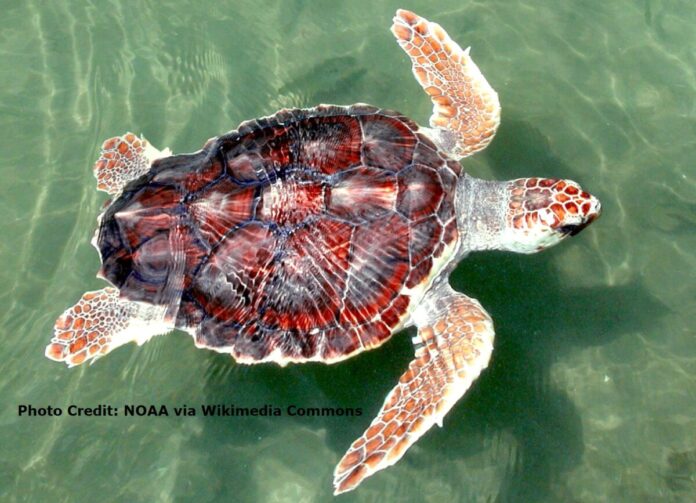
The numbers emerging from Sarasota’s barrier islands this year are nothing short of historic. On Longboat Key, researchers documented 1,473 nests in the 2025 season, a significant jump from 1,259 the previous year. Further south on Siesta Key, the count rose to 662 nests, up from 502. By every conventional metric used in conservation biology, this is a triumph—a testament to decades of local stewardship by Mote Marine Laboratory, the Longboat Key Turtle Watch, and rigorous coastal protections.
However, marine biologists caution that these record-breaking spreadsheets may be obscuring a more complex and precarious reality. While the quantity of nests is surging, the quality of the reproductive output faces an invisible, atmospheric threat.
Scientists monitoring the 35-mile stretch from Longboat Key to Venice are observing a “data paradox”: adult female populations appear robust, but the environmental conditions for their offspring are deteriorating. The concern is no longer just about protecting eggs from predators or tourists, but from the sand itself.
The Thermal Threshold
The primary driver of this silent crisis is the rising subterranean temperature of the nesting beaches. Sea turtle sex determination is temperature-dependent; a phenomenon researchers summarize as “cool dudes and hot chicks.” The pivotal temperature for a balanced sex ratio in loggerheads is approximately 29°C (84.2°F).
Data indicates that Sarasota’s beaches are consistently trending above this threshold during critical incubation periods. This heat creates a severe sex-ratio bias, with some Florida nesting sites now producing populations that are 86% to 99% female. While a female-biased population can technically sustain numbers in the short term—since one male can breed with multiple females—generational stability relies on having enough males to fertilize future clutches.
“We are seeing a reproductive bottleneck that won’t show up in the nest counts for another 20 years,” notes a source familiar with local research.
“We are effectively counting the success of the past, not the viability of the future.”
The Disorientation Factor
Beyond the heat, hatchlings on Longboat and Siesta Key face an increasingly hostile obstacle course upon emergence. Mote Marine Laboratory has reported a concerning rise in “disorientations”—instances where hatchlings crawl toward artificial light instead of the ocean.
Despite strict lighting ordinances on Longboat and Siesta Keys, the cumulative “sky glow” from intensified coastal development creates a luminous haze that overrides the hatchlings’ natural navigation systems. A disoriented hatchling burns vital energy reserves meant for the swim to the Loop Current, significantly lowering their odds of survival even if they eventually reach the water.
The “Lagging Indicator” Trap
The high nest counts celebrated this season are a lagging indicator. The females nesting on Longboat Key today were hatched 25 to 30 years ago, under cooler climatic conditions. Their abundance is a credit to the conservation policies of the 1990s.
The true health of the population is not determined by how many eggs are laid, but by “recruitment”—the number of hatchlings that survive to adulthood. With lower hatch rates due to thermal stress (eggs essentially cooking in the shell) and higher disorientation rates, recruitment numbers may be quietly plummeting even as nest counts soar.
A Call for “Smart” Conservation
Local experts are shifting the narrative from “saving turtles” to “saving habitats.” The focus is moving toward climate-adaptive strategies:
* Restoring Dune Integrity: Healthier, vegetated dunes on Siesta and Longboat can provide natural shade, lowering sand temperatures by vital degrees.
* Next-Gen Lighting: Moving beyond simple “lights out” policies to managing the aggregate light pollution of the entire coastline.
* Data Granularity: Moving beyond simple nest counts to track hatchling sex ratios and metabolic fitness.
The message for Sarasota residents is clear: The record numbers are a victory, but they are fragile. The battle has shifted from the visible threats of the past to the invisible, thermal threats of the future.
Local Data Snapshot (2024-2025):
* Longboat Key: 1,259 nests (2024) \rightarrow 1,473 nests (2025)
* Siesta Key: 502 nests (2024) \rightarrow 662 nests (2025)
* Sarasota County Total (Loggerhead): >11,000 nests annually

