
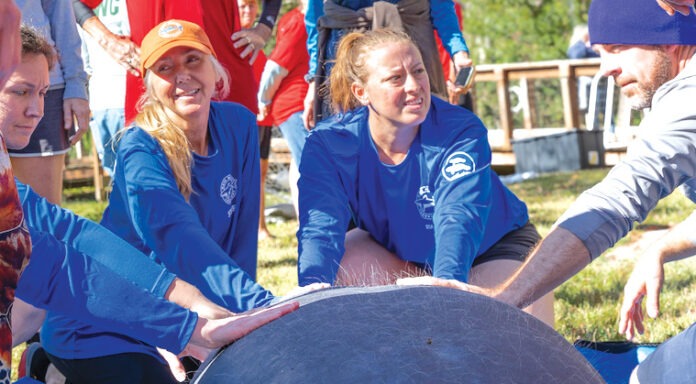
In a major milestone for local marine conservation, Mote Marine Laboratory & Aquarium has successfully released its first two manatee rehabilitation patients back into the wild.
The manatees, named Sleet and Cabbage, were returned to Florida waters last week following months of recovery at Mote’s facilities. Their release marks the successful conclusion of Mote’s first case since receiving its new designation as a secondary care holding facility.
A Journey to Recovery
Sleet and Cabbage arrived at Mote on April 28, 2025, after being transferred from acute-care centers within the Manatee Rescue & Rehabilitation Partnership (MRP).
Sleet: Rescued on January 8, 2025, from Crystal River, suffering from severe cold stress.
Cabbage: Rescued on February 27, 2025, from Bradenton, also presenting with cold stress and significant weight loss.
Mote’s role as a secondary care facility is designed to bridge the gap between critical care and release. Once the manatees were stabilized, Mote’s animal care teams focused on:
• Nutritional Support: Helping the animals regain significant weight.
• Body Conditioning: Ensuring they met the physical requirements to survive in the wild.
• Medical Monitoring: Overseeing the final stages of rehabilitation.
“The successful release of these two patients represents significant progress in statewide manatee conservation efforts,” said Dr. Michael P. Crosby, Mote’s President & CEO.
Back in the Wild
The releases were a coordinated effort involving the U.S. Fish and Wildlife Service (USFWS), the Florida Fish and Wildlife Conservation Commission (FWC), and several partner organizations.
Sleet was released into the warm waters of Crystal River on Tuesday, December 9.
Cabbage was released the following day, Wednesday, December 10, at the TECO Big Bend discharge canal.
Partner agencies assisting in the operation included ZooTampa at Lowry Park, Clearwater Marine Aquarium Research Institute, and the Bishop Museum of Science and Nature.
The Environmental Reality: Status and Threats
While Sleet and Cabbage are success stories, their struggle highlights a darker reality for the species. The West Indian manatee remains listed as Threatened under the Endangered Species Act, though many conservationists are petitioning to reinstate its Endangered status due to volatile environmental conditions.
Population Numbers
Current estimates place the Florida manatee population between 8,350 and 11,730 individuals, with a widely cited average of approximately 9,790. While this is a rebound from the lows of the 1990s (when the population was roughly 1,500), the stability of these numbers is fragile.
Increasing Mortality Rates
The expansion of Mote’s facilities comes at a critical time. Preliminary data from the FWC indicates that 2025 has seen a slight uptick in mortalities compared to the previous two years:
2025 (Year-to-Date): ~587 deaths recorded.
2024: 565 deaths.
2023: 555 deaths.
While these numbers are an improvement over the catastrophic “die-off” years of 2021–2022 (where nearly 2,000 manatees were lost), the trend line remains concerning.
Primary Threats
The threats driving these numbers are threefold:
Starvation and Seagrass Loss: The Indian River Lagoon (IRL)—a critical habitat—has suffered massive seagrass die-offs due to nutrient pollution. While the 2025 health assessment for the Central IRL showed a rating improvement from “poor” to “okay” with slight seagrass increases in the Mosquito Lagoon, coverage remains historically low, leaving manatees vulnerable to starvation.
Vessel Strikes: As boating traffic in Florida increases, collisions remain a leading cause of injury and death.
Cold Stress: As seen with Sleet and Cabbage, the loss of natural warm-water habitats forces manatees to rely on artificial sources (like power plant discharge canals), making them susceptible to cold snaps if they cannot find refuge.
Answering the Call
These environmental pressures created a bottleneck in the rehabilitation system, sparking an urgent statewide need for more holding capacity. By taking in non-critical patients like Sleet and Cabbage, Mote frees up space at acute-care hospitals for the most critically injured animals, creating a more efficient network of care across the state.
With the 2025 winter season approaching, Mote’s empty tanks will likely not stay empty for long, as the network prepares to respond to the ongoing environmental challenges facing Florida’s state marine mammal.

