
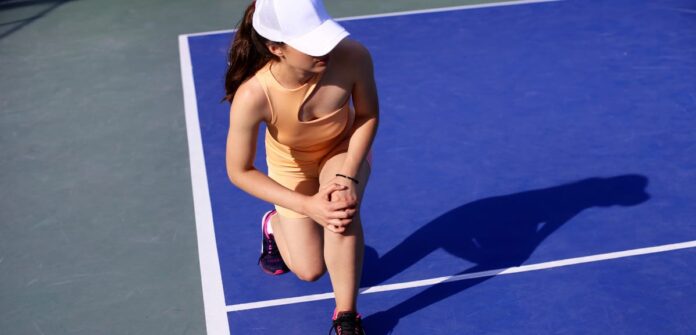
It was supposed to be the gentle alternative—a lower-impact pastime for those “aging out” of the grueling demands of the baseline. But as millions flock to converted hardtops, a startling medical reality is emerging: Pickleball, the darling of the retirement community, is actually the wolf in sheep’s clothing.
While “true” tennis on clay remains the gold standard for sustainable senior fitness, the plastic pop of pickleball is filling emergency rooms with fractures and tears at a rate that has doctors longing for the days of the clay court slide.
The narrative that pickleball is “safer” is crumbling under the weight of ER statistics. Orthopedists are finding that the “old guard” sport of tennis, particularly on Har-Tru surfaces, offers a refined biomechanical advantage that the frantic, stop-start nature of pickleball simply cannot match. For the over-50 athlete, the choice is becoming clear: stick to the clay if you want to save your joints.
The “Safety” Paradox
“It’s a massive misconception that lower impact means lower risk,” says Dr. Elena Ross, a sports medicine specialist who has seen her patient roster shift dramatically. “Tennis injuries are usually battles of attrition—wear and tear from a lifetime of sport. Pickleball injuries, however, are violent, sudden, and often catastrophic.”
The statistics paint a damning picture. While injury rates among tennis players over 50 have plateaued—likely because the sport naturally selects for fitness—pickleball injuries have skyrocketed, increasing by nearly 90% in recent years. The majority of these traumas occur in players over 60 who were promised a “safe” game and found a surgical boot instead.
The Breakdown: How You Get Hurt
The fundamental difference lies in the sophistication of the movement. Tennis requires fluid, rhythmic motion. By the time a player is 65, if they are still playing singles tennis, they possess a baseline of agility that protects them. Pickleball, conversely, lures deconditioned players onto a hard court to perform high-risk, explosive movements from a dead standstill.
The Surface: The Grace of Clay vs. The Grind of Asphalt
The court surface is where tennis claims its superiority.
• True Tennis (Har-Tru/Clay): The granular surface of a clay court is an engineering marvel for the aging body. It allows the foot to slide slightly upon impact. This slide acts as a release valve for torque, sparing the knees and ankles from the jarring force of a dead stop.
• Pickleball (Hard Court): Most pickleball is played on converted asphalt. When a senior player lunges, the surface offers zero forgiveness. The friction is absolute. If the body momentum keeps moving but the foot is stuck, the kinetic energy has nowhere to go but into the bone, causing snaps and fractures.
The Fall: Controlled Momentum vs. The “Backward Stumble”
• Tennis: Injuries here are predictable—Rotator Cuff Tears or Tennis Elbow.2 You rarely see a tennis player fall backward; their momentum is forward or lateral, trained over years of practice.
• Pickleball: The court is deceptively cramped (20×44 ft), tricking players into thinking they can backpedal to retrieve a lob. This is the deadliest movement in the sport. The “backward stumble” leads to a loss of balance, resulting in the number one traumatic injury: the Wrist Fracture.
The “Pop”: The Achilles Trap
In tennis, players are in constant motion, keeping tendons warm and elastic. In pickleball, the game involves standing stationary at the “kitchen” line, followed by a sudden, explosive reaction. This “cold start” snaps the Achilles tendon in men over 50 with frightening regularity.
The Pickleball Defense: Where the Paddle Wins
However, to call pickleball entirely dangerous is unfair. While it poses higher risks for the lower body, it offers a distinct sanctuary for the upper body.
• The Shoulder Savior: The mandatory underhand serve is a biomechanical blessing.3 It eliminates the violent overhead motion of the tennis serve, which is the primary cause of rotator cuff tears. For seniors with impingement issues, pickleball is undoubtedly superior.
• The Cardiac Sweet Spot: Tennis often pushes heart rates into Zone 4 or 5 (high intensity), which can be risky for those with underlying cardiac conditions. Pickleball keeps most players in Zone 2 (moderate), offering a safer cardiovascular workout for those building back their endurance.4
• Lighter Load: The paddle weighs a fraction of a tennis racquet, significantly reducing the torque on the elbow if proper mechanics are used.
The Verdict: A Question of Risk Profile
Ultimately, declaring a winner in the safety debate requires looking at the type of risk a player is willing to accept. Medical experts generally agree that for the over-50 athlete, Har-Tru (clay) tennis is mechanically superior for the skeletal structure. The granular surface allows for sliding, which acts as a release valve for torque, absorbing the jarring shocks that would otherwise rattle the spine and knees. However, tennis demands a high baseline of fitness; without it, the risk of overuse injuries like rotator cuff tears and chronic arthritis remains high.
Pickleball, while celebrated for accessibility, presents a sharper, more immediate danger. Because it is played on unforgiving hard courts, every step transmits shock directly to the joints. Furthermore, the sport’s deceptive “low impact” label often masks the high risk of acute trauma—specifically fractures from falls and Achilles ruptures from explosive starts.
In short: Tennis tends to wear the body down slowly through exertion, while pickleball is far more likely to break it suddenly through impact. But if your knees are strong and your shoulders are shot? The paddle might just be your best friend.
Expert Takeaway
“If you value your joints and want to avoid the ER, stay on the clay,” implies Dr. Ross. “But if you must play pickleball, never backpedal, wear eye protection, and treat the plastic ball with the same respect you’d give a tennis serve—because it can do just as much damage.”

