
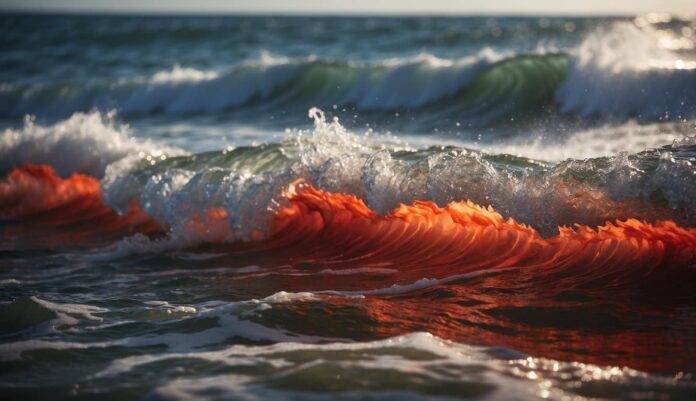
—For residents of Sarasota, Lido Key, and Longboat Key, red tide isn’t just an abstract scientific phenomenon — it’s a deeply personal issue.
When Karenia brevis blooms, it means coughing fits while trying to enjoy a sunset at Lido Beach, canceled reservations at St. Armands Circle, and the heart-wrenching sight of dead marine life washing up along the pristine shores of Longboat Key.
Recently, scientists in our backyard at Mote Marine Laboratory on City Island, alongside the University of Maryland, published three groundbreaking studies on why these blooms are getting worse.
Here is a look at what this research actually means for our rapidly developing coastal community.
The Red Tide “Season” is Disappearing
The Science: The first study shows a clear shift since the mid-1990s. Blooms are lasting longer, spanning multiple months, and occurring outside of their historical seasonal windows.
The Local Reality: We can no longer rely on red tide being a brief, late-summer annoyance that clears out before “season” begins. For our local economy—which relies heavily on winter snowbirds, spring breakers, and year-round real estate appeal—this is a serious threat. A bloom that lingers through January or February directly impacts hotel occupancies, restaurant revenues, and the daily quality of life for residents who pay a premium to live on the water.
—Our Local Growing Pains Are Feeding the Beast
—The Science: The second study links the increased severity of blooms to climate shifts (warming waters, intense storms) and anthropogenic (human-caused) footprints, specifically nutrient inputs from coastal population growth.
The Local Reality: Sarasota and Manatee counties are among the fastest-growing and most heavily developed regions in the state. What this study confirms is that our rapid development is acting as a fertilizer for red tide.
• The Runoff Effect: More condos, parking lots, and housing developments mean less natural ground to filter rainwater.
• Nutrient Overload: Nitrogen and phosphorus from lawn fertilizers, stormwater runoff, and stressed infrastructure flow directly into Sarasota Bay and out through New Pass and Big Pass into the Gulf.
While we cannot control the ocean’s temperature, this study highlights that our local development practices are directly contributing to the severity of the blooms right off our shores.
—The Algae Has a “Zombie” Survival Strategy
The Science: The third study discovered that K. brevis uses “mixotrophy”—a dual nutritional strategy. It can draw nutrients from multiple sources, allowing it to survive and grow even when normal environmental conditions are unfavorable (like low light or low traditional nutrients).
The Local Reality: This explains why red tide seems so stubborn once it arrives in local waters. Even if we have a dry spell with less nutrient runoff, the algae can switch up its diet to survive. It is a highly adaptable, chronic stressor that isn’t going to simply wash away easily. It means that once a bloom parks itself off the coast of Longboat Key, it has the biological tools to dig in and stay for months.
—The Bottom Line for the Suncoast
These studies are a wake-up call for the Sarasota area. The days of treating red tide as an episodic, unpredictable stroke of bad luck are over. The research clearly indicates that red tide is now a chronic, recurring stressor deeply intertwined with how we manage our environment.
Because we live in a development-intensive region, we are actively contributing to the “nutrient footprint” that fuels these toxic blooms. The findings from Dr. Cynthia Heil and her team at Mote Marine underscore an urgent need for our local municipalities to adapt.
To protect the coastal lifestyle and the local economy, Sarasota, Lido, and Longboat Key will need to look closely at:
• Stricter stormwater management and runoff mitigation for new developments.
• More aggressive enforcement of summer fertilizer bans.
• Upgrading aging wastewater infrastructure to prevent nutrient leaks into the bay.
Understanding the science is the first step. The next is recognizing that protecting our local waters is inextricably linked to how we manage our growth on land.

