
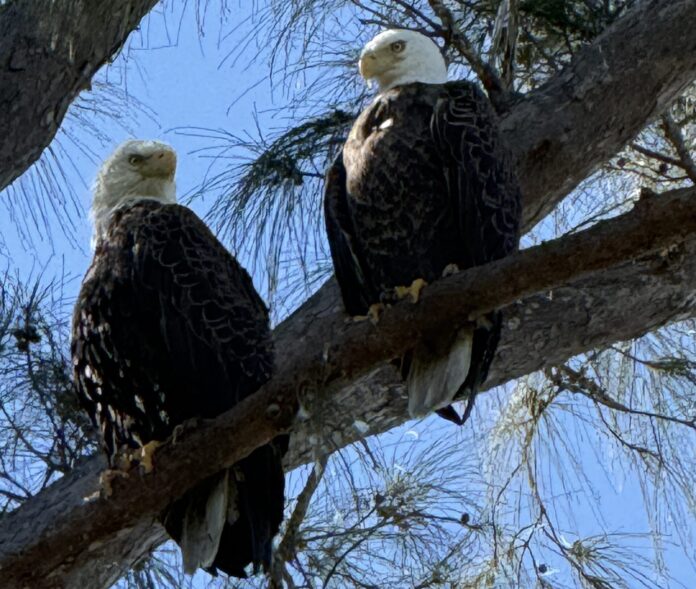
A tip led to Longboat Key.
For Bird Key resident Erik Abrahamson, an ordinary day turned into an ongoing wildlife adventure thanks to a casual conversation.
While at Tommy Bahamas, an employee tipped EriK off about a family of American Bald Eagles residing on Longboat Key. Following the lead to Dream Island Road, Erik struck gold. He not only located the eagles but has since made repeated trips, carefully photographing the majestic family as they thrive in their coastal habitat.
The Veterans of North Lido
The eagle-spotting didn’t stop there. Armed with a rough description of another location, Erik headed into the trails of North Lido Park. Tucked back in the woods, he successfully tracked down a second nest. A nearby sign confirms what local birders and park-goers have known for a while: eagles have been nesting in this exact spot for years, making them true, long-standing Lido Key locals.
Bird Key Flyovers and the Osprey Illusion
While Erik has spotted eagles soaring high above his home turf of Bird Key, he hasn’t found any active nests on the island just yet. Keeping an eye out for them, however, requires a bit of birding savvy, as it is incredibly common for casual observers to confuse them with Florida’s abundant osprey population.
• Spotting the Difference: Both are impressive, fish-hunting birds of prey, but they have distinct uniforms. Ospreys are slightly smaller, featuring stark white underparts and a distinct dark “bandit mask” across their eyes. A mature bald eagle, on the other hand, sports the unmistakable solid white head and tail, contrasting sharply with a heavy, dark brown body. (Juvenile eagles are mostly brown, making them even trickier to identify until they get their white feathers at around 4 to 5 years old!)
The American Eagle: By the Numbers
To put Erik’s discoveries into perspective, here is a look at the reality of bald eagles in the Sunshine State:
• A Thriving Population: Florida is an absolute haven for these birds. The state boasts one of the densest breeding populations of bald eagles in the lower 48 states, with well over 1,500 active nesting pairs. In fact, Florida is home to the vast majority of the entire southeastern United States’ eagle population.
• Nesting Habits & Real Estate: Florida’s official eagle nesting season runs from October 1st through May 15th. Eagles mate for life and are notoriously loyal to their real estate. They return to the exact same nest year after year, continually adding new sticks, moss, and grass. Because of this, their nests—usually built high up in old-growth pine trees near the water—can become architectural marvels, sometimes reaching 8 feet across and weighing several hundred pounds!
• Living with Humans: While they prefer quiet, secluded woods (like the trails at North Lido), Florida’s eagles have shown incredible adaptability. As development has expanded, they have learned to build nests in suburban neighborhoods or even on man-made structures like cell towers.

