
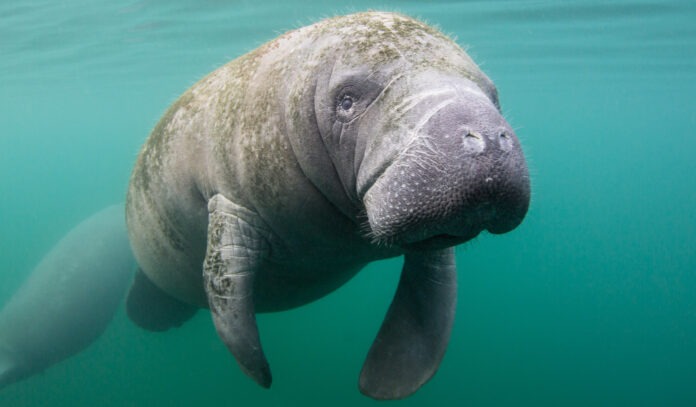
Just a short drive from Longboat Key, Bradenton’s Bishop Museum of Science and Nature is celebrating a major conservation victory this week.
Following months of intensive care, three manatees—Crane, Kyber, and Mandalore—have successfully completed their rehabilitation at the Parker Manatee Rehabilitation Habitat and returned to Florida’s winter waters.
Unique Journey to Recovery
While The Bishop typically serves as a “second-stage” rehabilitation facility—taking in manatees after they have been stabilized elsewhere—this trio’s recovery story is a bit different.
“Last winter, The Bishop was able to operate a temporary critical care facility through a grant from the Fish and Wildlife Conservation Commission,” said Virginia Edmonds, Director of Animal Care at The Bishop. “These three manatees were unique to The Bishop in that we performed both the critical care and the secondary rehabilitation for them, leading to their release today.”
All three manatees arrived severely underweight and in need of life-saving intervention. Thanks to the dedicated animal care team, they packed on hundreds of pounds before their respective releases:
• Crane: Arrived weighing 450 lbs. Released at the Apollo Beach Manatee Viewing Center at TECO on December 23, 2025, weighing a healthy 665 lbs and measuring 7.5 feet long.
• Kyber: Arrived weighing just 310 lbs. Released in King’s Spring off Crystal River on February 17, 2026, weighing 575 lbs and measuring 7 feet long.
• Mandalore: Arrived at 320 lbs. Released at Blue Springs in Orange City on February 18, 2026, weighing 645 lbs and measuring just over 7 feet in length.
The Science of the Release
Releasing a manatee is a highly coordinated effort that relies heavily on timing and geography. The Bishop’s Animal Care team worked closely with the Manatee Rescue and Rehabilitation Partnership (MRP), a consortium that includes local partners like Sarasota’s Mote Marine Laboratory, alongside the Florida Fish and Wildlife Conservation Commission (FWC), Clearwater Marine Aquarium Research Institute, and federal wildlife agencies.
Release sites are meticulously selected based on two main factors: proximity to the animal’s original rescue location and seasonal conditions. Because manatees are highly susceptible to cold stress in water temperatures below 68 degrees Fahrenheit, winter releases like these must occur at known warm-water refuges, such as natural springs or the outflow of power plants, to give them the strongest chance of survival.
What’s Next for The Bishop?
With Florida manatees continuing to face environmental threats ranging from boat strikes to red tide and habitat loss, the turnover at rehabilitation centers is constant. With the Parker Habitat’s pools now open, the museum is already preparing to welcome its next patients.
“It’s always a big day at The Bishop when we’re able to return manatees back to the wild,” said Andrew Sandall, Chief Executive Officer of The Bishop. “While we’ll miss Kyber, Mandalore, and Crane, we know that getting them back home means a job well done by our Animal Care team. We look forward to welcoming new manatees to Bradenton soon and playing a vital role in their rehabilitation.”

