
The National Academies of Sciences, Engineering, and Medicine is betting that the key to solving the Gulf Coast’s future environmental challenges isn’t just better technology—it’s better psychology.
The Gulf Research Program (GRP) has awarded Dr. Aly Busse, Associate Vice President of Education at Mote Marine Laboratory, a 2025-2027 Early-Career Research Fellowship. While typical fellowship announcements focus on the accolades, the grant itself signals a shift in how the scientific community views the future of the Gulf workforce: moving away from generic science education toward “Place-Based Education” (PBE).
Dr. Busse’s research over the next two years will test a critical hypothesis in educational data: that a student’s emotional and psychological attachment to their physical environment—their “sense of place”—is a primary variable in whether they stick with a career in science.
The Data Behind the Decision
The fellowship is rooted in a growing body of data suggesting that standard STEM (Science, Technology, Engineering, Math) curriculums are failing to retain students from underrepresented coastal communities because they present science as an abstract, placeless discipline.
Research published in journals like Frontiers in Education and Environmental Psychology indicates that “place attachment”—the emotional bond between a person and a specific setting—is a strong predictor of pro-environmental behavior and civic engagement. However, this metric is rarely quantified in standard educational assessments.
Dr. Busse’s work aims to fill this data gap. Her recent co-authored publications, including a 2024 study in Oceanography on inclusive marine STEM experiences, have already begun to track how localized, mentorship-driven research experiences can prevent “leakage” in the STEM pipeline. By formalizing this into a scalable framework, her new project aims to move anecdotal evidence into the realm of hard data.
Why the Gulf Needs “Place-Based” Scientists
The Gulf Research Program, born out of the Deepwater Horizon disaster settlement, has a vested interest in this specific psychological mechanic. The Gulf Coast faces existential threats ranging from intensifying hurricane seasons to complex offshore energy safety challenges.
The National Academies’ strategic goal is not just to create more scientists, but to create scientists from the Gulf who possess “local ecological knowledge.” The theory is that a workforce with a deep, identity-level connection to the region is more likely to innovate in ways that protect community resilience and environmental stewardship.
A Shift in Methodology
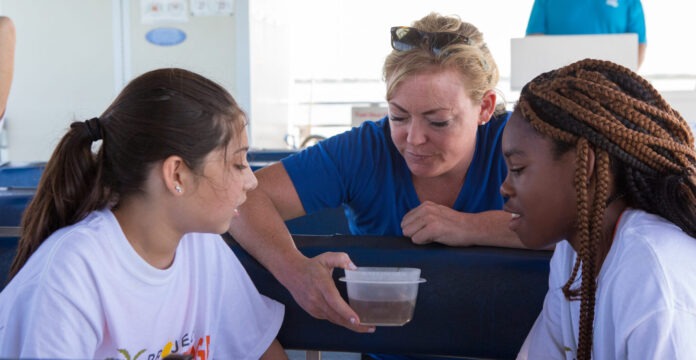
Dr. Busse’s project moves beyond the traditional “informal education” model (e.g., a one-time field trip to an aquarium). Instead, she will be examining long-term outcomes of “place-conscious” strategies—measuring if and how a student’s attachment to the Florida coastline correlates with their “science identity” and “self-efficacy” years down the road.
“We are moving from simply exposing students to science to analyzing how their relationship with their home environment dictates their professional persistence,” the project scope suggests.
If successful, Dr. Busse’s framework could provide the empirical evidence needed to overhaul how environmental science is taught across the Gulf, justifying a curriculum that prioritizes local field work over standardized textbook learning.

