
Outside the Rhône Valley, winemakers in the Provence region of Southern France frequently add one or more of five local white wines to red wine.
—Red grapes, such as Cabernet Sauvignon, make red wine; white grapes, such as Chardonnay, make white wine. This simple rule only holds true in one direction: white grapes make white wine. Red grapes make red wine, yet red grapes also make white wine. The Pinot Noir and Pinot Meunier red grapes make excellent white Champagne and sparkling wines. Almost all of the major types of red grapes are being used to make white wines at any one time somewhere across the globe.

—Do rosé grapes make rosé wines? This question frequently arises in wine tastings. No. The juice of crushed grapes comes out clear. In traditional winemaking, the color of a wine depends on the color of the grape skins and how long the skins soak in the juice after crushing. So white grapes make white wine. Red grapes make red, rosé, or white wine. The depth of the color of a wine depends on the depth of color in the skins and the length of time the winemakers leave the skins soaking in the juice.
—Soaking grape juice in the skins of the grapes extracts tannins into wine. These natural acids in a young wine taste like black tea left soaking in tea leaves. As a wine ages, the tannins “soften” and give the wine a taste and astringent mouth feel much like expresso, dark chocolate, spices, and tree nuts. These tastes and the contributions of tannins to the process of digesting proteins and fats help explain why diners pair red wine with savory meat and rich vegetable dishes.
—Some red grapes impart a heavy dose of tannins in wines. Many (though not all) wine drinkers find wines made from these grapes bitter and too astringent. Harsh tannins in wine present a problem for winemakers.
—Over generations, winemakers in regions producing highly tannic grapes have developed a simple solution for the harsh tannins problem. A longtime friend and fellow wine aficionado shared with us a perfect example of this 5-20% white wine solution. The Northern Rhône Côte-Rotie region restricts winemakers for the most part to the red Syrah grape for red wines; yet, due to the intense sunlight in the region during the autumn (the name of the region translates to “the roasting slope”), the rules of the appellation allow mixing of up to 20% of the local white grape, Viognier, into the Syrah after the initial crushing of the grapes. The mixing of the robust, tannic Syrah and the more mellow Viognier produces less tannic taste in younger wines. The 5-20% example, a 2020 Delas Côte-Rotie Seigneur de Maugrion ($120), combines aged, robust tannins with purple dark plum and cherry flavors. It enhances prime sirloin strip steaks from the grill, charred and rare. The Côte-Rotie makes a great alternative to a California Cabernet Sauvignon in the $200 range, or to an aged $300 Bordeaux.
—Other examples from the Rhône Valley include the Hermitage & Crozes-Hermitage. These appellations allow winemakers to blend up to 15% of white Marsanne and Roussanne with their red Syrah. (Winemakers adjust the percentage of white wine from vintage to vintage to fit the taste of the Syrah produced during that year.)
—Outside the Rhône Valley, winemakers in the Provence region of Southern France frequently add one or more of five local white wines to red wine. In the Italian region of Tuscany, the historic standard for the red Chianti wine included small quantities of white wine mixed with red Sangiovese grapes. Even Bordeaux, with perhaps the most rigid standards in France, has begun relaxing restrictions against adding of white to red wine in special cases.
In the USA, a bottle with a wine variety named on the bottle, say Syrah, must contain at least 75% of that variety. It may and often does contain up to 25% of other wines. Some winemakers list all of the other grapes. Many don’t. A favorite red wine may contain a lot of white wine.
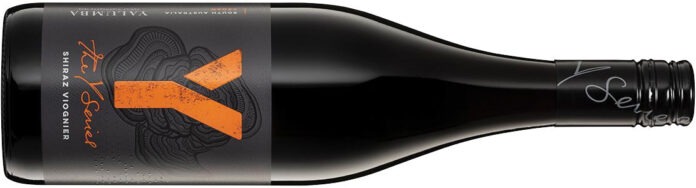
—From Southeastern Australia, a bargain 5-20% solution red wine, the 2021 Yolumba Shiraz-Viognier ($13) offers wine drinkers an easy introduction to the classic Côte-Rotie blend. We recommend it as a good starting point.
—S. W. Hermansen has used his expertise in econometrics, data science and epidemiology to help develop research databases for the Pentagon, the National Institutes of Health, the Department of Agriculture, and Health Resources and Services. He has visited premier vineyards and taste wines from major appellations in California, Oregon, New York State, and internationally from Tuscany and the Piedmont in Italy, the Ribera del Duero in Spain, the Barossa Valley and McLaren Vale in Australia, and the Otego Valley in New Zealand. Currently he splits time between residences in Chevy Chase, Maryland and St. Armand’s Circle in Florida.
—Rich Hermansen selected has first wine list for a restaurant shortly after graduating from college with a degree in Mathematics. He has extensive service and management experience in the food and wine industry. Family and friends rate him as their favorite chef, bartender, and wine steward. He lives in Severna Park, Maryland.

