
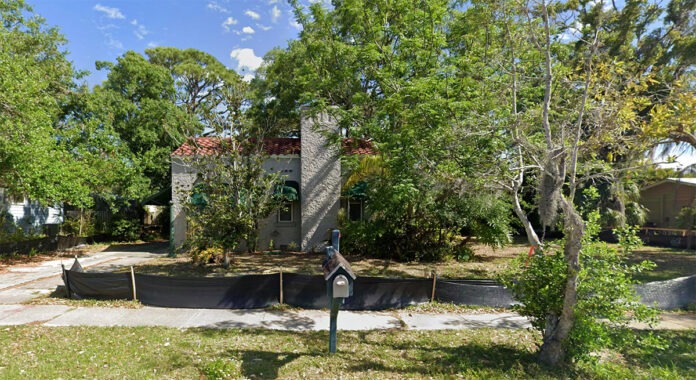
The 101-year-old bungalow that split Sarasota’s preservation board from its own planning staff is coming down. On September 8, the City Commission voted 3-1 to reverse the Historic Preservation Board’s denial and approve demolition of 1891 Wisteria Street, attaching a single condition: that salvageable materials be pulled from the house before the wrecking crew arrives. The requirement staff wanted most, a professional historical record of the home, was left on the cutting-room floor.
—The vote closes a fight Longboat Key News first chronicled in July, when the case looked less like a routine demolition appeal and more like a referendum on how Sarasota treats the dwindling remnants of its 1920s boom. It still does. Only now there is an answer, and it arrived over the objection of the mayor, who spent the better part of an hour cross-examining the owners like a prosecutor and ended the afternoon casting the lone vote to save the house.
“There are no teeth in historic preservation law,” Mayor Shelli Freeland Eddie’s successor on the dais, Mayor Debbie Trice, told the property owners near the end of the hearing. “Demolition by neglect is a common term. The most that we could do was slow down the efforts to demolish.”
—A smaller bench and a bigger record
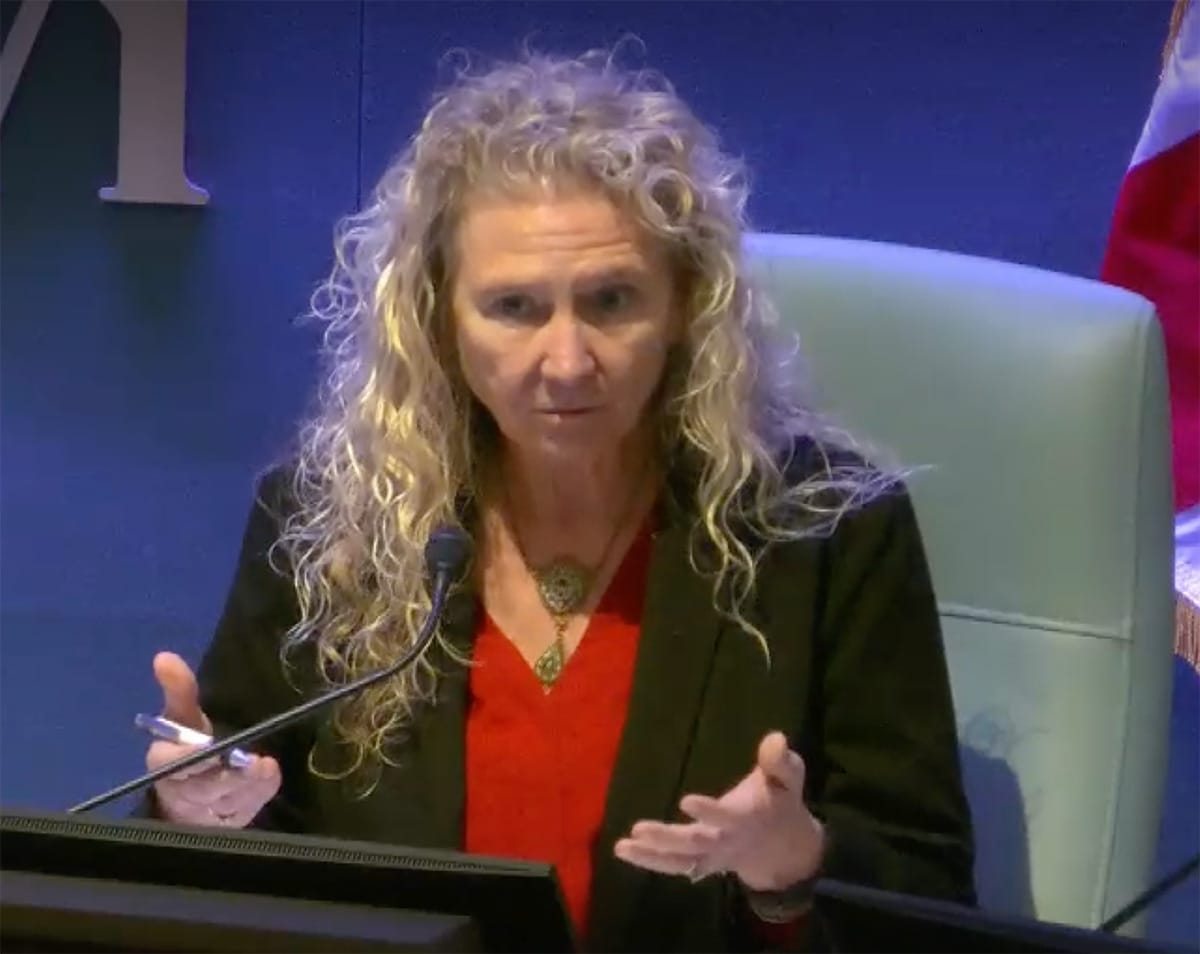
—The quasi-judicial hearing, originally set for July 20 and postponed to allow more engineering review, opened with a surprise: Commissioner Jen Ahearn-Koch, historically the commission’s most reliable preservation vote, recused herself and left the dais.
“I have a voting conflict and it does not allow me to be objective or neutral,” Ahearn-Koch said, without specifying the nature of the conflict. She will file a state Form 8B, the memorandum of voting conflict, with the meeting minutes. That left four commissioners to decide the fate of the house, and it meant the appeal needed three of them.
—The record before those four was substantially fatter than the one the Historic Preservation Board saw when it denied the demolition 4-1 in March. Back then, the only engineering opinion came from Renato A. Carotti, P.E., whose report described a structure so deteriorated that more than half its structural components required repair. Since the board’s denial, attorney Amy Concilio of Williams Parker, representing owners Dolphin Splash Club 2, LLC and Drs. Thomas and Jaclyn Kelly, layered on a second engineering report from KARINS Engineering, an $826,379 rehabilitation budget from Clark Horne Construction, a letter from house mover Davie Shoring declining the relocation job, and a salvage assessment from Sarasota Architectural Salvage.
“What you have in front of you today is not simply a request to overrule the board based upon the same record,” Concilio told the commission. “You have a substantially fuller record, one that independently confirms everything from the prior hearing.”

—Four questions, one word
—As in March, the case turned on the four-question “reasonableness” test articulated in 2024 by then-City Attorney Robert Fournier for structures that are listed on the Florida Master Site File but never formally designated historic: Can the owner reasonably preserve the house on site? Is a sale to a preservation-minded buyer reasonable? Is relocation reasonable? And if all three answers are no, what mitigation should be required?
“Every question includes the word reasonable,” Concilio said. “You’re not tasked with determining whether it’s possible to save the structure or impossible not to. This is just simply to see if it’s reasonable to do so.”
—Her arithmetic was blunt. The rehabilitation estimate exceeds $826,000. The Sarasota County Property Appraiser values the buildings on the lot at $173,000. “To put $800,000 into a $173,000 building, I think, would be the definition of unreasonable,” she said.
—Mike Valentine of KARINS Engineering, a 30-year industry veteran licensed in Florida and roughly ten other states, walked the commission through his firm’s July inspection: no continuous load path from roof to foundation, missing uplift connectors, long-term moisture intrusion, a bottle jack propping up a beam in the crawl space. “It’s my opinion this house is susceptible to structural failure if a significant wind event occurs,” he said. As for moving it: “The house in its current condition would not be stable enough to move and would risk collapse.”
—Valentine added a caution that cut both ways. Asked whether the $826,000 figure was solid, he noted his team never opened the walls. “The $800,000 or whatever that’s quoted probably will be more,” he said. “We can only see what we can see.”
—On the question of selling to someone who would restore it, Concilio was unapologetic: the Kellys never marketed the property and never intended to. “The applicants do not want to sell their property,” she said, “and we don’t believe the code requires them to do so simply because there is an old structure on the property.”
—The mayor plays prosecutor
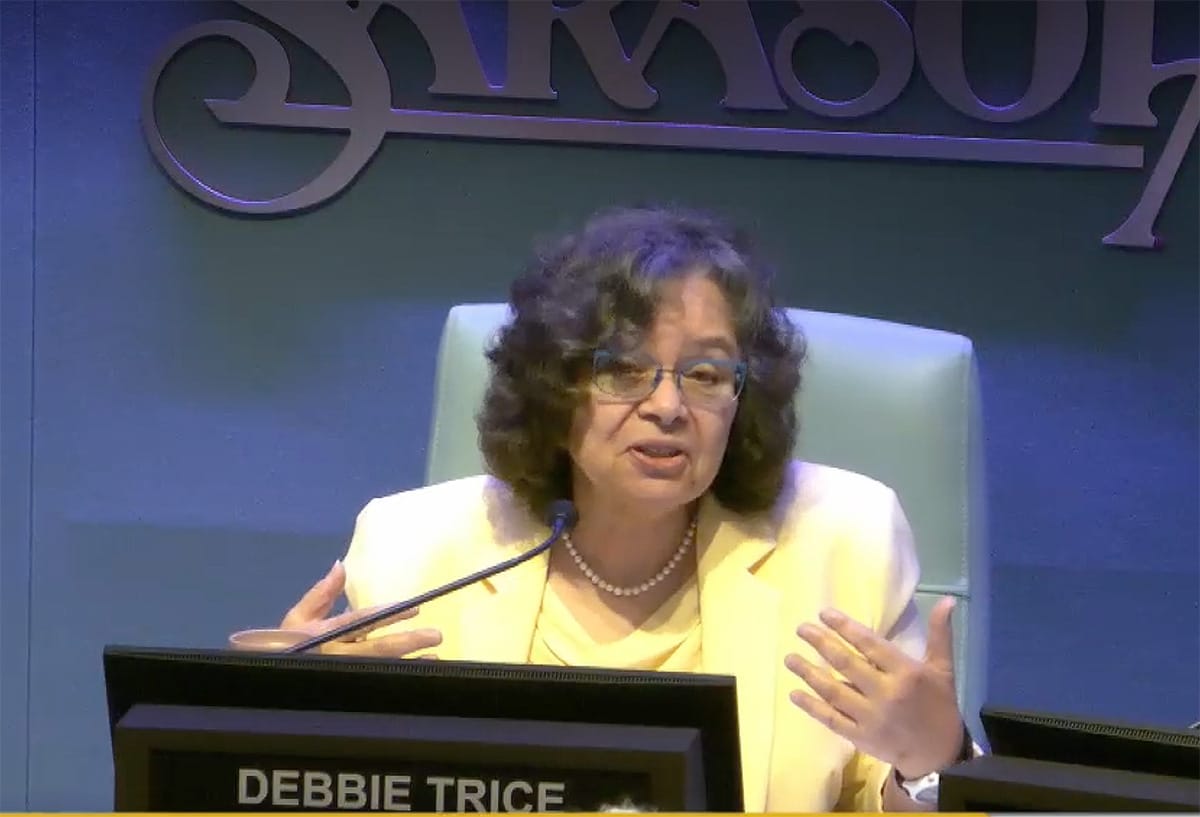
—Trice was not persuaded, and she went straight past the lawyer to the owners themselves. Under her questioning, the Kellys, who live a short walk away on Blue Heron Drive, laid out a timeline that became the emotional center of the hearing. They bought the house in 2014 as a rental and a future landing spot for one of their four children. It stayed rented, and by their own account in good condition, until November 2025, when the tenants left and the couple pulled a demolition permit.
“What work did you have done to prevent the deterioration that happened between the time that the renters left and today?” Trice asked.
“Very little, because we thought we were in the process of having a demolition,” came the answer. “But the historical society intervened.”
—Trice pounced. A neighbor had testified the windows were left open in an unair-conditioned Florida house, she noted, a recipe for exactly the moisture, mold and vegetation documented in the engineering reports. “Some people refer to that as demolition by neglect,” she said. And of the owners’ failure to contact the Sarasota Alliance for Historic Preservation, the organization she said could have found a buyer or produced a historical report at reduced cost: “If the intent, as you say, from a year ago was to demolish the house, yeah, you took all the right actions to prevent anybody who was interested in preserving it from preserving it.”
—Thomas Kelly pushed back. “We had no intention of demolition by neglect,” he said. “The neglect is what we were led to by not being authorized. Neglect is what happened.”
“Well, the owner didn’t maintain it adequately,” Trice replied.
“We didn’t intend to.”
“So, Catch-22.”
—Property rights push back
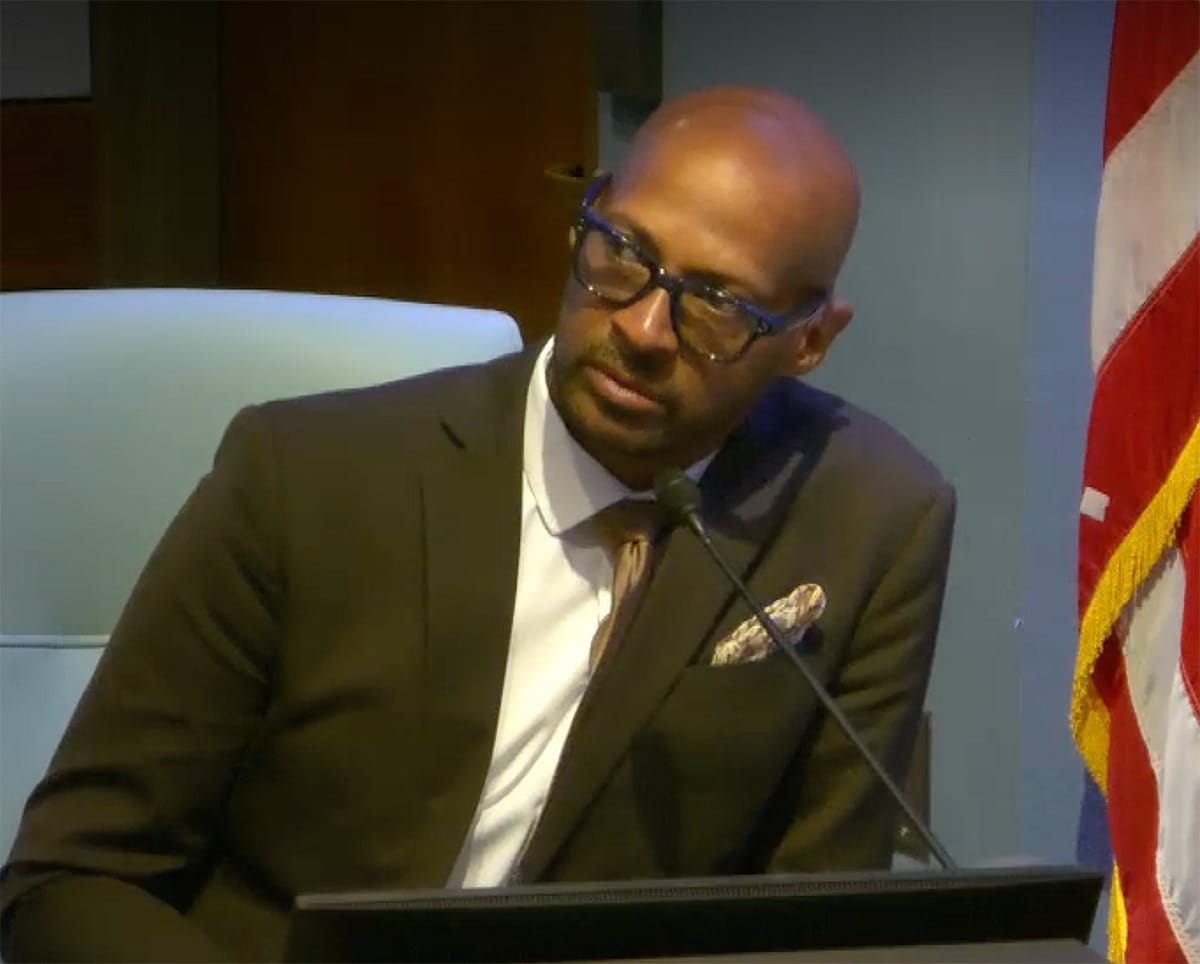
—If Trice supplied the hearing’s prosecution, Commissioner Kyle Battie supplied its property-rights counterweight, widening the lens from one bungalow to what he called a citywide problem: homeowners who discover, only when they want to renovate, that any structure flagged as eligible for designation must clear the Historic Preservation Board first.
“People don’t even know that the house they’re living in, with their property rights, should they want to do something with it, they have to go before the Historic Preservation Board,” Battie said. “That’s the problem that we have here in the city.” He noted he lives in an old fishermen’s village on Whitaker Bayou himself: “Heaven forbid I want to do something with my house.”
—Battie also invoked the Rosemary District, the historically Black neighborhood once known as Overtown, arguing that Sarasota’s most celebrated redevelopment happened precisely because not everything was preserved. Trice countered with a Rosemary building reduced to bare walls and restored at a cost of several million dollars, now “financially sustainable and part of Sarasota tourism.” Battie, who sits on the district’s board, respectfully disagreed: the one residential structure worth saving there was moved to Newtown, and the restored buildings around it are all commercial now.
—Commissioner Liz Alpert, who made the motion to approve the demolition, framed her vote as a simple application of the standard. “Just because something can be doesn’t mean it’s reasonable,” she said. “Anything can be with an unlimited budget, but does that meet the definition of reasonable? Not necessarily.”
—Vice Mayor Ohlrich spent much of the hearing probing the deferred-maintenance question, reading back both engineers’ own language about “a lack of timely, adequate maintenance to combat progressive decline.” But when it came time to vote, she noted the record contained both the $826,000-plus restoration estimate and a new-construction price exceeding $1 million, and concluded the four criteria were met. “We can’t go back in time and restore a house that used to exist some years ago to its prime condition,” she said.
—The neighbor behind the back fence
—Karen Pariser of Clematis Street, whose property backs directly onto the Wisteria lot, was granted affected-party status and gave the only public testimony, wearing what she described as two hats: worried rear neighbor and neighborhood association officer.
“We feel very concerned that we may be losing some of our charming antique structures, which we thought could be maintained with additions, modernizations, in keeping with the scale and the beauty of our centennial neighborhood,” she said.
—Pariser said her association, with an active newsletter and a website read across Sarasota, was never contacted about finding a preservation buyer. “This is the first I’ve heard that nobody was interested in looking at the property,” she said. “That’s a little disconcerting.”
—She also raised the replacement house itself, a roughly 6,100-gross-square-foot, two-story Neal Signature Homes design that would rise about 20 to 30 feet from her rear neighbors’ property lines, and warned about stormwater runoff from the added hardscape. Concilio’s rebuttal was procedural: the new home is not before the commission, and it will face the same permitting rules as anyone else’s.
—What the city asked for, and what it got
—Historic Preservation Senior Planner Susan Dodd, whose August staff memo concluded restoration would be “economically not-reasonable,” asked the commission for two conditions if it approved the appeal: a binding commitment to salvage historic materials, and a professionally prepared Historic Structure Report documenting the house’s history and architecture “so that we may retain a record of what will be lost.”
—The house at 1891 Wisteria is one of only five remaining homes built circa 1925 by the boom-era firm of Logan and Currin on that stretch of Wisteria Street, and the neighborhood has already lost two others in the last decade.
—The commission took half of staff’s request. Alpert’s motion required salvage, whether by Jesse White’s Sarasota Architectural Salvage or another firm of the owners’ choosing. She briefly floated a commemorative marker, then withdrew it after being reminded a Logan and Currin marker already stands at South Osprey Avenue and Hibiscus Street. And when the city’s counsel asked directly whether the Historic Structure Report, which Concilio had protested could cost $5,000 to $10,000, was a condition of the motion, Alpert’s answer was two words: “It is not.”
—The roll call came at 4:19 p.m.: Alpert, Battie and Ohlrich yes, Trice no.
—The precedent on the block
—Trice used her final comments to reject the majority’s reading of all four criteria. A preservation-minded owner would find restoration expensive but achievable, she argued, and a buyer would have materialized had anyone been allowed to look. “There are people who would have purchased it even with close to $900,000 to rehab it,” she said. As for the salvage condition the majority settled on: “The little bits and pieces that can be retrieved from the house that may still exist after 100 years are really not adequate mitigation.”
—The owners already hold their demolition, tree removal, new construction and right-of-way permits, all filed within weeks of the tenants’ departure last year. What comes next on the lot is a contemporary home priced from roughly $1.1 million, on a street where a century-old bungalow just tested the strength of Sarasota’s preservation rules and found, in the mayor’s words, that they have no teeth.
—The doors, the oak floors, the crystal knobs and the iron rails may yet find new homes. The house will not.

