
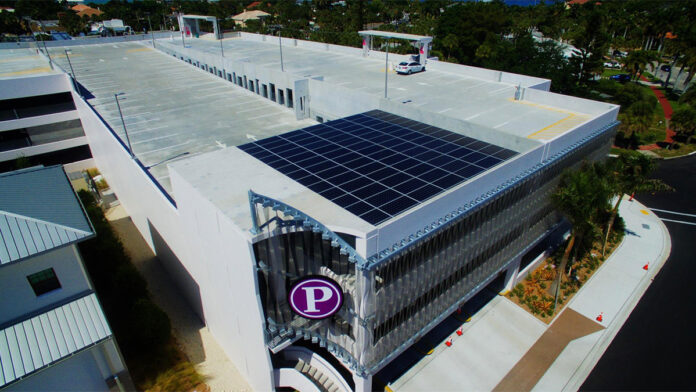
The city says purchasing spaces in the St. Armands garage would violate the parking bond. The developer’s new plans count 11 of those spaces anyway. On Wednesday, the City Attorney sits down with the Shore team to decide whether a lease can thread the needle, and the meeting arrives at the precise moment Sarasota’s parking program is at its weakest.
—The most consequential parking negotiation in Sarasota this year will not happen in a public hearing. According to Kimley-Horn’s Sept. 14 response to the city’s development review comments, a meeting between the City Attorney, the city’s interim parking manager, the applicant and the applicant’s consultant team is scheduled for Wednesday, Sept. 23. On the table: whether the Shore redevelopment at 24 and 28 N. Boulevard of the Presidents can lease 11 spaces inside the St. Armands public parking garage, the most contested structure in the city, to satisfy a zoning requirement its own third of an acre cannot meet.
—Strip away the engineering language and the situation is stark. The project, by its own revised arithmetic, requires 17 off-street parking spaces. The site provides 13. The plans close the gap by reaching into the public realm twice, first for seven metered on-street spaces along the project’s frontage, then for 11 spaces inside a garage that was financed with public bonds, is sustained by a special assessment on St. Armands businesses, and sits at the center of the ugliest municipal fight Sarasota has had in years.
—The city’s Planning Department has already ruled out the simplest version of the deal. In her written comments, Chief Planner Briana Dobbs states that the purchase of spaces in the St. Armands Parking Garage and District “is not allowed and would be in violation of the parking bond,” adding that “a parking agreement in the form of a lease would be the only potential option.” An off-site parking agreement, she notes separately, is required, with additional information forthcoming.
—Wednesday is where that information starts to take shape.
—The Meeting That Decides the Math
—The Development Review Committee told the applicant in July that staff were still researching whether garage spaces could be used at all, and that if they could not, “additional parking spaces will be required.” Kimley-Horn’s answer, delivered in the resubmittal, was a calendar entry: the September 23rd meeting with the City Attorney and the interim parking manager.
—Two details in that single sentence deserve attention. The first is who convenes it. When a development application’s parking solution requires the City Attorney personally at the table, the question has stopped being a planning matter and become a legal one, because the obstacle is not a design standard but a bond covenant. The second is the phrase “interim parking manager.” The permanent job has been vacant since Parking General Manager Broxton Harvey resigned in July, at the height of the public revolt over extended paid-parking hours. The person negotiating the future of the city’s most contested parking asset holds the title on a temporary basis, for a division whose very existence the City Commission has signaled it will reconsider after the November election.
—This is not a public hearing. There is no agenda item, no citizen input, no vote. It is a negotiation, and its outcome will surface later, folded into the next round of development review paperwork as either a lease framework or a dead end.

—What the Code Requires and Why Shore Is Short
—The parking requirement itself has been a moving target. The original submittal claimed a net commercial increase of 2,264 square feet, which staff recalculated in July at 1,904. The September resubmittal now puts the net increase at 5,242 square feet, the difference between 20,644 square feet of proposed commercial space and 15,402 existing. At the code’s ratio of one space per 350 square feet of expansion, that yields 15 required commercial spaces, plus two for the third-floor residence, for a total of 17.
—The site itself offers 13: eleven surface spaces off the rear alley and two for the residence. Nothing about a 0.33-acre parcel already asked to hold a restaurant, a café, retail, a rooftop residence and a pool leaves room for more. So the plans assemble the rest from the public inventory. The site data table lists seven on-street spaces and 11 spaces of “shared garage parking,” with a footnote acknowledging that “discussions are in progress with City of Sarasota staff regarding the leasing of parking spaces located within the St. Armands parking garage.” The tally the applicant presents to reviewers, 31 spaces provided, is built on 18 spaces the applicant does not control, has not secured, and in the garage’s case, may not legally be able to obtain.
—Worth noting: when this project was filed in June, the ask was to purchase eight garage spaces. After two months of scrutiny and a recalculated square footage, the ask did not shrink. It grew to 11, and changed from a purchase to a lease.
—The Map Redraws the Public Curb
—The revised site plan makes the reach into the public realm literal. To fit the project’s frontage improvements, the drawings relocate the City of Sarasota parking sign on Boulevard of the Presidents and relocate two of the city’s parking pay stations, the same machines that became flashpoints of the paid-parking backlash this summer. The plan’s signage legend specifies new “pay to park” and “pay here” signs, a “no parking here to the corner” sign, and, in a detail that will matter later in this package, a “no truck” sign.
—None of this is improper on its face. Frontage work routinely shifts street furniture. But the image is hard to unsee: a private development that cannot meet its own parking requirement is redrawing the paid public curb around itself, counting the city’s metered spaces toward its total, and asking to lease a block of the public garage besides.
—Purchase Is Illegal. The Lease Is the Loophole.
—Dobbs’s comment is the strongest written statement yet of a principle this newspaper first traced in June: the garage and its district are encumbered by bond covenants that restrict what the city can do with its paid public parking. Readers will recall this is the same legal wall that killed the Fillmore lot scheme, the 2021 proposal for a 98-room hotel and gourmet market on the city-owned Fillmore parking lot, which collapsed when it emerged that the bond covenants prohibited eliminating the lot’s paid spaces. The residents’ association’s records place an owner of Shore among the developers behind that earlier effort. The soft public asset that Circle projects reach for when their numbers fail has now been reached for again, by a familiar hand, and the city’s planners have again pointed to the bond.
—But this time staff left a door ajar. A lease, Dobbs writes, is “the only potential option.” Whether a long-term private lease of 11 spaces in a bond-financed public garage is genuinely distinguishable from the sale the covenant forbids, and on what terms, at what rate, for what duration, with what happens when the bonds become callable, is precisely the question that lands in front of the City Attorney on Wednesday.
—A Suitor Arrives at the Worst Possible Moment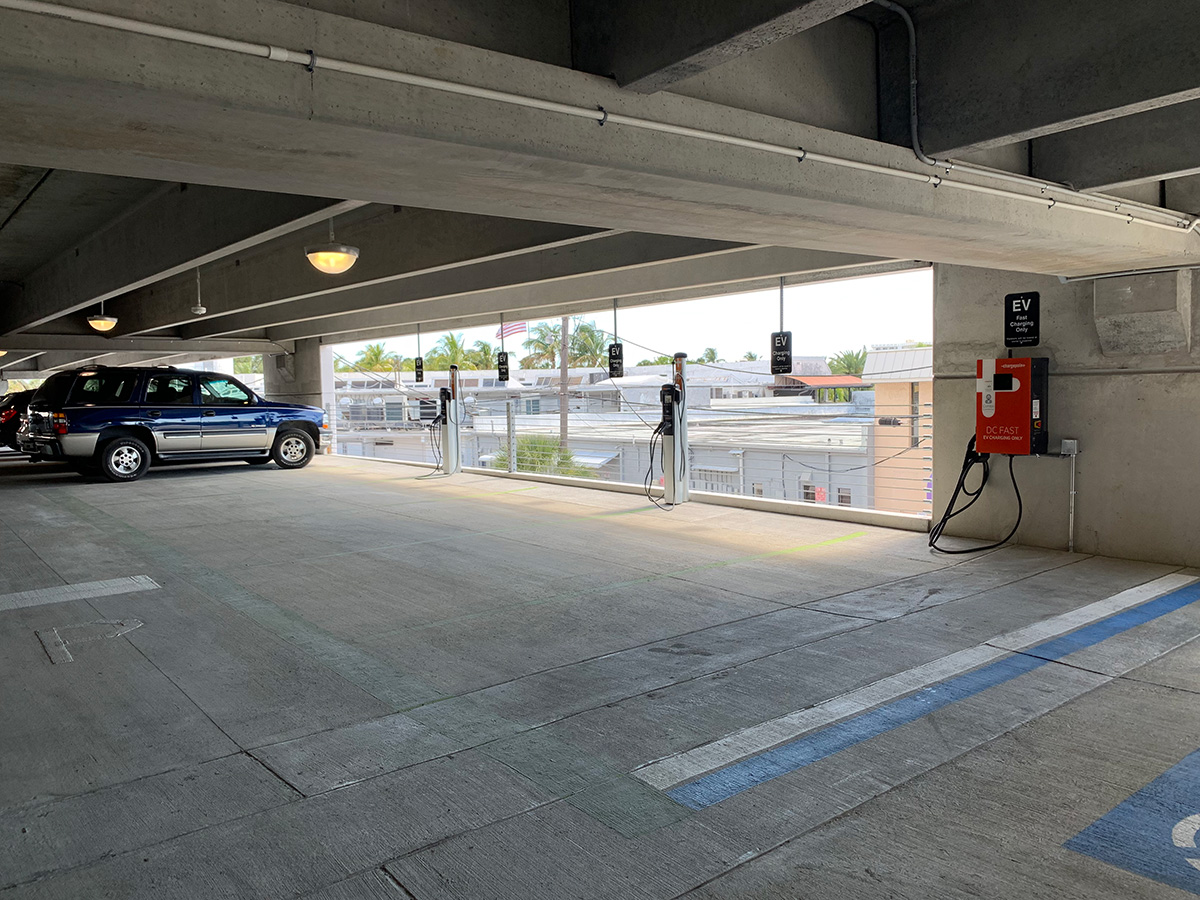
—Here is the context that turns a routine parking agreement into something more uncomfortable, and it is the context this newspaper has spent all summer documenting.
—Sarasota’s parking program is in open crisis. The extended paid-parking hours that took effect June 29 triggered a citizen revolt that filled two commission meetings, produced a 124-signature petition, cost a small business its lease, and preceded the resignation of the parking general manager. On Aug. 3 the commission voted 5-0 to suspend enforcement of the extended hours, salvaging only the increased fines on a 3-2 amendment. The division faces a multimillion-dollar shortfall, the workshop on Aug. 31 laid out who-pays options ranging from rate hikes to a special district, and the commission has effectively punted the Parking Division’s future past the Nov. 3 election. In September, a parking enforcement officer was assaulted on St. Armands two days after the city manager publicly pleaded for calm.
—And beneath all of it sits the garage: 13.6 million dollars in 2017 bonds, an annual special assessment of up to $270,692 quietly adopted on this month’s consent agenda and spread across 71 St. Armands parcels, and a standing proposal from resident Katherine Hermes that the city simply sell the structure when the bonds become callable on Oct. 1, 2027.
—Into that wreckage walks a developer offering to lease 11 spaces, which is to say, offering the one thing the parking program desperately lacks: reliable recurring revenue. There is something almost poignant in the courtship. The garage has spent a decade as the structure nobody quite wanted, built on a shortage study, blamed for killing the surface spaces shoppers actually used, and now billed to the merchants around it. It is the wallflower of Sarasota’s municipal assets, and the first suitor to arrive with a steady offer is a developer who needs the garage’s hand in marriage to make his own project legal. A city negotiating from financial desperation is a city negotiating badly, and everyone on the applicant’s side of Wednesday’s table knows the balance sheet of the party across from them, because this newspaper and every commission meeting since June has published it.
—Add one more layer. The consulting firm sitting on the applicant’s side of that table is Kimley-Horn, the same firm whose 2014 St. Armands Parking Feasibility Study, with its 320-space deficit figure and its $751,000 revenue projection, supplied the justification for building the garage in the first place. The firm that told the city St. Armands needed a garage now represents a private client seeking to lease that garage’s spaces. Justify a garage on shortage; lease it out on surplus. The circle closes neatly, and the public paid for every arc of it.
—The Template Question
—The Shore parcels, it should be said in fairness, already appear on the garage’s assessment roll, meaning the property is among those billed annually for the garage’s debt. The applicant can argue, with a straight face, that a business paying for the garage ought to be able to lease space in it, that the garage is underused, and that a lease converts idle inventory into revenue for a program drowning in red ink. Tom Leonard is a proven operator rebuilding a corner that has sat gutted since 2024, and nobody serious wants it to stay that way.
—But the assessment funds debt service on a public amenity; it does not reserve inventory for the payer’s private entitlement math. And the precedent mechanism that St. Armands Residents Association president Chris Goglia has warned about on every other front of this project applies with full force here. If one undersized redevelopment can satisfy its code-required parking by leasing a block of the public garage, every flood-damaged, under-parked commercial parcel on the Circle acquires the same argument, and the garage stops being public parking and becomes an entitlement bank, its spaces committed one development application at a time. That is the future this newspaper has warned against since tracing the garage’s origins in August: a structure justified by a claimed public shortage, gradually converted to private use, with residents and visitors the consistent losers.
—What to Watch
—The questions Wednesday’s meeting must answer, and which the public deserves to see answered on the record rather than in a resubmittal footnote, are concrete. What rate would Shore pay per space, and how does it compare to what the assessment-paying merchants and the parking public effectively pay? For what term, and does the lease survive a refunding, a restructuring, or a sale of the garage after the bonds become callable in 2027? Are the 11 spaces reserved and exclusive, removing them from public use during the hours the Circle is most crowded? And does the City Attorney’s reading of the bond covenant treat a multi-year exclusive lease as meaningfully different from the purchase the covenant forbids?
—If the lease framework holds, the Shore project clears its largest single obstacle and moves toward the Planning Board. If it does not, the July comment letter already spelled out the alternative in nine words: additional parking spaces will be required. On a third of an acre, there are none. The project’s fate, in other words, now runs directly through the garage at the center of the city’s parking war, and the two stories Sarasota has been living separately all summer, a beloved restaurant’s return and a parking program’s collapse, meet in a conference room on Wednesday morning.
—A companion analysis of the full Kimley-Horn resubmittal, including the eight-bedroom “single-family home,” the height measurement the city ordered fixed and the applicant refused to fix, and the loading zone that vanished by email, appears separately.

