
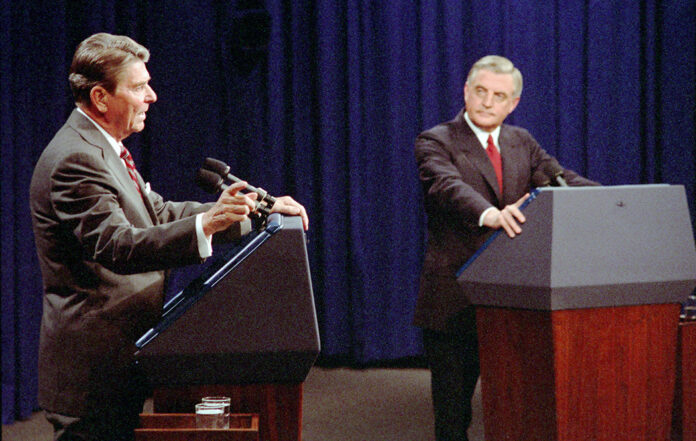
A lesson from the Gipper: never answer the question you were asked, and never send over the ball your opponent wants.
—Who would’ve thought the Gipper would turn out to be a tennis instructor?
—There’s a famous piece of Washington wisdom I’d have sworn came from Ronald Reagan, a man now revered as though the Park Service is quietly measuring a spot for him on Mount Rushmore: never answer the question you were asked. Answer the one that should have been asked.

—It turns out the line belongs to Robert McNamara, the former Defense secretary, who offered it with a smile in the documentary The Fog of War. But nobody ever played it better than the Gipper. McNamara is simply too dark a figure for the role.
—He was the numbers man of Vietnam, the fellow who tried to measure a war in body counts and spreadsheets. On a tennis court, true to form, he’d be the guy who loses 6-0, 6-0, waves the stat sheet around insisting he was ahead on points, and swears with great enthusiasm that he could have won if only his hands hadn’t been tied.
—Reagan, on the other hand, made you enjoy losing the point.
—The Gipper’s Drop Shot
—Exhibit A is the second 1984 presidential debate. Reagan was 73 and coming off a shaky first debate when a reporter asked, in effect, whether he was too old to handle a crisis. Reagan gave that question three words. Then he answered a better one, promising he would not exploit, for political purposes, his opponent’s youth and inexperience. The hall roared. Even Walter Mondale laughed. (Mondale was 56.) About two weeks later, Reagan carried 49 states.
—In essence, he was an interview disruptor. The reporter served one way, Reagan hit it the other, and everybody ended up playing his game. A man with that approach could have taught tennis at the Longboat Key Club, and he’d have been booked solid through season.
—Which Brings Me to Tennis
—Strip away the white shorts and the polite applause, and tennis is two grown adults standing 78 feet apart trying to make each other miserable with a fuzzy yellow ball.
—Nobody puts that on the club brochure. It’s my favorite part.
—Look One Way, Hit the Other
—Part of the beauty of tennis is you get to be the disruptor. The trickster. You look one way and hit the other. You serve left, move them over, then go down the T. You hit the hard ball to the baseline, at their feet, then follow with a drop shot that lands softly and refuses to leave, like a houseguest in February.
—Anything But a Warm Feeling
—You want to cause pain. Not real pain. Tennis pain, which is mostly a quiet internal scream behind a visor. You want to cause anything but a warm feeling, the one your opponent gets when he sees an easy, familiar ball coming, one he’s met at a cocktail party, and settles in to hit it with a smile.
—No smiles. Not on your watch.
—Read the Patterns
—This gets especially fun once you start noticing patterns. Even my dog Bandit has them, and he has never once returned a ball in the direction it came from, making him the most disruptive player in Sarasota County.
—Does your opponent love settling into a rhythm at the baseline, like a metronome with a club membership? That person is ripe for a varied game. Short balls. Lobs. Slices. Feed him a steady diet of things he didn’t order.
—Is he a net player, rushing forward like a man who heard there’s free shrimp at the net? Obviously he’s a candidate for long baseline rallies. Keep him back there. Charge him rent.
—The Gospel According to Gilbert
—None of this is new. Brad Gilbert, who won 20 tour titles with strokes nobody would hang in a museum, wrote the bible on it: Winning Ugly. Scout the other player before the warm-up, figure out what he wants to do, then refuse to let him do it.
—Why I Love Carlos
—That’s why I love Carlos Alcaraz. He has so many tools he should be licensed as a general contractor. He can go ground stroke to ground stroke with grinders like Daniil Medvedev or Andrey Rublev, or take out a fellow trickster like Alexander Bublik.
—Alcaraz has explained that the secret of his drop shot is the shot before it: hit hard enough to push the other guy back a few steps, then make the drop. That’s my theory exactly, now endorsed by a seven-time Grand Slam champion, or so I choose to believe.
—Medvedev and the Parking Lot
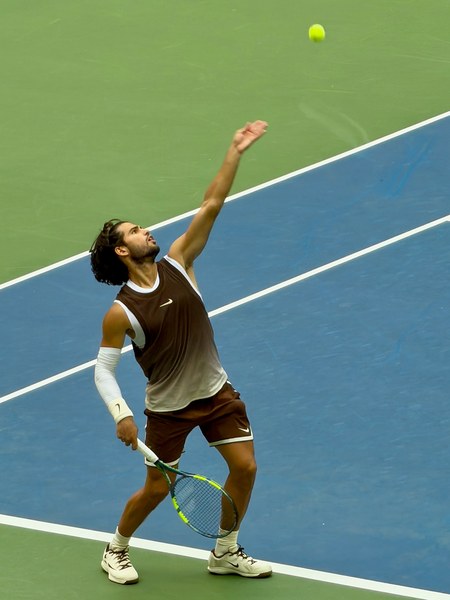
—Medvedev returns serve from so far behind the baseline he should be issued a parking pass. In the 2023 Indian Wells final, Alcaraz served and volleyed 10 times, won nine of those points, and won seven of his 11 drop shots. Medvedev collected five games and was home in time for dinner.
—The best part: Medvedev later recalled that the next week in Miami, everybody tried to drop shot him, and nobody did it the same way. After Alcaraz arrived, the tour hit more forehand drop shots, and its winning percentage on them fell, from 52.4 percent to 48.2. Everybody copied the trick. Nobody copied the hands.
—In November at the ATP Finals in Turin, Alcaraz beat him again, 6-2, 6-4, without facing a break point.
—Trickster vs. Trickster
—Bublik is the tour’s resident magician, a man who once hit seven underarm serves in a single game at Eastbourne. Playing him is like returning serve against a card trick. In their first-ever meeting, in April at Monte Carlo, Alcaraz beat him 6-3, 6-0. Turns out the cure for a trickster is a guy with more tricks.
—The Match I’ll Never Get to See
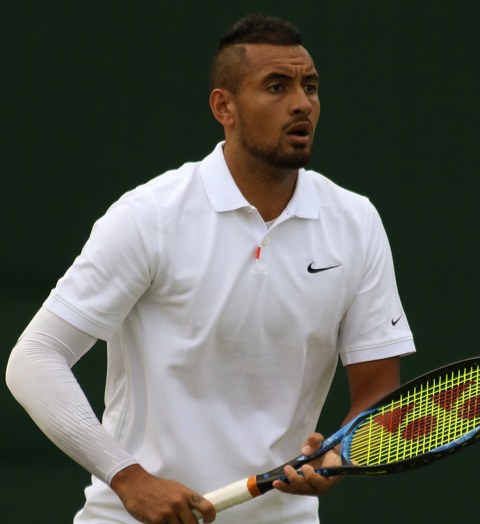
—I wish Alcaraz could have played Nick Kyrgios at his best. That was 2022, when the Australian reached the Wimbledon final and knocked out Medvedev, the defending champion and top seed, at the US Open. Kyrgios had the underarm serve, the tweener and a running dialogue with his own player box. He has admitted some trick shots came less from strategy than boredom.
—The two never met on tour. I think Kyrgios would have started off arrogant and then unraveled, like a soufflé arguing with the oven, and it would have been beautiful to watch.
—Taming the Bomb Droppers
—A couple of points on strong baseline players, the ones who lock down and refuse to miss.
—Sometimes they just relish big topspin and keep landing bombs. Rublev is the pro model, with a flat, early forehand he hits like it owes him money. When Rublev’s big stuff isn’t clicking, analysts note, he has little else to change the rhythm. Take away the rhythm and you’ve taken away the plan.
—Other times they’re slicers who love pace and work off yours like a remora on a shark. Hit hard to them and you’re doing their cardio. Give them slow, loopy, awkward balls and make them supply their own electricity.
—The Rule
—The main thing I’ve found: never play their game. Be the disruptor. If they like rhythm, break it up with slices, lobs, topspin, flat shots, anything but letting them settle into their zone.
—The Rule in Reverse
—Same thing if you draw the disruptive player: insist on rhythm. Big, strong technique strokes, deep and heavy, over and over. The trickster needs you to bite. Michael Chang famously underarmed Ivan Lendl at the 1989 French Open, and it rattled Lendl. Don’t be Lendl.
—Game, Set, Mischief
—Tennis is the only sport where you can dress like a Wimbledon gentleman and play like a pickpocket. Look left, hit right. And never send over that warm, familiar, easy ball.
—That’s not tennis. That’s charity. And on Longboat Key, we save that for gala season.

