
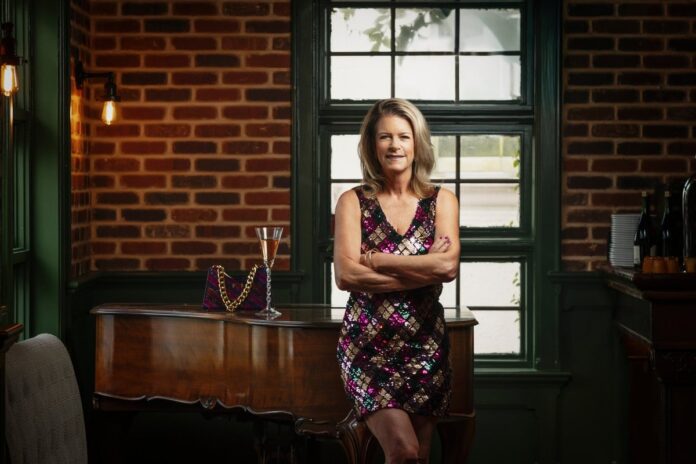
She saved a Myakka ranch, backed coral reef science and grew a pro tennis tournament. Now Elizabeth Moore is reopening Rose & Ivy, the ivy-draped 1925 landmark beside the Sarasota Opera House, with Japanese flavors, French technique and a century of First Street lore. Doors open to the public Tuesday, Nov. 10.
—Elizabeth Moore has a habit of saving things.
—A 1,143-acre cattle ranch on the Myakka River that might otherwise have been carved into subdivisions. The coral reefs of the Florida Keys, through a research center that bears her name. A professional tennis tournament she has backed, grown and moved to a bigger stage. And now Rose & Ivy, the restaurant that fills a two-story, ivy-covered 1925 building at the corner of First Street and Pineapple Avenue, right next door to the Sarasota Opera House.
—The building has been hiding in plain sight for most of a century. It wears its ivy like an opera cloak, so thickly that people strolling to the Opera House tend to assume it belongs to the theater. It doesn’t. It has its own address, 1296 First Street, its own hundred years of stories, and a talent for reinvention that rivals anything performed on the stage next door.
—Over the summer, the windows went dark again, which on this corner usually means one thing. Downtown regulars have watched a long parade of bars and restaurants come and go here: a pub, a jazz room, a chophouse or two, a sushi lounge, a steak-and-sushi supper club. This time a sign in the glass hinted at something different. It promised a refresh and, borrowing a little vocabulary from the software business, a sequel: Rose & Ivy 2.0.
—The sequel opens to the public Tuesday, Nov. 10, and it may be the most ambitious item on Moore’s very long list: a 101-year-old building, a chef who cooks Japanese flavors with French technique, a Las Vegas cocktail man behind the bar, and the Sarasota Opera House on the other side of the wall.
—Ranch, Reef, Racquet and Restaurant
—Moore is something of a whirlwind in Sarasota, and a restaurant is only the newest of her domains. Laid end to end, they describe an unusually wide orbit: a working cattle ranch, a professional tennis tournament, two downtown restaurants and a philanthropic portfolio that runs from forest canopies to coral reefs.
—Look closely and the holdings share a logic. Each is something worth keeping that she has kept alive by making it work. The ranch still runs cattle. The tournament got a bigger purse and a bigger stage. The century-old building gets a new kitchen, a new bar and a new reason to be full on a Tuesday. Preservation, in Moore’s hands, is less a museum than a business plan.
—Saving Triangle Ranch
—Start in the east. In 2016, Moore bought Triangle Ranch, 1,143 acres of pasture, hammock and wetland in Myakka City, just north of Myakka River State Park, where three miles of the Myakka River wind beneath live oaks and cabbage palms. The land had been in one pioneer ranching family’s hands for more than a century, and it was exactly the sort of place that, in the fast-filling country east of Interstate 75, tends to end up as rooftops. Moore saw to it that it would not. Working with the Conservation Foundation of the Gulf Coast and the Southwest Florida Water Management District, she placed the vast majority of the ranch under a perpetual conservation easement, protecting a watershed and a habitat used by more than 120 species, from the endangered Florida panther to the crested caracara.
—Then she did something conservation buyers rarely bother to do. She kept it a working ranch. There are cattle on Triangle Ranch, including a small herd of longhorned Florida Cracker cattle, the heritage breed descended from animals Spanish explorers brought ashore in the 1500s. Her ranch manager has pointed out that the longhorns don’t make any money. Moore keeps them anyway, out of plain affection and a regard for Florida history. She even moved a 1936 Cracker cottage from Siesta Key onto the property, in three pieces, and named it Little Siesta.
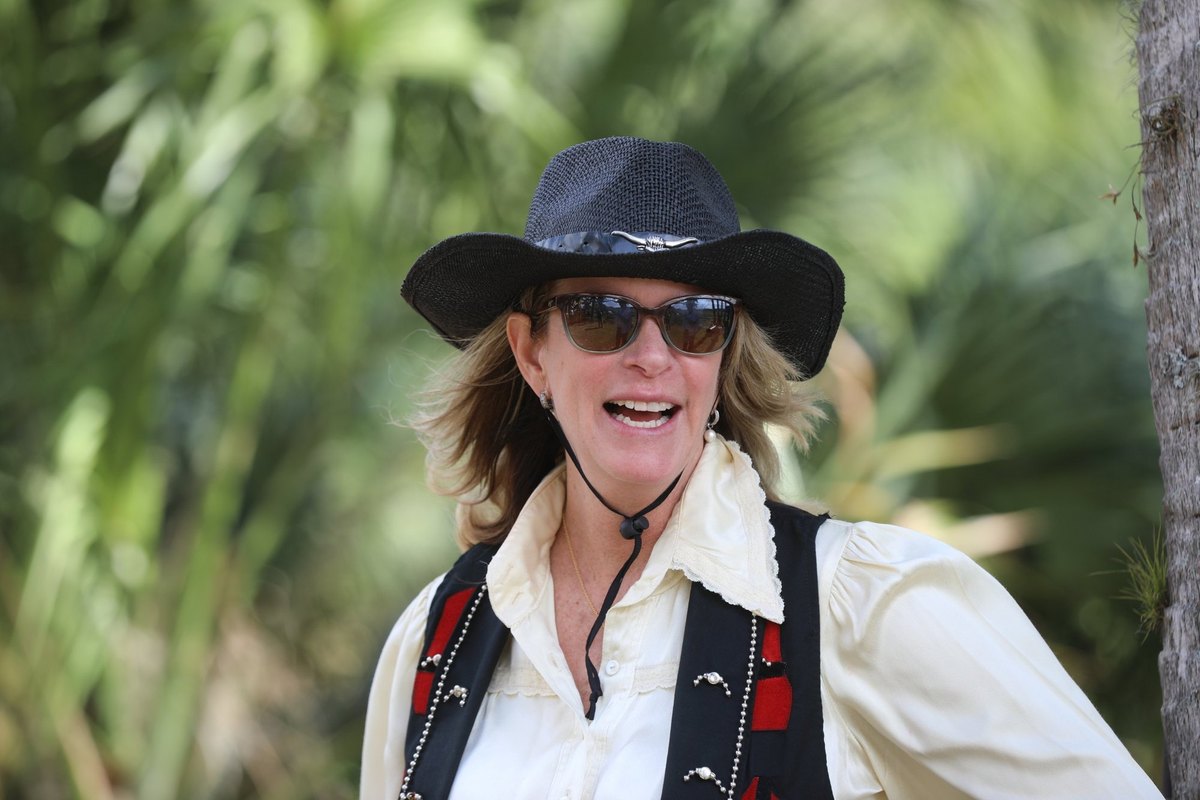
—Reefs, Trees and Center Court
—Head south, all the way to the Keys, and you find her name on Summerland Key, on the Elizabeth Moore International Center for Coral Reef Research & Restoration, which Mote Marine Laboratory opened in 2017 after her seven-figure gift. She has served as president of the TREE Foundation, the Sarasota-based forest research and conservation nonprofit, and sits on the board at Mote.
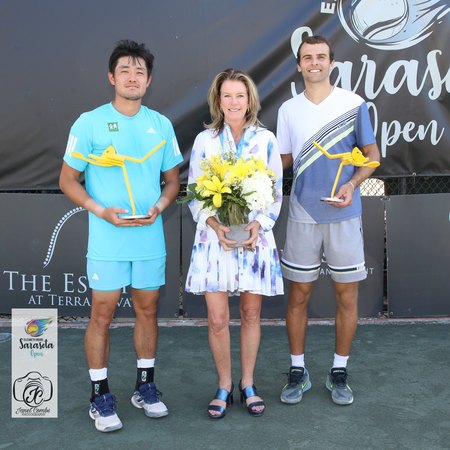
—Head north to Bradenton and you find her at IMG Academy, the new home of the Elizabeth Moore Sarasota Open, the ATP Challenger tournament she has backed as title sponsor since 2017 and now co-owns. It is the region’s front porch to professional tennis; she has recalled handing the trophy to a young Frances Tiafoe that first year. In 2023 she put up the extra money to raise the purse to $175,000, the kind of move that draws stronger fields, and this spring she moved the tournament to IMG, which she hopes will become its permanent home.
—Five Generations of Foodies
—And downtown, she owns Clásico Italian Chophouse, the corner restaurant at Main Street and Palm Avenue, which she describes as part of her expression as a foodie.
—That word is not a casual one for her. Moore comes from five generations of caterers and restaurateurs in New England, a lineage she sums up as “five generations of foodies.” She has lived on Nantucket, in France and outside Boston. Her Florida roots, as it happens, run through Longboat Key, where her grandparents kept a home in Country Club Shores and where, as a girl, she fished off the dock and named every heron she met Herman. In her downtown kitchen she likes to cook French Provincial food, and when she went out, Rose & Ivy was one of her regular haunts.
—In the oldest tradition of the restaurant business, she is the regular who bought the place.
—Behind the Glass
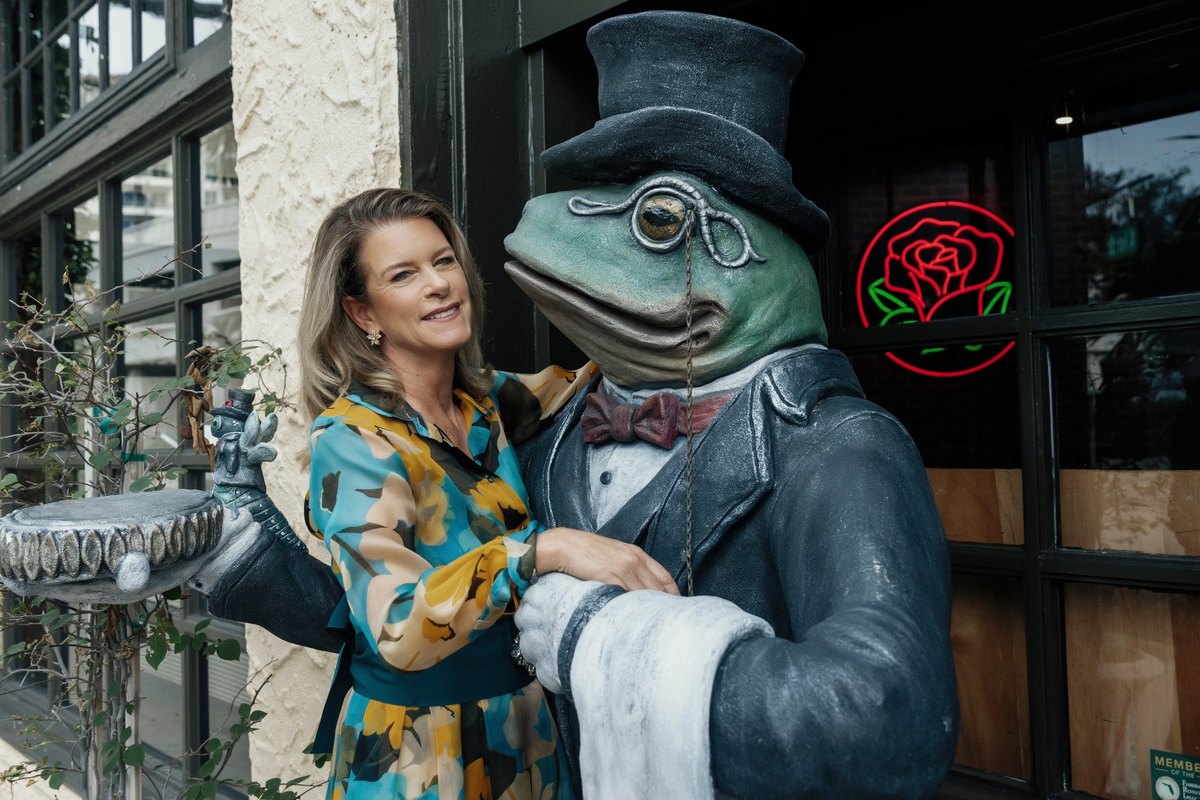
—What was going on behind the glass all summer was closer to an excavation. Moore and her team spent the season decorating, rehabbing and refinishing an interior that already had charm and history to spare. The building got a deep clean, and then a makeover. Original tile work that had disappeared under decades of later decisions was uncovered. Wood was repaired where it could be saved and replaced where it couldn’t. A bar went in. Alcoves and rooms were opened up and expanded. A whole new patio now greets the street. Upstairs, in a former stockroom that local legend has long assigned to John Ringling himself, a private dining room is taking shape.
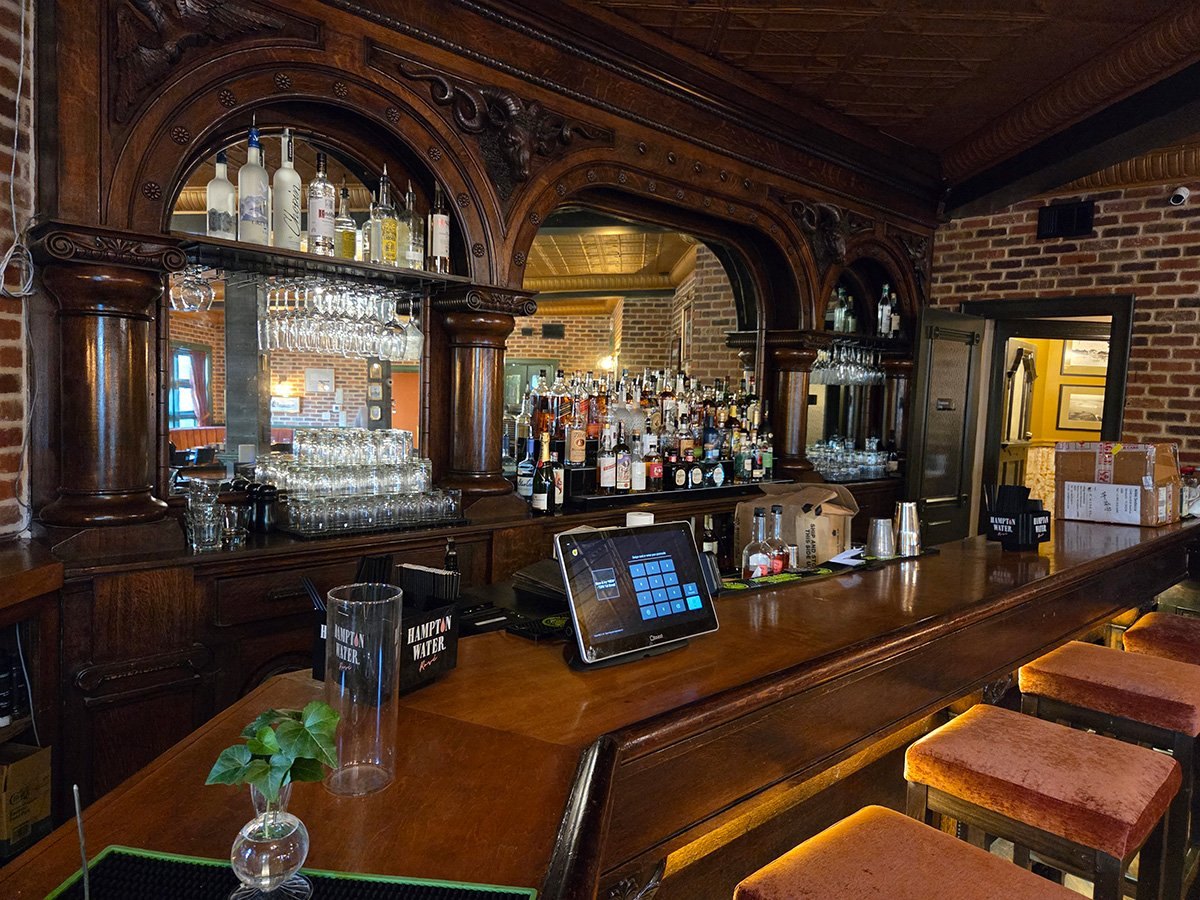
—The rooms that have emerged mix eras the way the building always has. There is exposed brick and crystal chandeliers, a pressed-tin ceiling burnished gold in one room and painted black in another, a black-and-white checkerboard floor, and a carved wooden back bar framed in arched mirrors and fronted by velvet stools in a shade best described as rose. The often-photographed neon rose from the last incarnation still glows on a brick wall. Vintage black-and-white photographs climb the staircase toward the room where Ringling is said to have kept his office.
—In the kitchen, the change is more radical still. The old Rose & Ivy was a steak-and-sushi house with a long cocktail list and a garden-party attitude. The new one, in Moore’s words, is “Japanese flavors with French technique,” a completely different approach. It is part preservation and part innovation, and in many ways a continuum, which also happens to be a fair description of Moore.
—Chef Ace and the Omakase Method
—The man at the center of the new Rose & Ivy is chef Jason Acevedo, who answers in the kitchen to Chef Ace, or simply Ace. He calls his approach the omakase method.
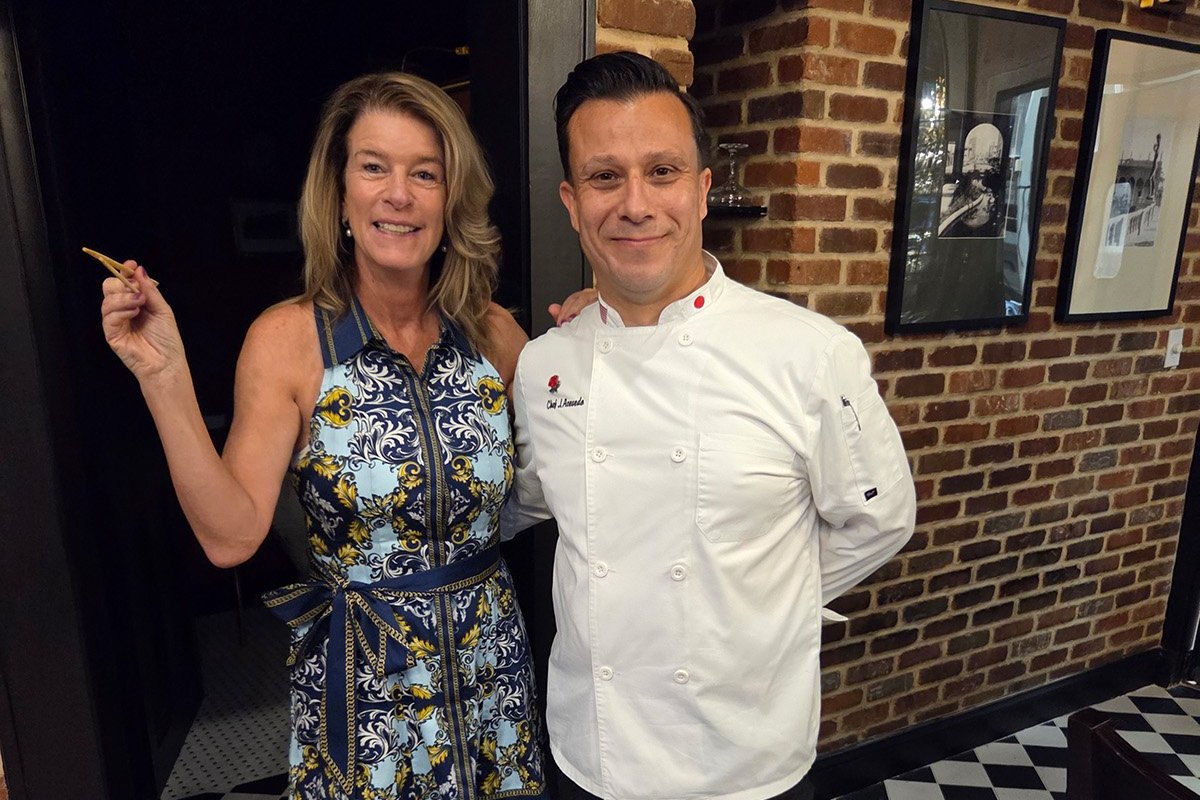
—Omakase is a Japanese word that translates, roughly, as “I leave it to you.” At a sushi counter it means the diner surrenders the menu and the chef decides, course by course, what is best that day, reading the guest nearly as closely as the fish. It is an exercise in trust, and in this country it has become shorthand for a kind of quiet virtuosity: rice seasoned and tempered just so, knife work so exact that each slice seems to have been decided by geometry rather than by hand.
—Japanese Flavor, French Grammar
—What Acevedo and Moore are building on top of that discipline is the French tradition: the saucier’s art, the classical techniques French kitchens have been refining since Escoffier, the reductions and emulsions and the patient layering of flavor. Japanese flavor, French technique. The French kitchen constructs; the Japanese kitchen subtracts. One trusts butter and time, the other trusts the knife and the moment. The question every restaurant in this genre must answer, plate after plate, is whether the sauce flatters the fish or smothers it.
—From Osaka to Lyon to First Street
—The pairing has a distinguished pedigree. In the 1960s, Paul Bocuse traveled to Osaka at the invitation of Shizuo Tsuji, the journalist turned culinary educator, and went home to Lyon carrying lessons from kaiseki, Japan’s formal procession of small, intensely seasonal courses. Its exactitude and restraint helped shape nouvelle cuisine, and nouvelle cuisine handed the world the modern tasting menu. Lately the traffic has run the other way, with Japanese chefs leading some of the most admired French kitchens in Paris. The conversation between Paris and Tokyo has been going on for sixty years. It has simply taken its time reaching First Street.
—What’s on the Menu
—The autumn menu still carries the restaurant’s old promise in small type beneath the rose on its masthead: steak, sushi, cocktails. What has changed is the grammar.
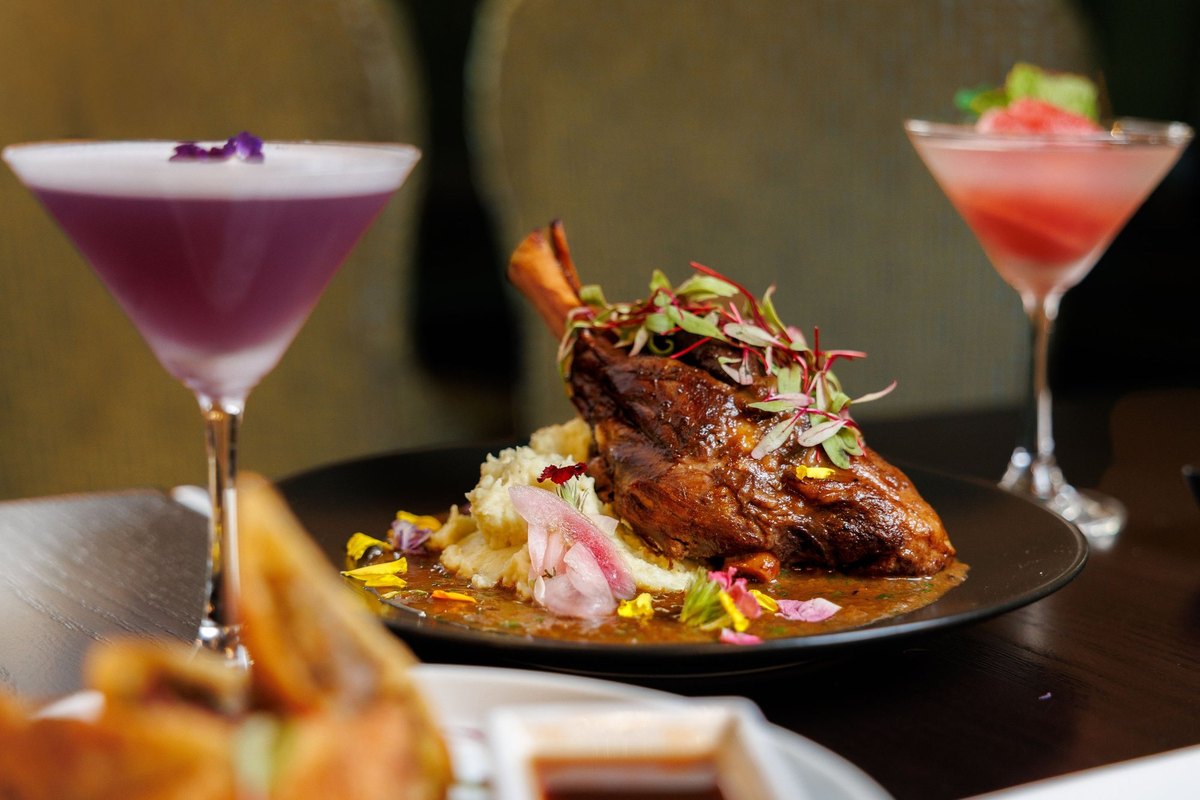
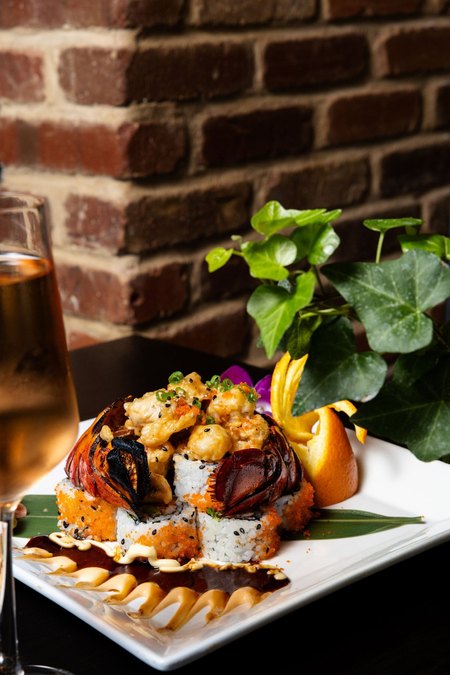
—Start where the two cuisines meet most literally. The fresh catch comes with jasmine rice, Sea Island field peas and a miso béarnaise, which is to say a sauce straight out of the French canon, butter and egg yolk perfumed with tarragon, taught to speak Japanese. The Hokkaido scallop arrives with local shrimp, ramen noodles and miso burn butter. The Kurobuta pork chop gets XO sauce, marinated eggplant and a pork belly risotto. The Elysian Fields lamb shank is set over mushroom risotto with a mint and burnt-onion jam. Even the steaks, an Australian Wagyu filet and New York strip and a Japanese A5 Miyazaki ribeye sold by the ounce, are finished the French way, with smoked sea salt and cultured butter, and served with a Japanese sweet potato mash.
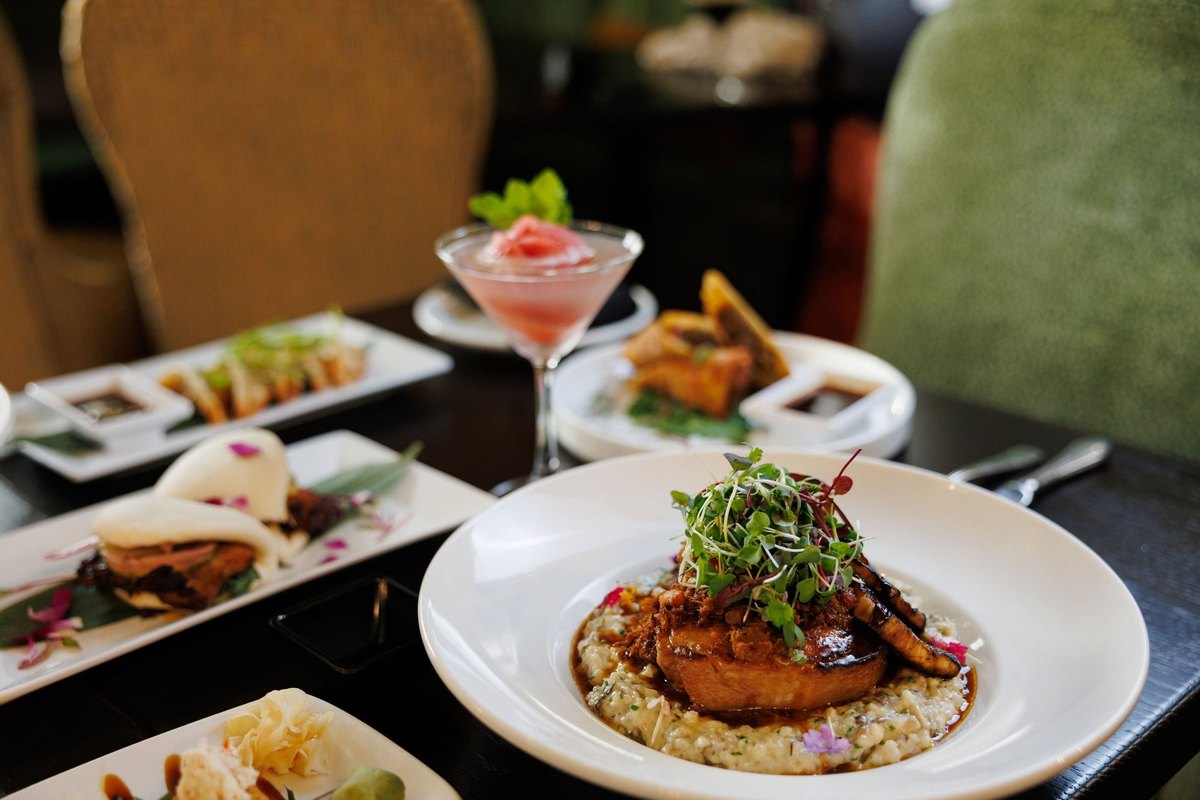
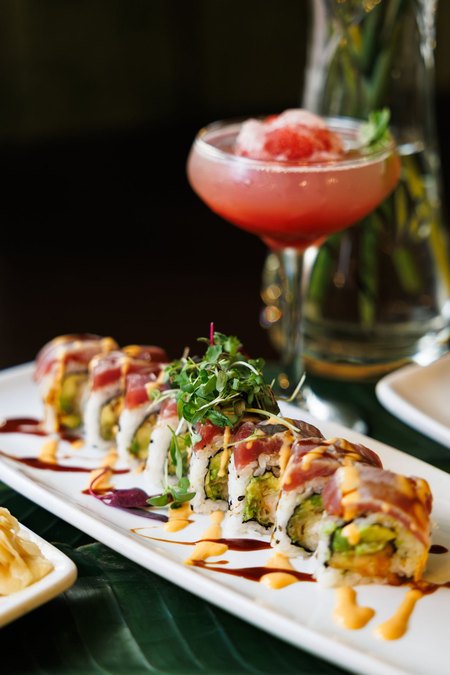
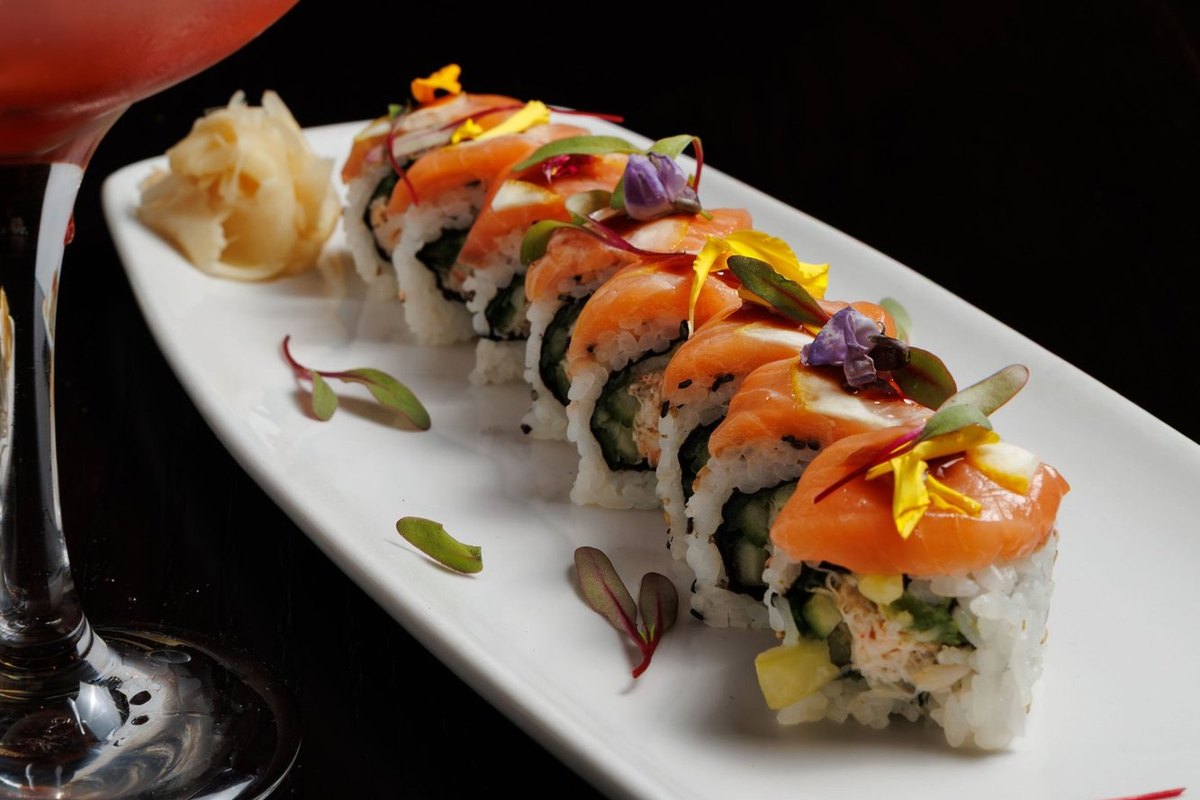
—The first courses lean toward the raw bar: hamachi with serrano and house-made ponzu, and bluefin usuzukuri, the paper-thin Japanese cut, dressed with truffle, wasabi and volcanic salt. The sushi menu keeps the classics and then has some fun. There is a specialty roll called the Rose & Opera, spicy tuna and avocado under snow crab salad, for diners with a curtain to make. There is the Marilyn Mon-Roll, the School of Rock and Enter the Dragon.
—And there is the part that matters most to the omakase idea: nigiri and sashimi by the piece, from Faroe Island salmon and Hokkaido scallop to otoro and uni, plus a chirashi bowl and a sashimi tasting, both left to the chef’s choice of the day’s best fish. Main plates and steaks run from $27 to $65, specialty rolls from $18 to $24, and the A5 ribeye goes for $25 an ounce with a four-ounce minimum.
—This is food built to be looked at before it is eaten, which, in a building that shares a wall with an opera house, seems only fair.
—See the full menus: Dinner menu · Sushi menu · Cocktails, wine and beer.
—From Party to Performance
—Consider what came before. When Rose & Ivy opened in 2024, its owners pitched a Pan-Asian program of sushi, sizzling steaks and dim sum, priced for a Tuesday night as much as a birthday, with a DJ in the garden after dark. That restaurant had its fans, and it filled a niche. But it was a party. The new Rose & Ivy intends to be a performance, which is a fitting ambition for a building that shares a wall with an opera house.
—Over the past week, the final stages have been underway: trial runs of the menu, then a soft opening, all leading up to the public opening on Tuesday, Nov. 10. A proper verdict on any restaurant belongs to a full dining room. A full dining room is exactly what Moore is counting on.
—The Overture
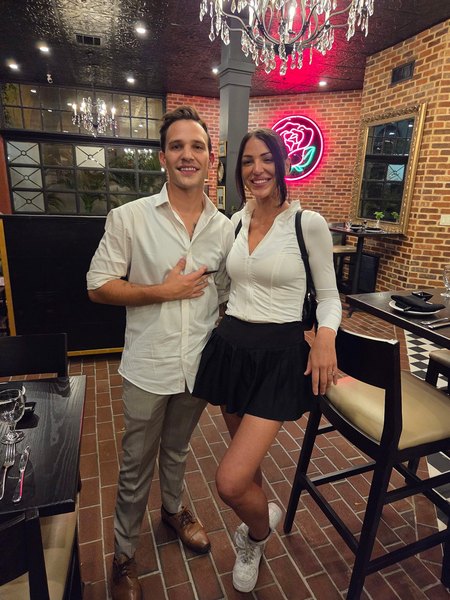
—If the kitchen is the orchestra, the bar is the overture, and Moore has handed it to Tristan Hibbs, Rose & Ivy’s restaurant manager, who arrives by way of the Las Vegas Strip. Hibbs spent years in Las Vegas, most recently as corporate mixologist for 81/82 Group, the hospitality company behind The Venetian’s trio of cocktail lounges: Juliet, Electra and Rosina, the last of which was conceived as the group’s most mixologist-driven room, built on drinks you couldn’t get anywhere else in town. Along the way, he helped open more than half a dozen restaurants and bars.
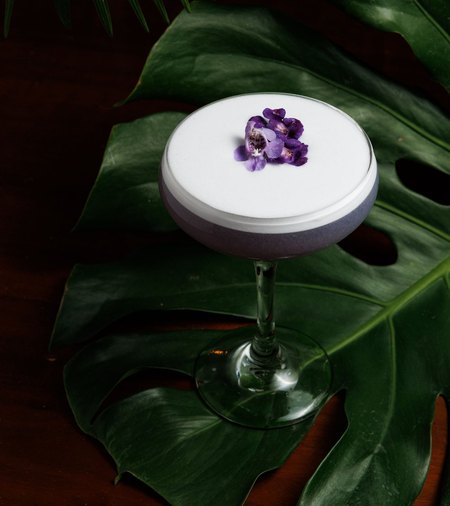
—For Rose & Ivy he has built a precision cocktail menu, which in the current vocabulary of the craft means obsessive attention to the things most guests never consciously notice and always taste: dilution, temperature, clarity, balance. A drink built that way is the natural partner to an omakase kitchen. Both are arguments for exactness. Vegas teaches a bartender to put on a show at volume. Next door to the opera, Hibbs gets to put one on at a whisper.
—The list reads like a program note. The house signature, the Rose & Ivy, pairs vodka or gin with lime, elderflower and sparkling rosé and floats a strawberry rose ice cube. About Last Night is finished with applewood smoke. The Lavender Love Letter is built on gin, lavender, Italicus and egg white. One drink, Lychee Since 1926, carries the year the Opera House next door opened. There are zero-proof cocktails, a short, well-chosen wine list that runs from Sancerre and Chablis to Amarone and Veuve Clicquot, and a Japanese lager for the purists. The menu’s own motto, printed at the bottom of the cocktail list: “Cocktails are a love language.”
—A Century of Second Acts
—The building Moore has taken on has been rehearsing for this role for 101 years. Local businessman I.R. Burns built it in 1925, at the height of the Florida land boom, to anchor the stretch then known as Realtor’s Row; Burns and H.H. Bell owned it, and their names are still attached to it. Within a few years the boom had gone bust, and the building had to find other work. Over the decades it was an antiques shop, commercial offices and a home for city operations, including the City of Sarasota’s collections office. In the 1950s it sold children’s furniture and clothing as Sherwin’s Stork Club.
—Since the 1980s, it has belonged mostly to the restaurant trade, and the restaurant trade has treated it like a revolving stage. By 1990 it was Limerick Junction Pub & Club. From 1995 to 2004 it was Munroe’s, with a jazz band upstairs and, as one former owner recalled, nights so crowded you sometimes couldn’t get in the door. Then came DJ’s, Arosa, 1st Street Chop House, Maximo’s, Roast, Umbrellas 1296, Flirt Sushi Lounge and Azul Steak & Sushi Lounge, before Raffaele Perna, Nicholas Perdue and Kaye Warr rebranded the space as Rose & Ivy in 2024.
—They chose the name with care: roses for the bouquets handed to the principal performers at the end of an opera or a ballet, ivy for the walls. Moore has kept it. Some things in an old building don’t need restoring.
—The Room Upstairs
—Then there is the room upstairs. It was an old stockroom, and by local tradition it served as John Ringling’s headquarters in town. The hand-painted murals that local lore credits to Ringling himself are still on the walls: scenes of Sarasota that earlier owners believed include his self-portrait and his signature. Moore points to where his office used to be, and to the place where a secret door once led into the Opera House, which adjoins the building. Earlier tenants liked to tell of the gentlemen of Sarasota slipping through it at intermission for a drink, then rejoining their wives before the final curtain. Like most Ringling stories, this one has been polished by a century of retelling, and earlier owners were careful to call it lore. Moore isn’t interested in debunking it.
“I want to honor the legacy of John Ringling,” she says.
—The room is becoming the restaurant’s private dining room, which may be the most Ringling thing about it: a place for a few people to eat very well, behind a door, beneath the murals, next to a show.
—The Neighbor Turns 100
—The Opera House opened on April 10, 1926, as the Edwards Theatre, the dream of A.B. Edwards, the City of Sarasota’s first mayor. Over the decades it hosted silent films, vaudeville, Will Rogers and, in 1956, a young Elvis Presley, before closing in 1973 and very nearly disappearing. The company now known as Sarasota Opera bought it in 1979 and restored it, and this spring it marked its centennial. That makes the ivy-covered building on the corner, built in 1925, the slightly older of the two.
—Dinner, a Drink and a Night at the Opera
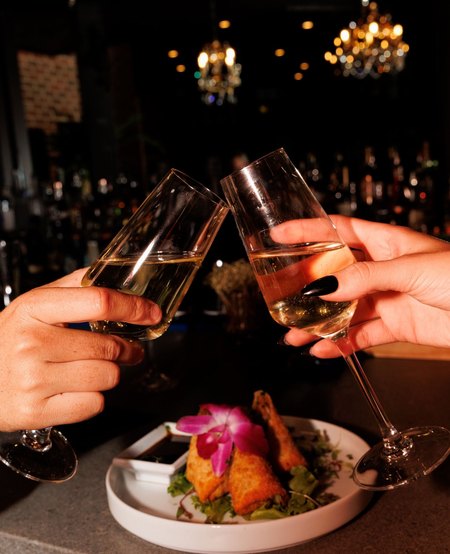
—Moore is clear that the relationship with the Opera is central to the plan. It is a neighbor, she says, and the setting is made for a particular kind of evening: fine dining, a drink, and a night at the opera.
—That evening is the oldest business model in any theater district, and one of the hardest to execute. A restaurant beside a stage lives by the curtain: a rush before the overture, a lull during the second act, and a second life afterward for anyone who wants a nightcap and an argument about the tenor. Rose & Ivy has the Opera on one side of the wall and the Florida Studio Theatre campus a few steps down First Street. The new patio, the expanded rooms and alcoves, and the private room upstairs give it more ways than ever to play all three acts.
—The Michelin Question
—The timing is interesting, too. In May, the Michelin Guide published its first statewide Florida selection, and for the first time its inspectors’ verdicts reached Sarasota: a Bib Gourmand for Lucky 8, and recommendations for Tralia and Focaccia Sandwich + Bakery. No stars. Stars are not something a sensible restaurateur predicts out loud. But a chef-led, French-trained, Japanese-minded kitchen in a historic room beside a century-old opera house is precisely the kind of ambition a guide like that exists to notice.
—Two Corners, One Owner
—There is also the matter of geography. With Clásico on Main Street and Rose & Ivy on First, Moore now owns two of downtown’s most visible dining rooms, a few minutes’ walk apart, in the blocks where Sarasota’s theater crowd, office crowd and condo crowd overlap. Both restaurants helped feed the VIP lounge at her tennis tournament this spring. Few owners in town can draw a straight line from a professional tennis event to a conservation ranch with rentable cabins to a pair of downtown restaurants. It is, in its way, a vertically integrated version of the good life.
—The Patience Premium
—And then there is the ingredient that never appears on a menu: patience. On a corner where nearly a dozen bars and restaurants have come and gone since 1990, the scarcest resource has rarely been talent or location. It has been an owner willing to think in decades rather than seasons. Moore’s other investments are measured in watersheds and coral reefs. By her standards, a 101-year-old building is a short-term project.
—A New Rose
—Moore sums up the whole undertaking in a gardener’s phrase. It is, she says, her way of blooming a new rose in an old garden.
—Anyone who has kept a garden knows what that takes. You don’t rip out what took a century to grow. You clear away what has gone tired, feed the soil, keep the ivy, and give the new thing room and light. Then you open the gate and let people in.
—At the end of an opera, tradition says, the principals get roses. On the corner of First and Pineapple, the audience gets one.
—If You Go
—Rose & Ivy: 1296 First St., Sarasota, next door to the Sarasota Opera House.
—Opens to the public: Tuesday, Nov. 10.
—Phone: (941) 343-2122.
—Online: roseivysrq.com.
—The menu: Chef Jason Acevedo’s Japanese flavors with French technique, in what he calls the omakase method; main plates and steaks $27 to $65, specialty rolls $18 to $24.
—Menus online: Dinner menu · Sushi menu · Cocktails, wine and beer.
—The bar: A precision cocktail program from restaurant manager Tristan Hibbs, a Las Vegas veteran.
—Private dining: The room upstairs, beneath the murals local lore credits to John Ringling.
—Outside: A new patio on First Street.
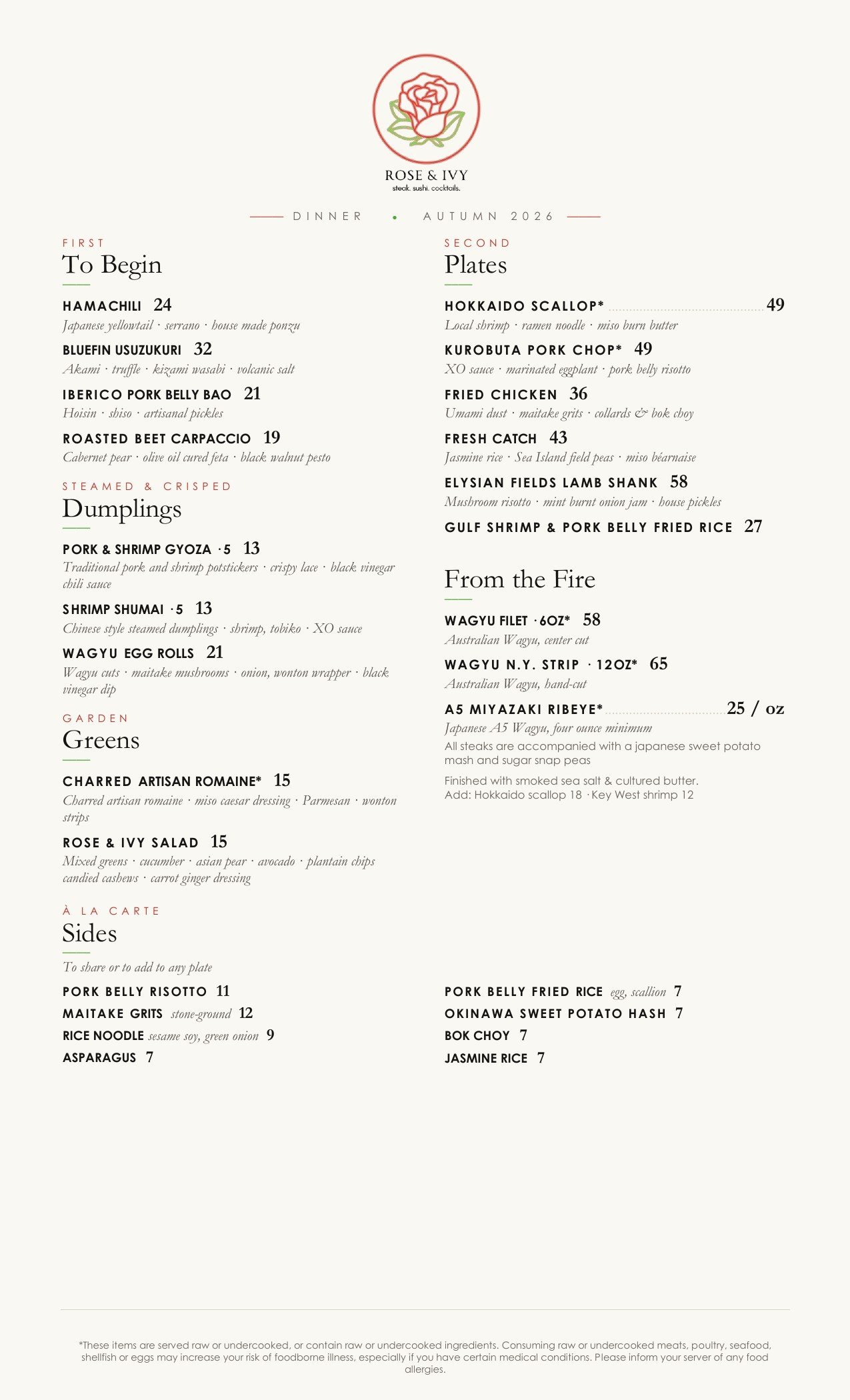
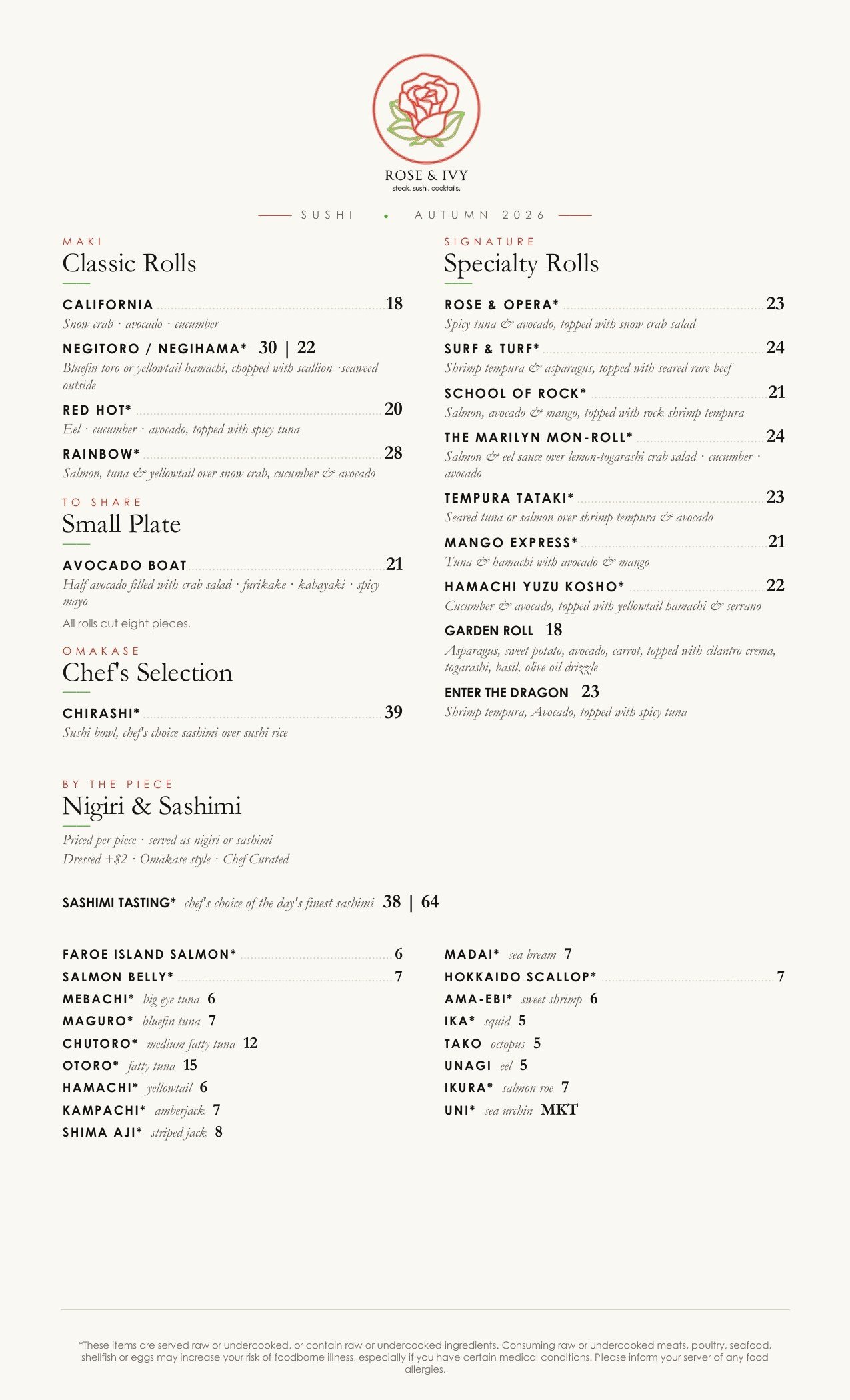
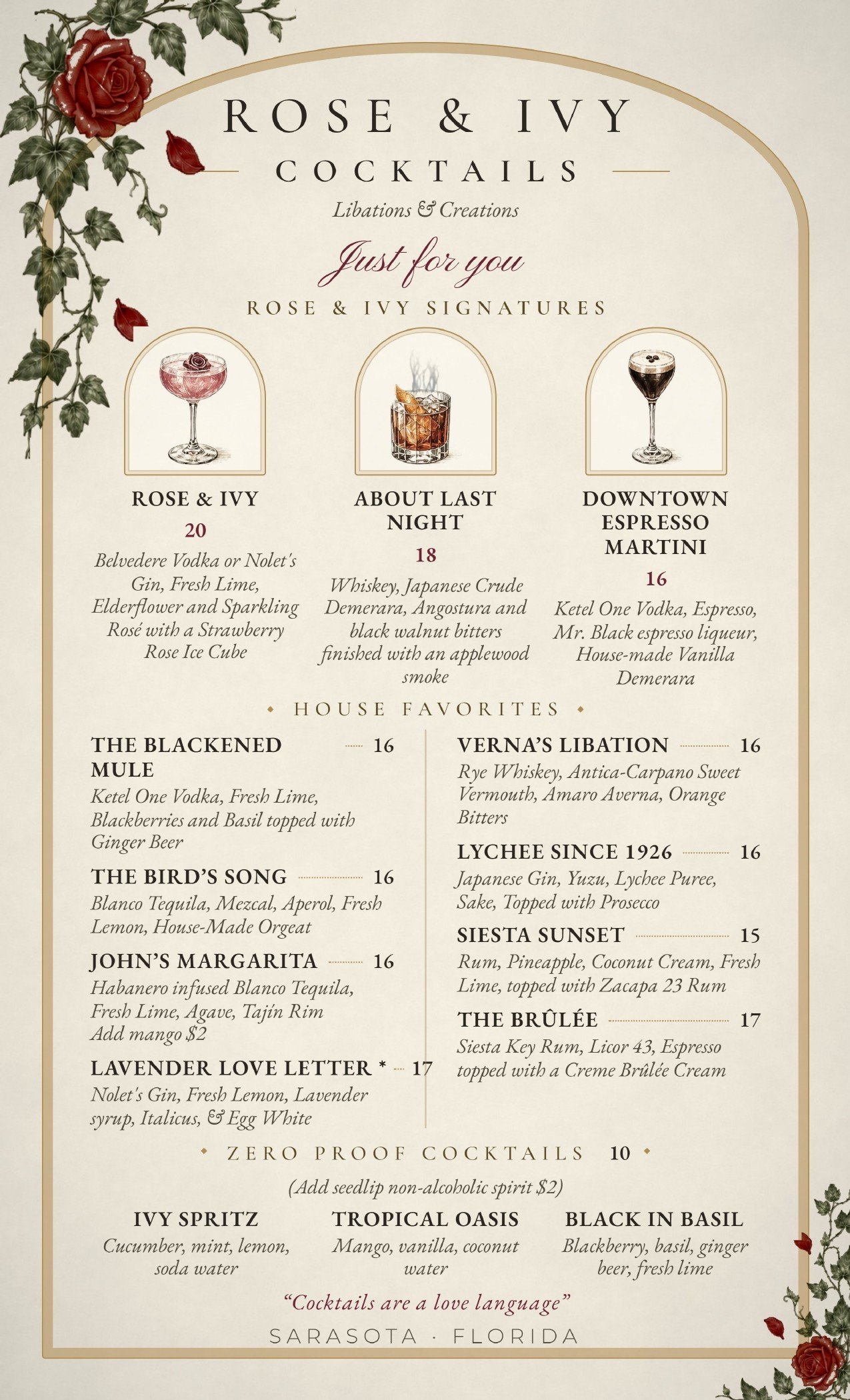
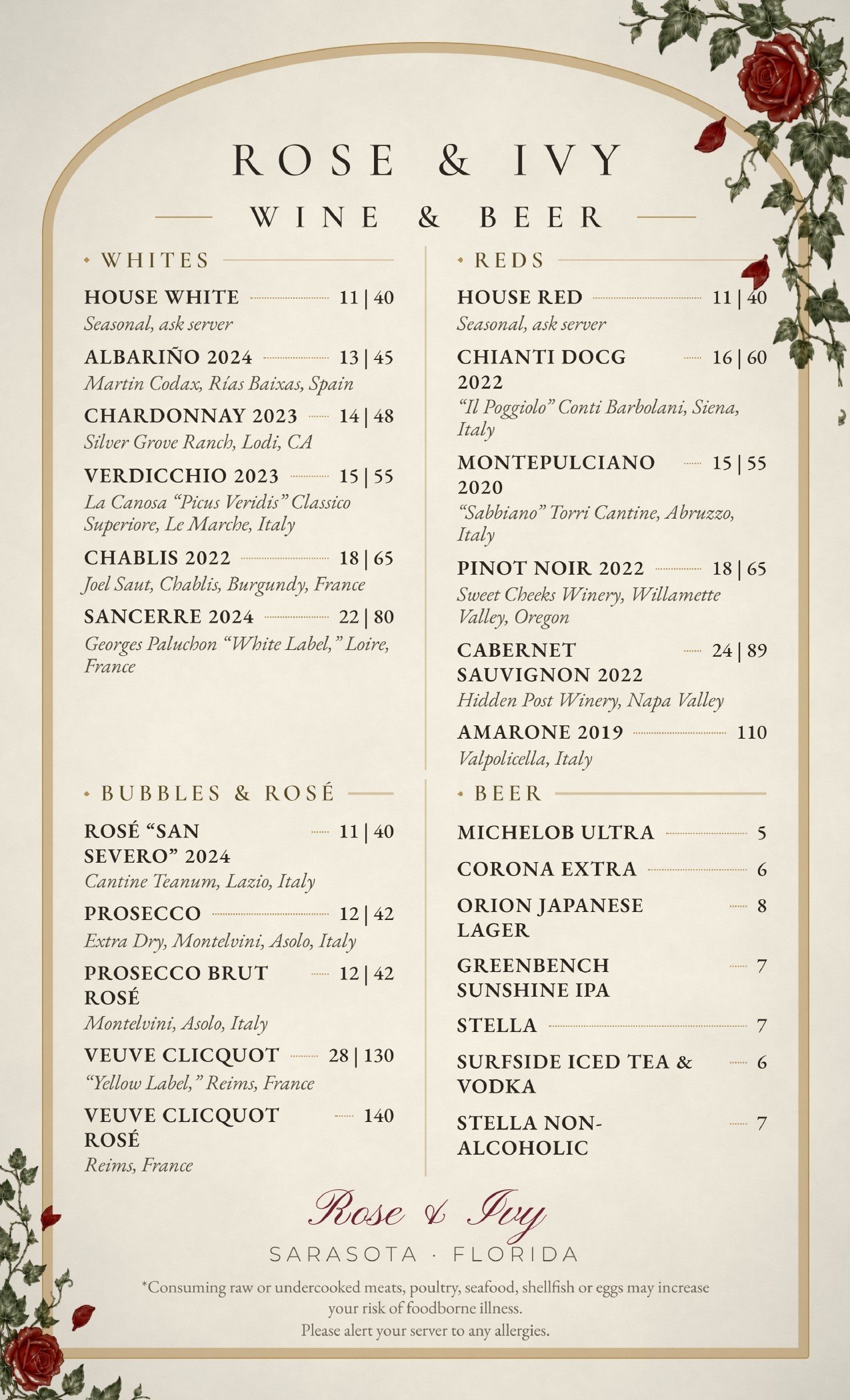
Rose & Ivy’s autumn 2026 dinner, sushi, cocktail and wine menus. Click any page to see it full size. Courtesy of Rose & Ivy
—1296 First Street: A Century of Acts
—1925: Local businessman I.R. Burns builds the two-story building to anchor “Realtor’s Row” during the Florida land boom; it carries the names of owners I.R. Burns and H.H. Bell.
—1926: The Edwards Theatre, today’s Sarasota Opera House, opens next door on April 10.
—After the bust: Antiques shop, commercial offices and city operations, including the City of Sarasota’s collections office.
—About 1953 to 1958: Sherwin’s Stork Club, children’s furniture and clothing.
—Later years: The Conversation Piece antiques; Gourmet Catering and Roz’s Restaurant.
—By 1990: Limerick Junction Pub & Club.
—1995 to 2004: Munroe’s, with live jazz upstairs.
—2005 to 2012: DJ’s Restaurant, Arosa, 1st Street Chop House and Maximo’s Pub and Restaurant.
—2013 to 2016: Roast Restaurant.
—2019 to 2020: Umbrellas 1296.
—2022: Flirt Sushi Lounge, renamed Azul Steak & Sushi Lounge in 2023.
—2024: Rose & Ivy opens under Raffaele Perna, Nicholas Perdue and Kaye Warr, serving Pan-Asian steak and sushi.
—2026: Closed for a summer renovation; reopens to the public Nov. 10 under owner Elizabeth Moore with chef Jason Acevedo and restaurant manager Tristan Hibbs.
—Elizabeth Moore’s Domains
—Triangle Ranch: 1,143 acres in Myakka City with three miles of the Myakka River, bought in 2016 and largely protected by a perpetual conservation easement; still a working ranch.
—Mote Marine Laboratory: The Elizabeth Moore International Center for Coral Reef Research & Restoration on Summerland Key opened in 2017.
—The TREE Foundation: Has served as president of the Sarasota-based forest research and conservation nonprofit.
—Elizabeth Moore Sarasota Open: Title sponsor since 2017 and co-owner of the ATP Challenger tournament, now played at IMG Academy.
—Clásico Italian Chophouse: Owner of the restaurant at Main Street and Palm Avenue.
—Rose & Ivy: New owner of the restaurant in the 1925 I.R. Burns & H.H. Bell Building beside the Sarasota Opera House.

