
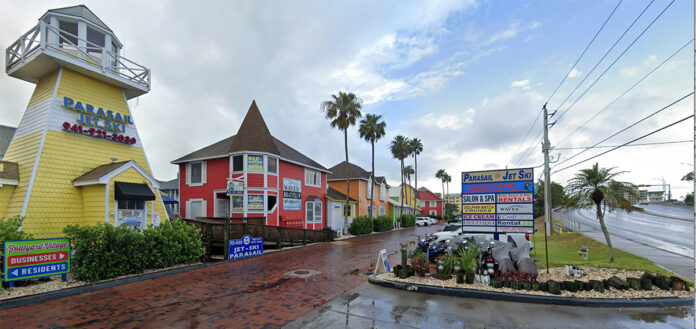
A federal easement on the books since 1960, a $700,000 offer nobody could price and two commissioners who changed their minds. In 17 minutes Wednesday morning, the county’s marquee waterfront park went back to being a vacant private lot.
—The lighthouse is still standing. Everything else about the Boatyard deal is underwater.
—Sarasota County commissioners voted 3-2 on Wednesday, Nov. 4, to terminate the county’s $18.1 million contract to buy the Boatyard, the 2.04-acre faux fishing village at 1500 Stickney Point Road that has greeted every driver headed for the south bridge to Siesta Key since 1983.
—The vote ended a nine-month saga that emptied a working waterfront of its tenants, lined up as much as $20.77 million in borrowing against the county’s land-buying tax, and then ran headlong into a federal easement that has been sitting in the public record since the Eisenhower administration.
—The twist was who pulled the plug.
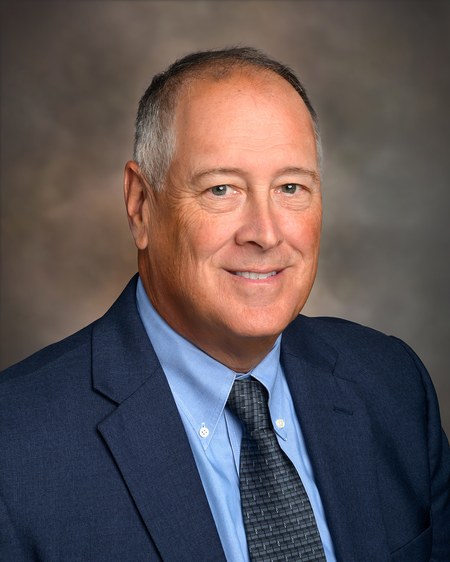
—Commissioner Tom Knight, the lone no vote when the board approved the purchase in February and again when it authorized the borrowing in May, did not say a word during Wednesday’s Boatyard discussion. He didn’t need to. This time he had company.
—Commissioners Teresa Mast and Ron Cutsinger, both yes votes on those earlier 4-1 decisions, crossed over and joined him. Commissioners Mark Smith and Joe Neunder voted to keep the deal alive.
—And the timing was almost too neat to be believed. Less than a day earlier, county voters had extended the Environmentally Sensitive Lands Protection and Neighborhood Parkland tax through 2049 with roughly 84 percent of the vote. That is the same tax that was set to repay the Boatyard borrowing.
—The land program got a 23-year lifeline Tuesday night. By Wednesday morning, its most visible acquisition was dead.
—Seventeen minutes
—Item 55 on the commission’s agenda was billed as a staff update on the Stickney Point Road acquisition and a request for direction on the seller’s latest proposal. From the moment the chair called it until the gavel came down on the vote, about 17 minutes passed. No one from the seller’s side spoke during the item.
—Parks, Recreation and Natural Resources Director Shawn Yeager walked commissioners through how the county got there. The board authorized the purchase on Feb. 10. Due diligence turned up title defects. On July 17, the seller’s window to cure them was extended to Aug. 8, with closing pushed to 45 days after that. On Sept. 14, the county attorney’s office sent a notice of default to Big Main Street LLC, the entity controlled by Sarasota investor and restaurateur Chris Brown.
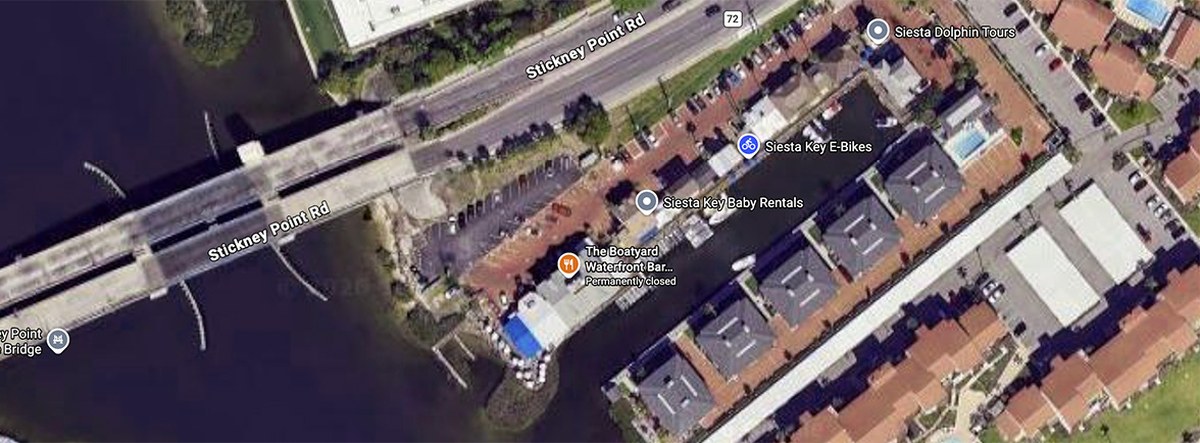
—Three defects remained uncured, Yeager said. The first was a set of overly broad recorded access easements granted to the neighboring Boatyard Condominium Association. The second was a set of unrecorded utility easements benefiting that same residential association. The third was the big one: a federal easement granted to the West Coast Inland Navigation District in 1960 and transferred to the U.S. Army Corps of Engineers in 1962.
—That easement runs across the western parcel, the stretch that fronts Little Sarasota Bay. In other words, it sits on the exact piece of the property that made it worth buying in the first place.
—The letter from the Army Corps
—On Oct. 1, the Corps put its position in writing, and it gave the county very little to work with.
—According to Yeager’s presentation, the Corps confirmed that “the existing restaurant structure encroaches into that federal easement without authorization.” The staff slide spelled out what that means: “the encroachment must be resolved through retroactive approval or removal before moving forward with federal review options.”
—Translation: before the county could even start asking the federal government for relief, somebody would have to get the Corps to bless a building it considers an illegal encroachment, or tear that building down.
—After that, the Corps offered two doors. Neither one opens quickly.
—The first is a full release of the easement. That would wipe out the federal claim and give the landowner unrestricted use, but it needs sign-off at the district, division and headquarters levels of the Corps. The county would have to supply surveys, title work, environmental documentation under the National Environmental Policy Act and appraisals, and pay all federal administrative and technical costs. Just opening the file costs $7,500. The Corps can release land rights only when the area is no longer needed for project purposes or is unsuitable for continued federal use, and it has signaled the county could be asked to pay fair market value for what it gives up. Estimated time: one to five years.
—The second is a consent to easement, which keeps the federal interest in place but allows compatible local use. Recreational structures may be permissible under that path, Yeager said, but “four-walled structures generally remain restricted.” That route still requires engineering plans, environmental documentation and federal review. Estimated time: about a year.
—Brown’s $700,000 offer
—On Sept. 30, county attorneys and staff sat down with Brown and his representative. On Oct. 5, Brown came back with a proposal: a third amendment to the contract, plus an escrow agreement.
—As Smith summarized it from the dais, the seller offered to put $200,000 in escrow to deal with a lift station serving the site and another $500,000 to cover the cost of curing the remaining problems, chiefly the federal easement.
—The catch was everything above that number. According to the county’s September memo, Big Main has taken the position that the federal easement isn’t a title defect the seller is obligated to cure at all, and that the county should close first and sort out the Army Corps later as a routine development matter. The September default notice rejected that argument and called the easement exactly what the county says it is: a defect in the title.
—Smith asked the obvious question. Would $500,000 be enough?
“So unknown at this point if that would be enough,” Yeager answered, adding that he wasn’t sure the money would cover the Army Corps process. “It’s something I’ve not experienced.”
—County Administrator Jonathan Lewis was blunter.
“The answer Mr. Yeager gave is one hundred percent right. We don’t know,” Lewis said. “And at two hundred thousand or three hundred thousand or four hundred thousand, we’re not going to know there either. I think the cost will only go up from there.”
—Lewis said staff could probably come back with a number that offered the board some reasonable assurance, but no guarantee. And the spread was enormous. If the county stuck with the acquisition and the federal review turned into “the five year version of things versus the one year version of things,” he said, “that’s going to be a radically different number.”
—The flip
—Mast spoke next, and she did not take long.
“For me, it’s a very clear business decision from a perspective of these are public dollars,” Mast said. “And if we don’t have a clear title, then I’m not an interested party.”
—She didn’t slam the door forever. “If the owner of the parcel would like to go through this arduous process and bring back a clear title, then I think we could have a discussion at a different date, whether that’s a year from now, five years from now, or whatever,” she said. “But I’m not interested in continuing any further discussions or any further options until there’s a clear title.”
—Then Cutsinger, who chairs the commission, jumped in, and his explanation may be the most revealing line of the whole saga.
—He called his original yes vote a challenging decision, one he landed on for the long-term value. “But we had no idea at the time that this easement existed,” Cutsinger said.
—That easement had been sitting in the public record for more than six decades when the board agreed to pay the higher of two appraisals, $18.1 million against a low of $14 million, for a property its owner had bought two years earlier for $8.9 million.
“Unless we have clear title, I don’t want to be the one trying to buy something at a price point like this and then still have uncertainties as to the outcome,” Cutsinger said. “That easement significantly impairs the value of the property.”
—He made clear it wasn’t the waterfront he was walking away from. “If they had been able to clear title and deal with this, and we were able to buy it without any encumbrances, that would be a different story for me, because I’m all about waterfront,” he said.
—The easement was another matter. “We have no idea what the ultimate outcome will be, how much time it will take, what they’re willing to release and all the complicated things going along with that,” Cutsinger said.
—Smith’s last stand
—Smith, the deal’s most enthusiastic champion, made the case for staying the course right up to the vote.
“Let me be clear. I’m in favor of the county purchasing the property. I think it’d be a tremendous asset to us all,” Smith said, “even if the whole process took five years, considering the use of that property for decades after. This is, to me, an opportunity that’s rare, to have waterfront property be available to the county.”
—This was the commissioner who had called the Boatyard the perfect home port for the county’s new charter boat medallion program, a place to open the water to as many six-pack captains as possible.
—But even Smith wanted a ceiling. “I want to make sure that we have ourselves covered and that it doesn’t cost the taxpayers any more money to purchase it than we had budgeted,” he said. He suggested having the county attorney’s office estimate the real cost before going forward, “unless we just want to up that number.”
—Nobody took him up on it. Neunder joined Smith in voting no, without comment.
—Lewis forces the question
—The reason the Boatyard came back to the board at all, Lewis explained, was that it didn’t fit the county’s normal routine.
“If it’s not a clear title, we don’t go ahead,” Lewis said of standard practice. “But this one was a clear direction of the board in the past dealing with access to waterfront property. I didn’t feel comfortable just terminating it without having a discussion with the board on what your policy direction might be.”
—He laid out the alternatives. The board could delay the closing and let the seller go get the title cleaned up. Or it could set an escrow number large enough to make it comfortable. He floated $1 million as an example.
“If you want me to do something different, give me some broad parameters. I’ll go make it happen,” Lewis said. “Otherwise, I think that’s what I have to do.”
—The county attorney’s office confirmed Lewis already had authority to terminate unless the board directed otherwise. The commission could have let the contract die quietly under normal procedure. Instead, Mast made a motion to terminate, it drew a second, and the board put the decision on the record: 3-2.
—Knight’s silent told-you-so
—For nine months, Knight has been the deal’s one-man opposition. He argued the price was too high, that demolition and operating costs were unknown, and that the purchase would drain the county’s land acquisition fund at a moment when the program’s future depended on a referendum.
—He warned back in February that the Boatyard could leave the land program unable to buy anything else if voters declined to renew the tax.
—On Wednesday, he sat through the entire discussion without speaking and then voted with the majority. In a commission meeting, that is about as close to a mic drop as it gets.
—Two ballot questions, one morning after
—Tuesday’s election hangs over this vote, and it pulls in two directions at once.
—The Boatyard borrowing, up to $20.77 million through the Florida Local Government Finance Commission’s pooled commercial paper program, was to be repaid from the same quarter-mill property tax that voters just renewed through Dec. 31, 2049. Supporters of the extension had to ask voters to keep funding a land program while its most visible current purchase sat publicly stuck in a title fight, storefronts dark at one of the busiest intersections in the county.
—Voters renewed it anyway, by a landslide.
—But the same ballot carried Amendment 3, the bigger homestead exemption that local governments across Florida spent the fall warning would squeeze their general funds. It passed, and Sarasota County voters backed it with nearly 63 percent. When commissioners took their turns at the microphone Wednesday morning, that was the result on their minds.
“I think there was a very clear direction based on the Amendment 3,” Mast said during her commissioner comments, less than 40 minutes before she made the motion to kill the Boatyard deal. In the budget conversations ahead, she said, “we’re going to have to be very selective on projects and what is going to be able to come to fruition.” Her bottom line: “The people have spoken, and we’ll make sure that we work within that.”
—Smith called Amendment 3 “challenging” and said the board is “going to have to make some difficult decisions coming up.” Knight said he would approach the coming budgets the way the board handled the last downturn. “I’m going to treat it as kind of like the recession,” he said, adding that the message from voters was plain: “People need relief.”
—Nobody connected those remarks to the Boatyard when Item 55 came up, and nobody mentioned the election during the 17-minute discussion. The purchase itself was to be paid from the dedicated land tax, not the general fund. But a finished waterfront park, with restrooms, docks, boat slips and staff, would have needed money to run every year after the ribbon cutting, and Knight had warned for months that nobody knew how much. Minutes after his recession remark, in a discussion about landscaping on North River Road, Knight noted that operating costs usually come out of the general fund, the same pot Amendment 3 now shrinks.
—And the order of events mattered. Had the board killed the deal in October, it would have handed the land tax’s critics a waterfront-view talking point in the final weeks of the campaign. Instead, the contract died the morning after the polls closed, with the program’s funding already locked in for another generation and the commission already talking like a board bracing for leaner years.
—By then, the Boatyard was no longer a showcase anyone needed. It was simply an $18.1 million question with no good answer, and three commissioners decided not to answer it with public money.
—Who’s left holding what
—Brown’s Big Main Street LLC now keeps a two-acre bayfront parcel at the most visible commercial corner on the approach to Siesta Key, one Brown bought in January 2024 for $8.9 million. Its docks and buildings were battered by Hurricanes Helene and Milton. And thanks to the county’s contract, it is now empty of long-term tenants.
—The site’s commercial intensive zoning is among the most permissive in the county, broad enough that real estate professionals have long said it could accommodate condominiums or even a hotel.
—But the Army Corps problem doesn’t care who owns the land. The Corps has now said in writing that the restaurant building encroaches on federal right of way without authorization, and that finding travels with the deed. The condominium association’s access and utility claims travel with it too. Whoever buys the Boatyard next, whether it’s the county someday or a private developer, inherits that cloud at the permit counter.
—The people who paid the steepest price aren’t at the closing table at all.
—The contract required the property to be emptied, and it was. Siesta Key Watersports, which ran parasailing, wave runner and boat rentals from the site for 20 years, scattered its operations across the region after commissioners told it watersports weren’t the target use for the future park. Co-owner Shawn Fontana told ABC7 this week the business is working to stay afloat at its new location and would love to return to the place it called home for two decades. Florida Fun Rides moved off the tourist corridor entirely. A boat club, a salon and boutiques cleared out too.
—They were moved out to make way for a public park. Now there won’t be one.
—Is it really over?
—Legally, the contract is terminated. Practically, Mast left a door cracked.
—If Brown, or whoever owns the Boatyard next, can get the Army Corps to approve or remove the encroaching structure, settle the condominium association’s easements and deliver clean title, Mast said she would be willing to talk again. Any new deal would almost certainly come with a new price and a new public vote. And given what the Corps has said about one to five years of federal review, nobody should hold their breath.
—In the meantime, the clean-title condition the county wrote into the contract from day one did exactly what it was designed to do. It let the county walk away without closing on a problem nobody could measure.
—What it couldn’t do was undo the evictions, refill the storefronts or answer the question of what happens next at the foot of the bridge.
—The lighthouse still stands over an empty village. The county spent nine months trying to buy the view.
—In the end, it couldn’t buy the title.
—How the Boatyard deal died
—January 2024: Chris Brown’s Big Main Street LLC buys the Boatyard for $8.9 million.
—Fall 2024: Hurricanes Helene and Milton batter the property’s docks and structures.
—Feb. 10, 2026: County Commission votes 4-1 to buy the 2.04-acre site for $18.1 million, the higher of two appraisals. Knight votes no.
—May 2026: Commission votes 4-1 to authorize up to $20.77 million in borrowing, to be repaid by the land program tax. Knight votes no. Tenants clear out.
—July 10: Original target closing date passes.
—July 17: Seller’s title cure period extended to Aug. 8.
—Sept. 14: County sends Big Main a notice of default.
—Sept. 30: County attorneys and staff meet with Brown and his representative.
—Oct. 1: Army Corps confirms in writing that the restaurant structure encroaches on the federal easement without authorization.
—Oct. 5: Brown proposes a third amendment with $700,000 in escrow.
—Nov. 3: County voters extend the land program tax through 2049 with about 84 percent support. Amendment 3, the bigger homestead exemption, also passes.
—Nov. 4: Commission votes 3-2 to terminate the contract. Mast, Cutsinger and Knight vote yes; Smith and Neunder vote no.

