
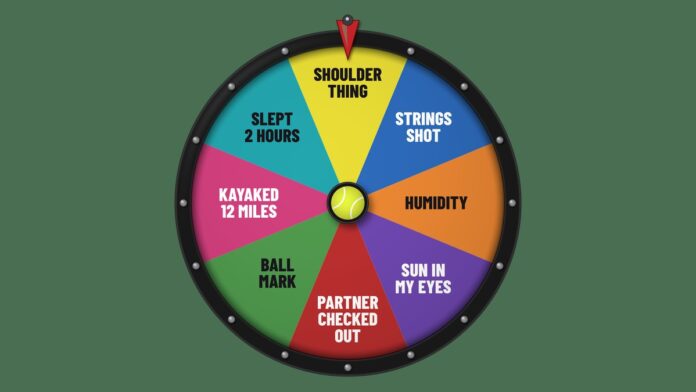
On Longboat Key, the alibi is filed before the first serve. A field guide to the kayak, the shoulder thing, the shot strings and the sun in your eyes, with expert testimony from Nadal, McEnroe and a Wellesley psychologist.
—I play tennis the way some people drink. Think of me as a chronic alcoholic who doesn’t drink: take away the bottle, hand me a racquet, and you have the general picture. I never say no to a match. I have been known to double-book. When it pours on the clay, I do not see weather. I see a logistics problem, and I will cross two bridges to find a dry hard court so we can finish what we started.
—I also narrate. Watching tennis with my wife, I’ll say, “I know you have to build the point, but isn’t it wiser to find a shot with enough topspin that you can put a hundred percent of your energy into it?” She looks at me with the serenity of a woman who has heard this before and says, “Sounds good, hon.” That has been the rhythm of our marriage, and I say that with love. I make an observation about topspin. She agrees. Everybody goes home happy.
—The upshot of all those hours on the court is that I have become, without training, license or couch, a low-grade sports psychologist. My office is the parking lot. My clients are grown adults clutching a can of balls and a grievance. I know exactly where it began. I have no idea how to make it stop.
—The Phone Rings
—It always starts with the phone. Usually it’s a doubles partner, calling the evening after a loss to share a few thoughts.
“Oh my God, can you believe him? Was he even serious? We could have won, but I’m kind of frustrated, low key. I don’t think he was even trying. It was like he checked out. I’m not saying you guys played badly. You played well. But in my view that really accounts for, you know, a big factor, so anyway.”
—This is the only sentence in the English language that can accuse a third party, compliment the listener and apologize to nobody, all at once. And here is the beautiful part. Somewhere across town, the partner who “checked out” is on his own phone, delivering the very same speech about the caller. In doubles, the loss is a hot potato with a phone number.
—The Defense Starts Typing in the Parking Lot
—Here is what decades of this have taught me: the loser does not build his case after the match. He builds it before the first ball. By the time you find the court, the script is written, memorized and, I suspect, lightly rehearsed in the car.
—You’ll hear it during the warm-up. I went kayaking twelve miles yesterday and slept maybe two hours, but hey, I’m just glad to be out here. Or: I hope your expectations are low, I already played twice today. These are not small talk. These are exhibits.
—The idea is to make himself the underdog, so he can play loose and free. The side effect is that you, who showed up for a pleasant Tuesday match, have been named the favorite, a job nobody wants and nobody applied for, like being appointed designated driver at a wedding you didn’t know you were attending.
—And here is the diabolical part: the kayak man may be doing science. A Wellesley College psychologist named Julie Norem has spent decades studying people who lower their expectations on purpose before a big performance. She calls it defensive pessimism. In her work, when you try to cheer these people up and get them picturing success, they perform worse. The kayak man is not lying to you. He is tuning an instrument. Do not tell him he looks great.
—In league tennis, by the way, the system begins with a form on which you rate yourself. A new player is asked to assign himself a number before hitting a ball, which is “I hope your expectations are low” with a decimal point.
—Even Rafael Nadal Is Not Playing Well Enough to Win This Tournament
—This is not a Longboat Key problem. I would call it a human problem, but then I’d have to defend the humans.
—At the 2011 French Open, Rafael Nadal, who at that point had lost exactly one match in his entire Roland Garros career, beat Ivan Ljubicic in straight sets and announced to reporters that he was “not playing well enough to win this tournament.” He then won the tournament. In the final, he beat Roger Federer.
—Pre-alibi, followed by heroic victory: it is the entire excuse economy, compressed into a fortnight. To Nadal’s credit, he also has the other setting. After a loss in Rome in 2020 he waved off the idea of excuses and said he simply hadn’t played well enough. So he has mastered both ends of the system. Say you’re terrible before. Say you were bad after. Win in between.
—The Equipment Rider
—Then come the equipment people. My strings are shot. I tried to get them restrung, but the stringer was out of town. Every stringer in the Western Hemisphere leaves town the day before a big match. I have checked. The strings, the grip, the shoes, the humidity (on Longboat Key, humidity is not a condition, it is a lifestyle, and every shot is hit through a warm washcloth): all of it goes in the file.
—On clay, we also have the ball mark. A single smudge on Har-Tru has caused more bitterness than most peace treaties. Every point on clay is a tiny, wet court case, and the only exhibit is a smudge.
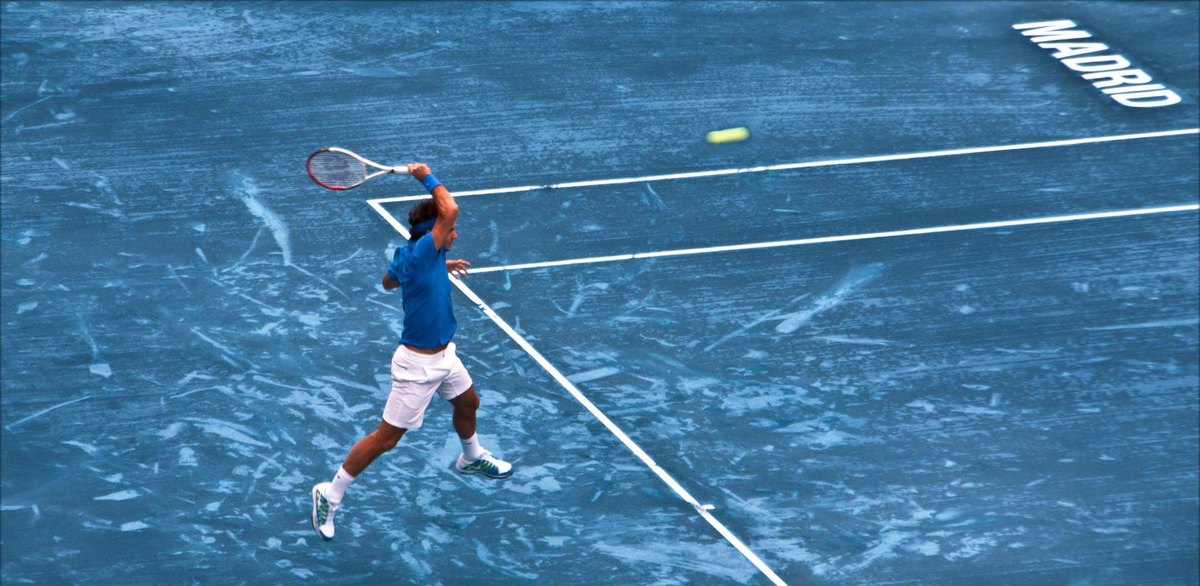
—The pros do this too, only with better lawyers. In 2012 the Madrid Open switched to blue clay so that television viewers could see the ball. Nadal lost to his countryman Fernando Verdasco and blamed the surface, which he said wouldn’t let him move, and threatened to skip the tournament in the future. Novak Djokovic, who had already told reporters he would need either football shoes or Chuck Norris as a consultant, was knocked out the next day. Then the tournament’s own owner, Ion Tiriac, stood up and said, “The court is slippery and I apologise.” The ATP banned blue clay the following year.
—That is the nightmare scenario for the rest of us: the excuse that turns out to be true. Now you have to live with it.
—And then there’s John McEnroe. In 1984 he went 82 and 3, which is not a record Roger Federer ever matched. In the French Open final he was two sets up on Ivan Lendl when noise from a cameraman’s headset got on his nerves. Lendl won in five. Eighty-two wins, and the loss everybody remembers came with background noise. Three years later in Rome, the tournament director has since claimed, he paid a maintenance man to cut the stadium lights, twice, to rescue a struggling McEnroe. McEnroe won in three sets. I am not making this up. It is the only known case of a tournament supplying the excuse before the player needed it.
—The Medical Report at the Net Post
—Next comes the medical disclosure. I’ve got a little bit of a shoulder thing going on. The shoulder thing has a long and glorious tradition in this sport and is, by my count, the most heavily injured body part in America, despite never having shown up in a single doctor’s office.
—The pros are not above it. In Shanghai in 2016, Nick Kyrgios lost to Mischa Zverev and explained that his arm was a little sore, which accounted for some very gentle serves. Later the same day he posted that he could go on about excuses, but there were none. He excused himself and un-excused himself inside one news cycle, which I admire as a feat of efficiency.
—At the majors, by the way, a player who is not giving best effort can be fined thousands of dollars. I would love to see the local version. Sir, that was approximately a 23 percent effort. That will be $400 and a short conversation.
—What the Winner Hears
—There is one more thing about the shoulder thing, and it’s what the winner hears. In 2010, Federer lost a Wimbledon quarterfinal to Tomas Berdych and said he had a bad back and leg, plus a few unlucky bounces. Berdych, the man who had just beaten him, publicly wondered whether Federer was fishing for excuses.
—That is what every winner is thinking, and only one in a million says it out loud. When you tell the person who just beat you about your shoulder, what he hears is that you consider his victory a medical event.
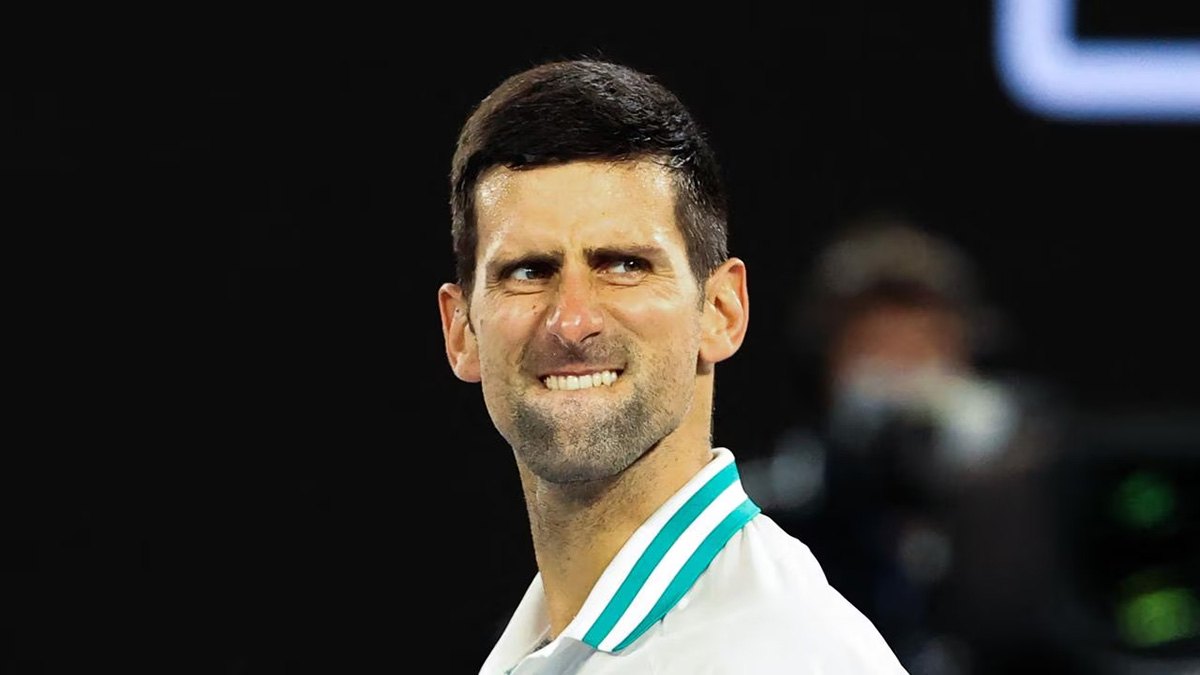
—Science Weighs In (It Was Not Surprised)
—Researchers have, of course, studied this. A 2020 analysis pooled 69 studies covering 10,515 athletes and concluded that athletes take credit for their victories and hand their losses to outside forces. This is the kind of finding that earns somebody a grant and surprises not one person who has ever heard the words “sun was in my eyes.”
—Older research suggests it is worse in individual sports, where there is no goalie to blame. Tennis, in other words, is the perfect incubator. Unless it’s doubles, in which case the outside force has a name, a phone number and a lawn.
—The Win Is a Moon Landing
—Now to the part that really gets me. If the guy wins, the pre-alibi turns into a hero’s journey.
—Kayaked twelve miles. Slept two hours. Shoulder held together by prayer and a bag of ice. And still. By the time the story reaches the clubhouse, he has crossed the Delaware. I once watched a man describe a 6-4, 6-3 victory to four different people in twenty minutes, and by the fourth version he had played the last game on one leg.
—This is why the pre-alibi is genius. It is a hedge. If he loses, it’s explained. If he wins, it’s legend. There is no outcome in which he is just a guy who played a tennis match, which is the one thing the rest of us aspire to be. Wall Street would call it a perfect hedge, and Wall Street would be right.
—Down the Road in Bradenton, the Pros Are Doing It Too
—We are not the only ones with a front-row seat. From 2009 through 2014 the Sarasota Open, an ATP Challenger tournament, was played on the green clay at the Longboat Key Club’s Tennis Gardens, where fans stood a few feet from the pros and crowds ran well past 25,000 over the years. Kei Nishikori won it in 2010. James Blake won it in 2011. The list of players who have passed through the event includes Nick Kyrgios, whom you may remember from the sore-arm episode above.
—One local paper called the unknown young players the fans came to discover “the little rabbits.” I keep rabbits at home, and I can report they are great at excuses. The one who just bolted from my grasp is never at fault. It’s always the door.
—The Sarasota Open has since wandered like a snowbird, from Lakewood Ranch to Laurel Oak to Payne Park to the Sarasota Sports Club, and this past April it landed at IMG Academy in Bradenton, where Wu Yibing won. The pros have the same instincts we do. They just have media training. Coach Patrick Mouratoglou has observed that pros who lose often insist they’re perfectly healthy, which he translates as: they are not. “He played better today” is the sentence amateurs cannot pronounce.
—Meanwhile, at Bird Key Yacht Club, a local paper reported in 2021 that more than 200 members were playing tennis on three Har-Tru courts, and that the club’s tennis director figured a thriving club needs about 25 members per court. Do the math. Two hundred divided by three is roughly 67 players per court, which is 42 more than recommended, and supplies every one of them with a ready-made excuse. I couldn’t get my usual court. Over on Bay Isles Road, the town’s public center offers ten clay courts, which means ten courts’ worth of ball marks to argue about.
—A Two-Way Street
—The traffic runs in both directions, and the toll is paid in plausible deniability. The pros study us: Nadal, in the grand tradition of tour modesty, has been known to call his next opponent “very dangerous,” which is the ATP version of I hope your expectations are low. And we study them. The Longboat Key hamstring tends to appear around 4-1 down, right on schedule with the on-court medical timeout at the big tournaments. The long stare at the strings after a missed forehand, as though the strings had said something about your mother, was imported directly from television. Somewhere on Bay Isles Road this morning, a man in a visor is doing it right now.
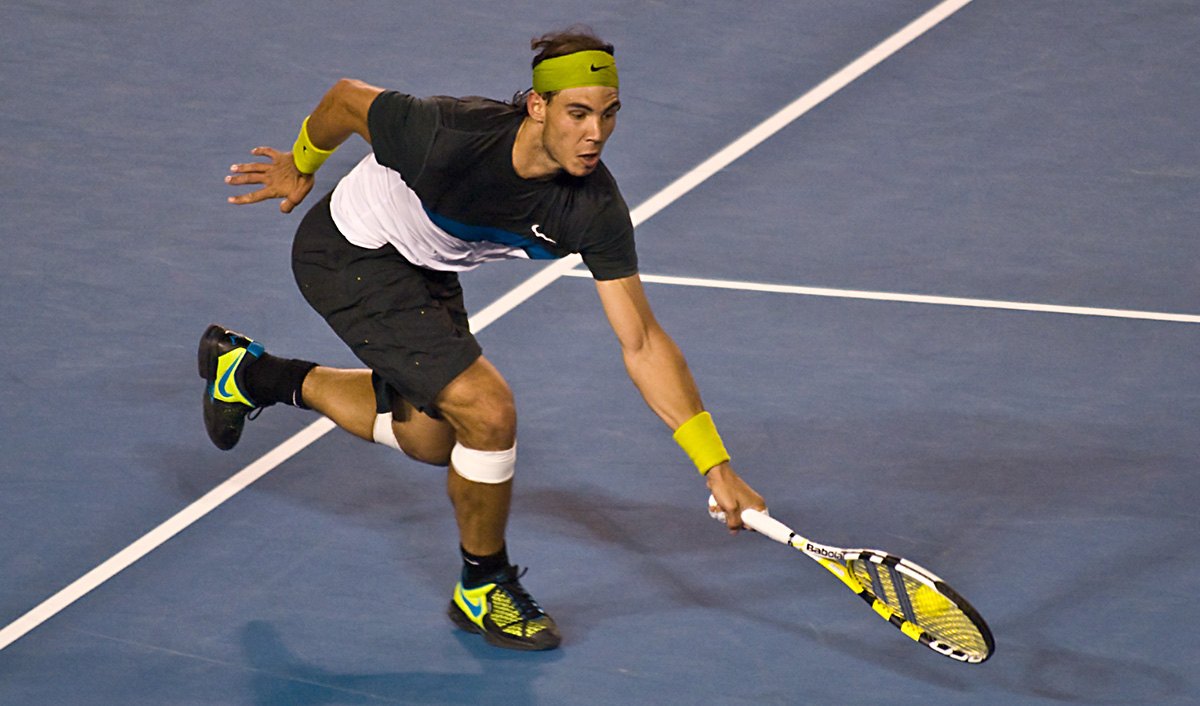
—The difference is stakes. When a pro blames the court, a tournament owner may have to apologize. When a Bird Key player blames the court, the court has no comment, and is booked until Thursday.
—How to Survive a Longboat Key Excuse
—After years of unpaid practice, I offer this field manual for the opponent.
—1. Never ask how they slept.
—2. Do not ask about the shoulder. Do not look at the shoulder.
—3. When they mention the kayak, say “Wow.” Say nothing else.
—4. On ball marks, give them the call. You cannot win a trial whose only evidence is a smudge.
—5. If you win, say you got a few lucky bounces. It is the national anthem of the sport, and everybody gets to go home happy.
—6. Never, under any circumstances, offer to explain what happened.
—A Note on This Column
—In the interest of full disclosure, I wrote this column on two hours of sleep, the day after kayaking twelve miles, with a bit of a shoulder thing going on. Please keep your expectations low. If it’s good, it’s a miracle. If it’s not, well, you know how it is.
—My editor, who happens to be me, was out of town.

